Get Full Government Meeting Transcripts, Videos, & Alerts Forever!
Get email alerts on the School Budget And Staffing topic
No spam. Unsubscribe anytime.
Prior Lake‑Savage board weighs $4.5 million in cuts, directs fund‑1 staffing analysis
Summary
School board members debated proposed reductions that administrators say total about $4.5 million, voiced concerns that cuts fall disproportionately on classroom staff, and asked administration to produce a Fund 1 organizational/position report using the new Skyward data and the staff directory as a starting point.
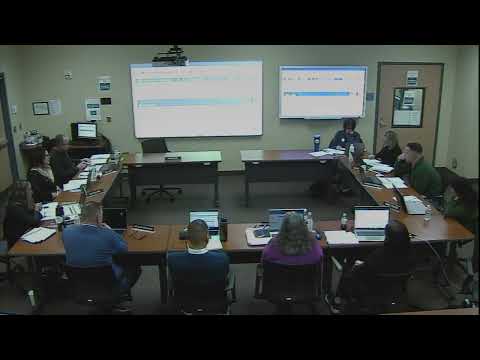
Members of the Prior Lake‑Savage Area Schools governing board spent the bulk of a meeting reviewing proposed budget reductions and how the district counts and classifies staff, then directed administration to prepare a narrower, Fund 1 organizational report before the next round of budget decisions.
Board discussion centered on roughly $4.5 million in proposed reductions laid out by district staff. Director Atkinson said she categorized the proposed cuts into three buckets and found about $3,000,000 — roughly 73% — would come from teachers and programs, about $672,000 (16%) from efficiencies, and about $439,000 (11%) from administrative reductions. "I don't support cuts that impact our teachers and our students in the classroom directly," Atkinson said.
The board pressed administration on how positions and titles are tracked. Director Herman, who led a supplemental presentation, said the district's historic personnel reports are limited by the older Skyward system and that the business office and human resources are building improved position control in the new Skyward release. "With the mandatory upgrade to the new Skyward, we are working very hard and diligently between business office and HR to build out so we can have a true position control," Herman said.
Several board members expressed concern that cuts to special education paraprofessionals and other classroom supports could force an immediate budget reconsideration if enrollment or student needs change next year. "We don't know what the new kids coming into our district are going to be ... and someone will say, 'We need three elementary SPEDs' because we have three kinders that came in with super high needs,'" Atkinson said, warning that undercutting those positions now could prompt midyear budget increases.
Director Mason said she supported some of the efficiency moves, including eliminating the district's COVID‑era online program and some transportation changes, but reiterated concern that current proposals do not free up enough money to invest in academic outcomes. "I'm not supportive of this budget" as presented, Mason said, citing a desire to target administrative reductions and reallocate more to classroom and student supports.
Board members and staff debated which historical data sources show staffing changes. Administration and board members discussed the Minnesota Department of Education STARS reporting and the UFARS manual as inconsistent with internal personnel records, with staff describing annual classification and coding changes that make direct year‑to‑year comparisons unreliable. Herman and other administrators showed an internal administrator count dating back to 2016–17 and cautioned that titles have been reclassified over time (for example, some roles moved into assistant principal bargaining units).
Directives from the meeting focused on two operational items rather than formal votes. When asked whether the board wanted the program recommendations to proceed, the board voice indicated agreement to "move forward as listed." Separately, the board asked administration to produce a clearer, Fund 1‑focused organizational analysis using the new Skyward reports and the district staff directory as a starting point. Director Herman agreed to work with Directors Mason and Johnson to produce a model report and return with a recommended scope and sample output. Administration said monthly updates from the new Skyward system will be easier to clean and provide going forward than attempts to reconstruct decade‑long historical data.
Administrators repeatedly warned that some staff functions cannot be eliminated without creating compliance or segregation‑of‑duty problems. The board discussed separating the analytic exercise into a forward‑looking organizational rationalization (who does what now and where redundancies exist) rather than an exhaustive historical reconstruction back to 2016–17, which staff described as time consuming and of limited comparability.
Other items raised for future work included a curriculum audit aligned to the district's strategic plan, K–3 legislative changes, discipline and truancy updates, and a review of the district cell phone policy and school safety audit; board members asked that those items be scheduled and that legislative updates be shared as bills move through the session.
The board did not take any formal roll‑call votes during the portion of the meeting focused on the budget and staffing analysis. The directions given to staff were recorded as consensus requests for reports and follow‑up rather than binding policy changes.