Get Full Government Meeting Transcripts, Videos, & Alerts Forever!
Get email alerts on the Sewer Infrastructure topic
No spam. Unsubscribe anytime.
Mayfield Heights committee reviews Marnell sewer dye‑testing; 101 of 107 properties showed storm‑to‑sanitary flow
Summary
City engineer and consultants presented detailed dye‑testing results for the Marnell area: 101 of 107 properties tested positive for stormwater entering the sanitary sewer. The Public Works committee recommended city repairs in the Marnell project area, homeowner notifications, a town hall and options for follow‑up testing and enforcement.
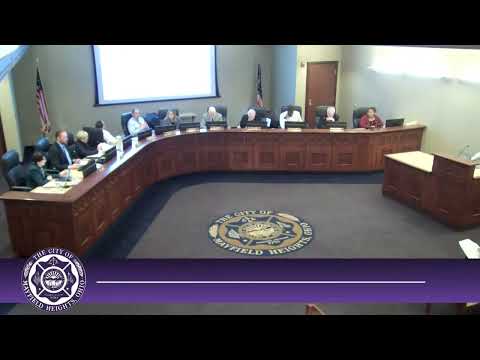
At a Committee of the Whole meeting on Sept. 23, 2024, the city received a detailed report of dye‑testing in the Marnell neighborhood that found stormwater entering the sanitary sewer at most tested properties and identified dozens of defects on the city side of the lines.
GPD Group presenter Mr. Chuuni summarized the testing and the consultant AECOM’s findings: “Of the 107 properties that were tested, 101 properties tested positive. That's a big number. It's a big number,” he said. The report includes individual exhibits and camera photos for each property, and classifies defects on a 1‑to‑5 national scale where level 3 or above is recommended for repair.
The findings matter because the city’s sanitary system is showing multiple points where stormwater (from downspouts, driveway or yard drains) is entering sanitary pipes; that increases system flows and can cause localized flooding and higher system maintenance costs. The city engineer and Public Works committee recommended prioritizing repairs tied to the Marnell project, notifying affected homeowners, holding a town hall to distribute the results, and providing information about contractor and financing options.
Key findings and recommendations
- Testing scope and result: The detailed follow‑up dye testing covered 107 properties; 101 returned positive indications of stormwater entering sanitary laterals. Six property owners refused access and were not re‑tested. An additional 29 properties could not be fully tested on the private side because of severe defects in the public (city) portion of the lateral or main that prevented the camera from passing the test tee.
- City‑side defects: GPD reported 73 properties with defects rated level 3 or higher between the street centerline and the test tee behind the sidewalk (city responsibility). Of those, 19 fall inside the Marnell street project footprint and the consultant recommended addressing those with the planned Marnell construction. The remaining 54 city‑side defects are outside the current Marnell limits and were recommended for repair either as part of a change order to the Marnell contract or in a separate project.
- Private‑side issues and homeowner guidance: Several homes showed mixed results (some corners positive, some negative). Chuuni told council the report will allow homeowners and plumbers to identify where repairs are needed on the private side. The Public Works committee recommended that homeowners who initially refused testing be offered an opportunity to opt back in after the city completes its work.
- Next steps and timing: Public Works advised that construction on Marnell is scheduled for 2025 and the city anticipates finishing major work by early 2026. City staff recommended notifying homeowners after the city-side work is complete so they can arrange private repairs; the building department outlined a typical enforcement timeline that begins with a “soft” notice and a 90‑day compliance period for more expensive repairs, followed by escalation if necessary.
- Outreach and assistance: Committee members recommended a town‑hall meeting where the engineer, building department and staff from Heritage Home (a local loan/assistance program) would explain the technical reports, provide copies of the camera photos and defect pages for each house, and share lists of licensed contractors. Staff said they will explore whether block‑level coordination could reduce costs by encouraging homeowners to bid together.
Quotes and statements
- “We have 73 properties that have a level 3 defect or above … between the main and the test tee,” Chuuni said, describing the scope of city‑side work the consultant recommends.
- Council member Mr. Balestreo argued the city should offer homeowners who initially refused testing a chance to opt back in: “At least I'd like to give those homeowners another … opportunity to opt back in when they go out and retest those 29 homes.”
- The building department advised on the enforcement timeline and typical practice: staff said the department would issue a soft notice and generally allow about 90 days for residents to complete more expensive repairs before pursuing fines or further legal action.
Context and technical details
- Testing method: Crews used dye in storm drains and launched a camera from the sanitary main toward the house lateral to locate where colored water entered the sanitary system. The consultant’s full report (about 858 pages) includes an exhibit and photo set for each tested property and measurements from each test tee to the observed defect.
- Defect ratings: The report uses a 1–5 national defect scale (5 most severe). The consultant recommended repairs for defects rated 3 or higher.
- Numbers of note: 168 properties were originally screened; 107 received the detailed follow‑up testing; 101 of those 107 tested positive on some portion of the property; 6 owners refused access; 29 could not be fully tested on the private side due to city‑side obstructions; 73 properties had city‑side level 3+ defects (19 within Marnell project, 54 outside).
Questions, funding and responsibilities
Staff discussed funding timelines for grant and sewer district programs and noted many external funding cycles (MCIP and others) operate a year or more in advance, which can affect the ability to subsidize private repairs. The committee asked staff to prepare contractor lists, an informational packet with each homeowner’s test photos and measurements, and to plan a town hall to explain the schedule, enforcement expectations and financing options (including Heritage Home and other local programs).
What was not decided
There was no final council vote at the meeting on whether the city will pay for private‑side repairs, nor on a specific enforcement deadline; those remain matters for follow‑up. Committee recommendations — town hall, homeowner notification, allowing opt‑in for earlier refusals, and prioritizing city‑side repairs within the Marnell project — were presented to council as the next steps.
Ending
Public Works staff said they will set a date for a town hall, prepare individualized packages for affected homeowners, and return to council with cost estimates if additional contract work (beyond the Marnell contract) is needed to repair the 54 city‑side defects outside the scheduled project area.