Get Full Government Meeting Transcripts, Videos, & Alerts Forever!
Get email alerts on the Subdivision Development Taxes topic
No spam. Unsubscribe anytime.
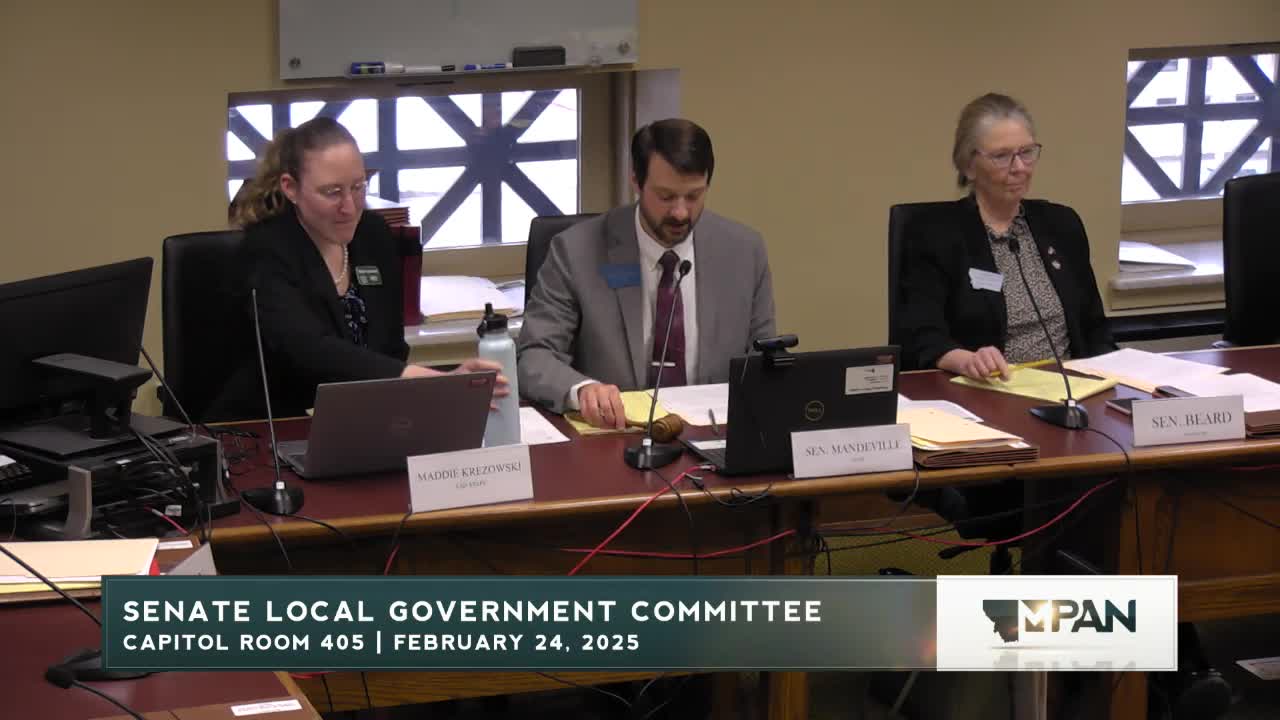
Committee hears bill to allow temporary tax prepayment for subdivision development
Summary
Sen. Greg Hertz told the committee SB 337 would let developers apply for a temporary property tax exemption during subdivision development by prepaying five years of current taxes; proponents said it reduces carrying costs and encourages housing development; a fiscal note was requested.
Senator Greg Hertz introduced Senate Bill 337 to the Senate Local Government Committee as a tool intended to reduce carrying costs for developers during subdivision creation by offering a temporary exemption from increased property tax assessments in exchange for a prepayment.
Under the bill as introduced, a developer may apply for a temporary exemption for property undergoing subdivision development. The exemption requires a timely application and within 30 days of approval a tax prepayment equal to five years of the property’s existing tax liability; as lots become occupied the property’s tax will be adjusted to fair market value and the exemption ends when 95% of lots in the subdivision have habitable improvements.
Proponents said the prepayment would provide certainty to local governments while lowering developers’ immediate carrying costs and encouraging new housing. Bill Myers, a long‑time short‑term rental operator and property owner in the Flathead Valley, supported the bill as a tool to encourage subdivision development in areas with constrained land availability. Martin Nez of the Montana Building Industry Association called the bill “a win‑win‑win” because local governments receive prepayment while builders gain flexibility during development. Daniel Cox for the Montana Association of Realtors also supported the measure.
Bryce Kautz, bureau chief with the property assessment division, appeared as an informational witness and said the Department of Revenue is available for questions. Committee members asked detailed questions about the mechanics of the prepayment, how it would affect tax classification changes when lots are built, and whether the prepayment could be used to game tax outcomes. Senator Hertz said the fiscal impact depends on the property’s prior classification (for example, agricultural taxes typically are much lower than residential post‑development) and acknowledged different outcomes based on lot value and timing.
The committee did not take a final vote on SB 337 at the hearing; staff reported a fiscal note was expected (witnesses discussed a possible initial half‑time position to handle applications, rising to a full FTE in a later biennium). Supporters asked the committee to consider the measure as another tool to encourage housing supply while preserving local tax revenue through the prepayment mechanism.
Ending: The bill remains pending; the sponsor and proponents indicated willingness to answer follow‑up questions and provide fiscal details for committee consideration.
Quotes (selected): “We need more housing throughout the state,” Bill Myers said in support, describing land constraints in the Flathead Valley.
“Senate Bill 3 37 is a win‑win‑win for the local government, developers and Montanans,” Martin Nez of the Montana Building Industry Association told the committee.
“It's going to depend on the value of the property, where it's located,” Senator Greg Hertz said when asked about likely tax savings from the five‑year prepayment.