Get Full Government Meeting Transcripts, Videos, & Alerts Forever!
Get email alerts on the Rezoning topic
No spam. Unsubscribe anytime.
Monticello council rejects rezoning for 214 West Center Street after residents cite traffic, property-value and public-safety concerns
Summary
The City Council voted to deny a rezoning request for 214 West Center Street that would have allowed commercial development; neighbors and the planning and zoning board raised traffic and neighborhood character concerns.
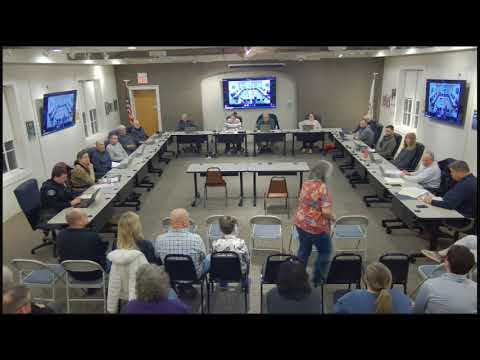
Monticello City Council on Feb. 24 voted to deny an ordinance that would have rezoned 214 West Center Street to allow commercial development, including a packaged-liquor and video-gaming business proposed by the property’s prospective buyer.
The vote followed public comment from nearby residents who said a commercial operation on the corner would generate traffic, delivery-truck conflicts and reduced property values. “We respectfully ask the city council to deny this request for rezoning,” resident Brenda Brown said during public comment.
The zoning administrator told council members the parcel’s current RD designation was not appropriate for a proposed commercial use and noted that the city’s 2023 comprehensive plan shows a community-based business designation on future land-use maps for the area. The planning and zoning board, however, voted not to recommend rezoning; city staff included that recommendation in the council packet.
Residents who spoke at the council meeting said the corner’s configuration already causes vehicle backups at the stoplight and that adding another high-capacity retail use would worsen congestion. Jason McClain, who identified himself as a Monticello resident and a member of the Monticello Fire Department, said construction and subsequent traffic could divert semis and farm equipment onto smaller side streets and increase response times for emergency services.
City staff explained notices were sent to adjacent property owners and a public hearing had been held Jan. 21; staff also noted the applicant’s written responses to neighborhood concerns were included in the packet. No representative of the developer attended the council meeting.
On a roll-call vote on a motion to not approve the ordinance, a majority of council members recorded “yes,” and the motion carried; the ordinance failed. City staff said that if the rezoning motion failed, related steps such as a liquor-license hearing would not proceed.
The council did not take further action on the parcel at the meeting.