Get Full Government Meeting Transcripts, Videos, & Alerts Forever!
Get email alerts on the Labor Negotiations topic
No spam. Unsubscribe anytime.
Cheyenne and firefighters reach tentative reorganization and pay-language agreement; union may sign immediately
Summary
City negotiators and Cheyenne Professional Firefighters reached an agreement in principle on a contract that reorganizes ranks, clarifies specialty-team pay, formalizes an advanced EMT pathway and expands medical screening; the union may sign immediately and city council will subsequently ratify.
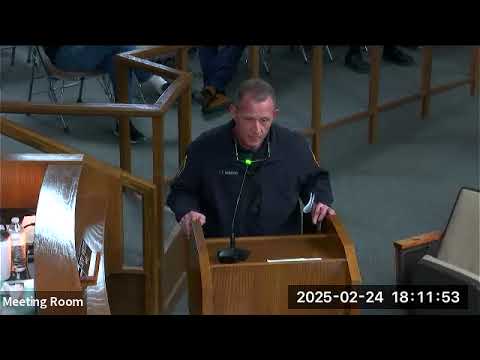
City negotiators and representatives of the Cheyenne Professional Firefighters (IAFF Local 279) reached an agreement in principle at a collective-bargaining session, outlining an organizational rework, updated pay provisions and health and leave clarifications.
Why it matters: The agreement affects staffing structure, pay progression, emergency medical training pathways, medical screening and leave conversion, including how daytime and 48/96 shift personnel are treated comparably.
Key elements of the tentative agreement: - Organizational changes: The agreement authorizes creating a captain rank (up to four captains over time) and provides the ability to have up to two deputy fire chiefs; several current lieutenant positions may convert to captain positions as part of the reorganization. - Pay and step clarifications: Consolidated step requirements and simplified pay calculations (rounded to two decimal places) to ease administration; acting-certification pay differentiated by one- and two-rank acting assignments (44¢ vs. 66¢ per hour) with members eligible for the higher amount when acting two ranks above their current position. - Advanced EMT and paramedic progression: The contract establishes an advanced EMT pay tier for employees who hold that certification, intended as an intermediate step toward paramedic certification. Advanced EMT pay can be paid for up to three years; the fire chief may extend that period at his discretion to avoid penalizing employees if paramedic training slots are limited. - Specialty teams and coordinator pay: The agreement defines specialty operations teams (hazmat, technical rescue, wildland, tactical EMS, community paramedicine), limits paid team participation to two teams per member, and clarifies coordinator and team-lead pay structures. - Health screenings and cancer surveillance: The agreement expands mandatory medical screening aligned with NFPA guidance and includes participation with Colorado State University research and additional screenings (for example, low-dose CT) to address the higher incidence of certain cancers among firefighters. The city will provide initial and exit physicals and participation in a CSU program for more comprehensive diagnostics. - Leave and EOD conversions: The contract aligns sick-leave and emergency-off-day (EOD) accruals and creates conversion factors so daytime (2,080 hours) and platoon (2,920 hours) employees have comparable benefits; the city retains management rights to pay out unused EOD or vacation above 240 hours under specified circumstances (promotion, transfer, or if accrued but unusable due to injury).
Process and next steps: Union representatives said the union may sign the agreement immediately; the city must run the agreement through council for final approval. City and union negotiators praised the extended meetings and frequent labor-management sessions that built trust and allowed both sides to reach the agreement.
Ending: With an agreement in principle reached, the union is authorized to sign immediately and staff will prepare the formal contract for council ratification and signature.