Get Full Government Meeting Transcripts, Videos, & Alerts Forever!
Get email alerts on the Elections Voter Rolls topic
No spam. Unsubscribe anytime.
Committee hears bill to confirm signing a petition won’t automatically reactivate inactive voters
Summary
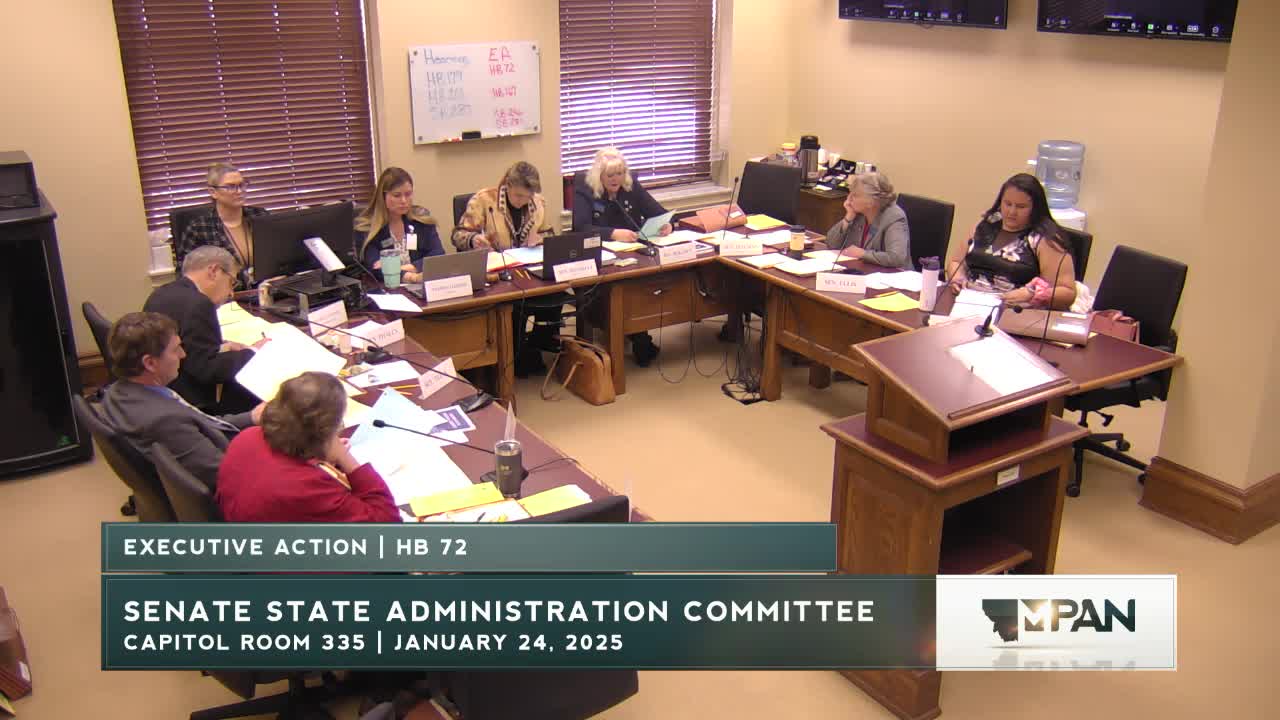
At a Senate State Administration Committee hearing in Helena, lawmakers heard House Bill 179, a bill to put into statute that signing a statewide ballot petition does not automatically move an inactive voter to the active voter rolls.
At a Senate State Administration Committee hearing in Helena, lawmakers heard House Bill 179, a bill to put into statute that signing a statewide ballot petition does not automatically move an inactive voter to the active voter rolls.
Representative Braxton Mitchell, the bill sponsor, described HB 179 as “a very straightforward cleanup bill” that “simply specifies that if you sign a petition for a statewide ballot issue that you will not be moved from, move as an inactive voter to the active list.” He said the measure is supported by the Secretary of State’s office and “maintains the integrity of the voting rules.”
The bill’s chief proponent on behalf of the Secretary of State, Austin James, told the committee that the bill largely codifies current practice. “No elector has ever been activated in the history of Montana by signing a petition,” James said, and the bill is intended to close any statutory ambiguity that could be raised in the future.
Patrick Webb of the Montana Family Foundation and Amelia Gilsdorf of FGA Action also testified in favor. Webb said petition gatherers can be focused on collecting names rather than verifying residency and that HB 179 helps “protect the voice of Montana voters.”
In committee questions, a staff member identified as Miss Plettenberg clarified the operational effect: “It doesn't change that inactive voters can sign the petition. And currently, as...the director said, we don't move them currently to the active [list] if they sign. This is just putting that in statute, if I'm correct. So, it doesn't change anything we're actually doing right now.”
Committee debate emphasized that the bill is intended to codify the status quo rather than create a new practice. Representative Mitchell closed by urging passage as a common-sense clarification to maintain accurate voter rolls.
The committee held the hearing and closed public testimony on HB 179; no committee vote on final disposition was recorded in the transcript.