Get Full Government Meeting Transcripts, Videos, & Alerts Forever!
Get email alerts on the Waste Management topic
No spam. Unsubscribe anytime.
Augusta County staff outline DEQ disposal process after poultry disease outbreaks; farmers seek faster options
Summary
County staff described the DEQ's special-waste application process and a practical 500-birds-per-day handling benchmark at the landfill after several recent poultry mortality events; supervisors urged staff to contact DEQ about possible exemptions or faster turnaround for disease outbreaks.
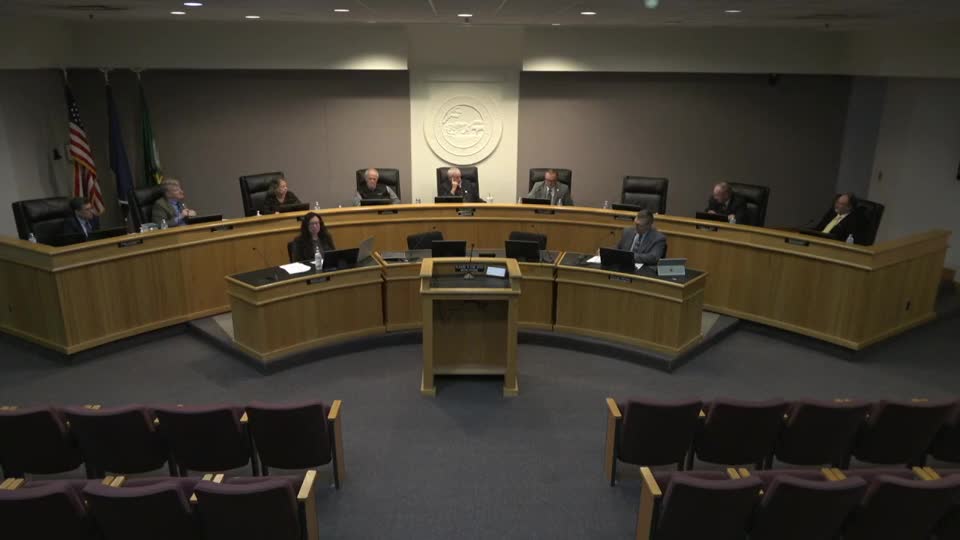
Augusta County staff on Jan. 6 described how the Virginia Department of Environmental Quality's rules govern disposal of large poultry mortality events and said the county has had multiple recent requests to accept diseased birds at the landfill.
Staff and landfill manager Cole explained that DEQ requires a two-part special-waste package for each event. The grower and integrator must complete an application describing the number and type of birds and the disease, and the landfill manager must provide a plan describing where and how the birds will be placed on the landfill face; the DEQ then must approve the package before animals are accepted.
County staff said DEQ approval and landfill operational concerns have led to an informal throughput benchmark of about 500 birds per day for acceptance, driven by site-placement and liner protection concerns. Staff noted the county currently has room on the landfill face to accept animals under the required process but said the turnaround time can be a practical problem when farmers report thousands of mortalities in a short period.
Supervisors and staff discussed alternatives including composting on the farm (when feasible) and asking DEQ whether temporary exemptions or expedited review can be provided during outbreaks; one supervisor reported helping a farmer compost a flock when immediate landfill acceptance was not possible. Staff noted the landfill charges normal tipping fees to the integrator and identified the DEQ special-waste permit process as the controlling requirement.
Why it matters: outbreaks of an unfamiliar poultry disease have led to multiple local mortality events; rapid removal of diseased carcasses can be important to limit spread, but regulatory and operational constraints affect how quickly disposal can occur.
Next steps: supervisors asked staff to contact DEQ and to explore whether any procedural flexibility or faster approvals are possible during outbreaks; staff outlined the steps a grower and landfill manager must take to obtain DEQ approval.