Get Full Government Meeting Transcripts, Videos, & Alerts Forever!
Get email alerts on the Speed Limits Highways topic
No spam. Unsubscribe anytime.
Committee reviews bill to raise passenger-vehicle speed limits on widened two‑lane highways
Summary
House Bill 312 would add a 5-mph increase for passenger vehicles on stretches of highway expanded to four lanes; sponsor said the change restores passing offsets lost after road widenings, while transportation officials urged engineering study for safety.
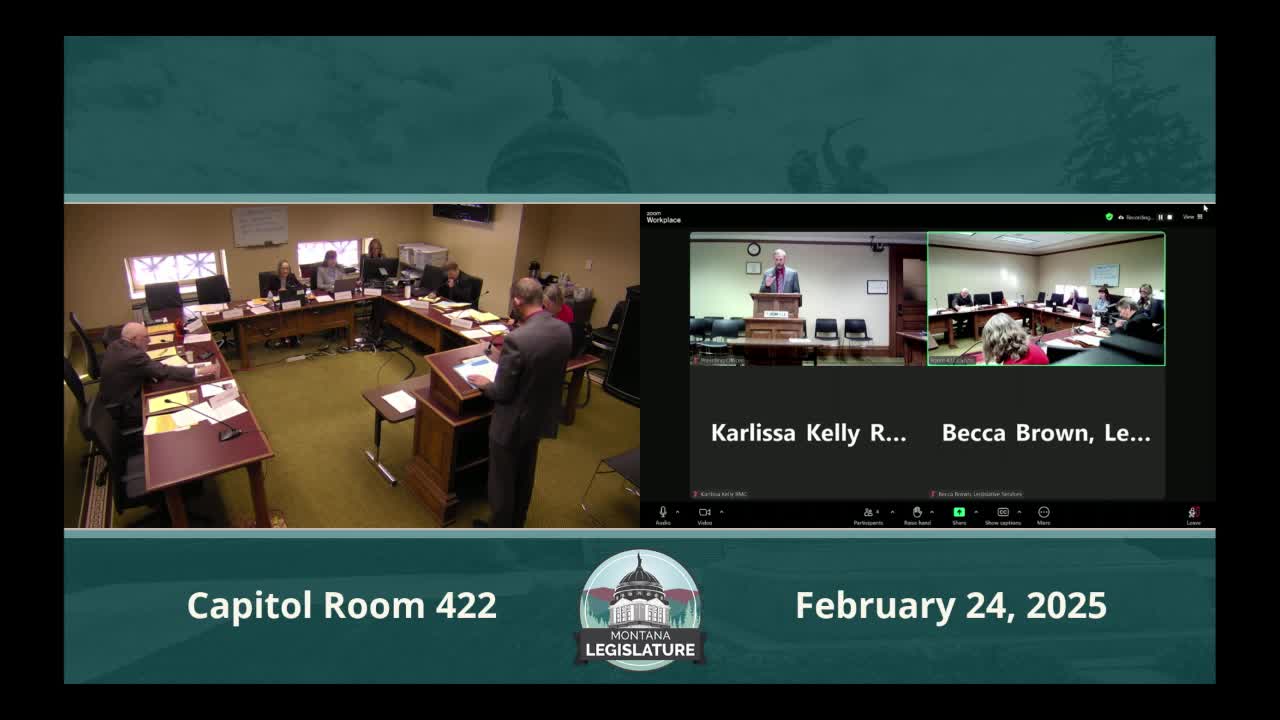
HELENA — The House Transportation Committee took testimony Wednesday on House Bill 312, which would increase posted speed limits for passenger vehicles by 5 miles per hour on national highways that have been expanded to four lanes.
Representative Jedidiah Hinkle, sponsor of HB312, told the committee the bill addresses a statutory mismatch created when two‑lane highways were expanded to four lanes: "When the highway was 2 lanes, we could exceed the speed limit by 10 miles per hour. But now that it has been expanded to 4 lanes, we cannot drive faster than 70, during the day or 65 at night without breaking the law," he said, arguing the change would help motorists safely pass large trucks.
The bill drew questions from senators and departmental staff about safety and enforcement. Dustin Rouse, highways and engineering administrator for the Montana Department of Transportation (MDT), appeared as an informational witness and said the bill, as drafted, will initially apply only to the section south of Townsend on Interstate 90 (the segment described in the bill’s fiscal note). Rouse said MDT can provide maps and can run engineering speed studies on request but does not have a statewide “safe speed” list ready for every segment; those studies examine design speed, roadway geometry and the 85th‑percentile speeds across vehicle classes.
Director Chris Dorrington of MDT clarified that speed studies and safety analyses are done in response to requests or crash clusters and that the department uses the 85th‑percentile methodology and other engineering criteria in setting special speed zones. Committee members pressed whether reducing truck speed limits might be a safer alternative; Hinkle and witnesses said lowering truck limits had not been considered and that the bill was designed to restore an offset for passenger vehicles on certain widened segments.
Senator Olivia Olson and others asked for engineering reports and safety analyses. Rouse and Dorrington offered to provide a recent speed study (U.S. 93 south of Missoula) and MDT’s comprehensive highway safety plan, which includes Vision Zero work, so the committee could compare engineering findings. The sponsor said the highway patrol supported the bill in concept and that he would provide additional background if requested. No final committee vote on HB312 was taken at the hearing.
The testimony centered on balancing motorist convenience and passing ability with engineering-based speed-setting and public-safety evidence; MDT officials recommended segment-level studies to assess safety before changing posted limits.