Get Full Government Meeting Transcripts, Videos, & Alerts Forever!
Get email alerts on the School Governance topic
No spam. Unsubscribe anytime.
Sponsor says transparency bill would require boards to be told of reductions in force; opponents warn statute duplicates existing law
Summary
House Bill 602 would require districts to notify boards of trustees when reductions in force occur; proponents said the measure costs nothing and protects teachers from hidden RIFs, while Montana School Boards Association and other opponents argued current law already provides mechanisms and the bill risks complicating employment processes.
House Bill 602, introduced by Representative Overstreet, would require school districts to notify the board of trustees when a reduction in force occurs and place the matter on the board agenda; the sponsor said the bill is intended to prevent covert reductions in force that leave teachers believing they were fired for performance reasons.
Representative Overstreet recounted a constituent’s experience—his wife—who received a preprinted notice that her contract would not be renewed and later learned colleagues were told by administrators that staff reductions had been made to balance the budget. Overstreet said the bill imposes minimal administrative burden (an email from the superintendent and agenda placement) and estimated a compliance cost of about five minutes per occurrence.
Proponents included a teacher, Ann Marie Gurney, who testified she was effectively pushed out after receiving a nonrenewal notice; she said administrators later admitted at a staff meeting the nonrenewals were budget-driven and that the board shrugged off the resignations at the meeting. Gurney urged statutory clarity to prevent what she described as covert RIFs.
Opponents, led by Lance Melton of the Montana School Boards Association, urged the committee to table the bill. Melton said Montana law already allows districts to nonrenew non‑tenured employees either with or without cause and that the existing statutes and board authority provide the public opportunity to address staffing decisions. He warned that the bill could reopen long-resolved litigation risks tied to earlier case law about statements of true reasons and nonrenewals. Melton argued the bill would not change the legal outcome in many cases and could increase litigation risk.
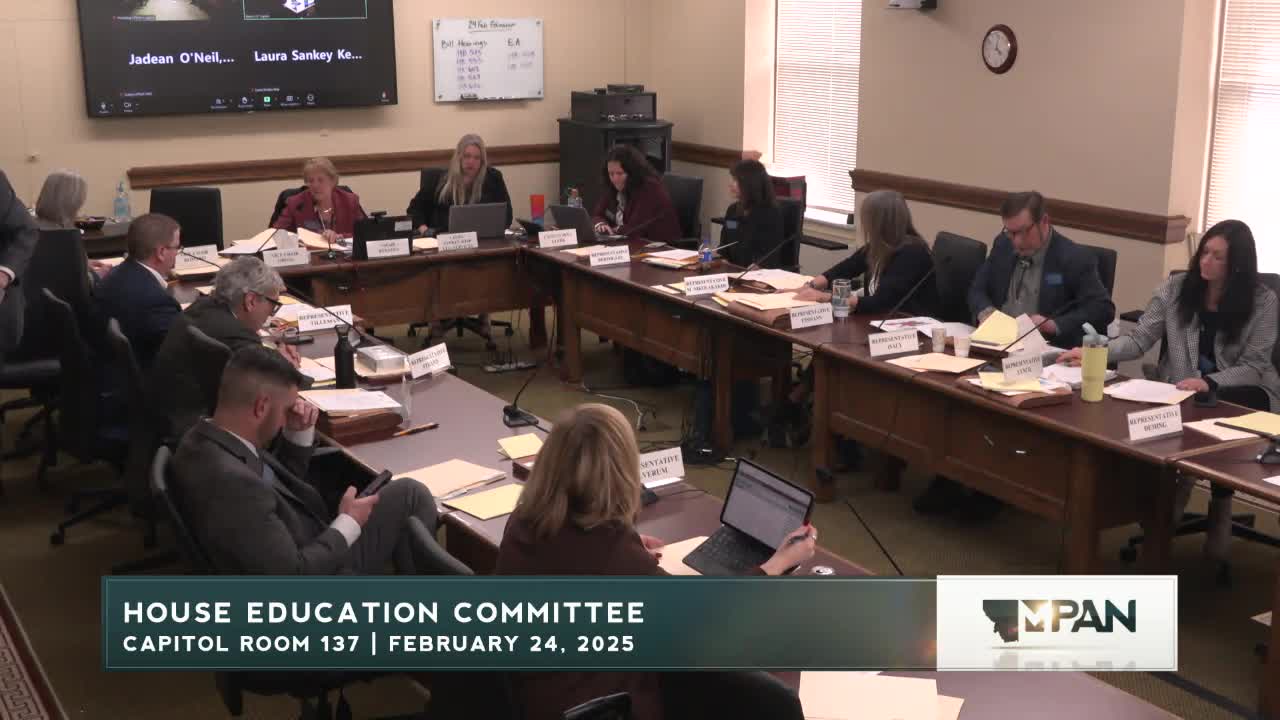
Committee members questioned whether the bill would change existing obligations and whether it might inadvertently compel disclosures that complicate nonrenewal procedures. Representative Overstreet said the bill is not aimed at changing nonrenewal law; rather, it would ensure the board and public know when a reduction in force, rather than a performance-based termination, is the cause. The sponsor urged the committee to support a transparency measure that he said would impose almost no burdens on districts.
No committee vote was recorded during the hearing; testimony included proponents and opponents and extensive committee questions about employment law and board authority.