Get Full Government Meeting Transcripts, Videos, & Alerts Forever!
Get email alerts on the Electric Vehicles topic
No spam. Unsubscribe anytime.
Senate committee advances bill to clarify tax treatment, metering for public EV chargers
Summary
A Montana Senate committee recommended passage of Senate Bill 228 to clarify tax rules and meter requirements for public electric vehicle charging stations, narrowing what electricity use is taxed and aiming for uniform registration with transportation officials.
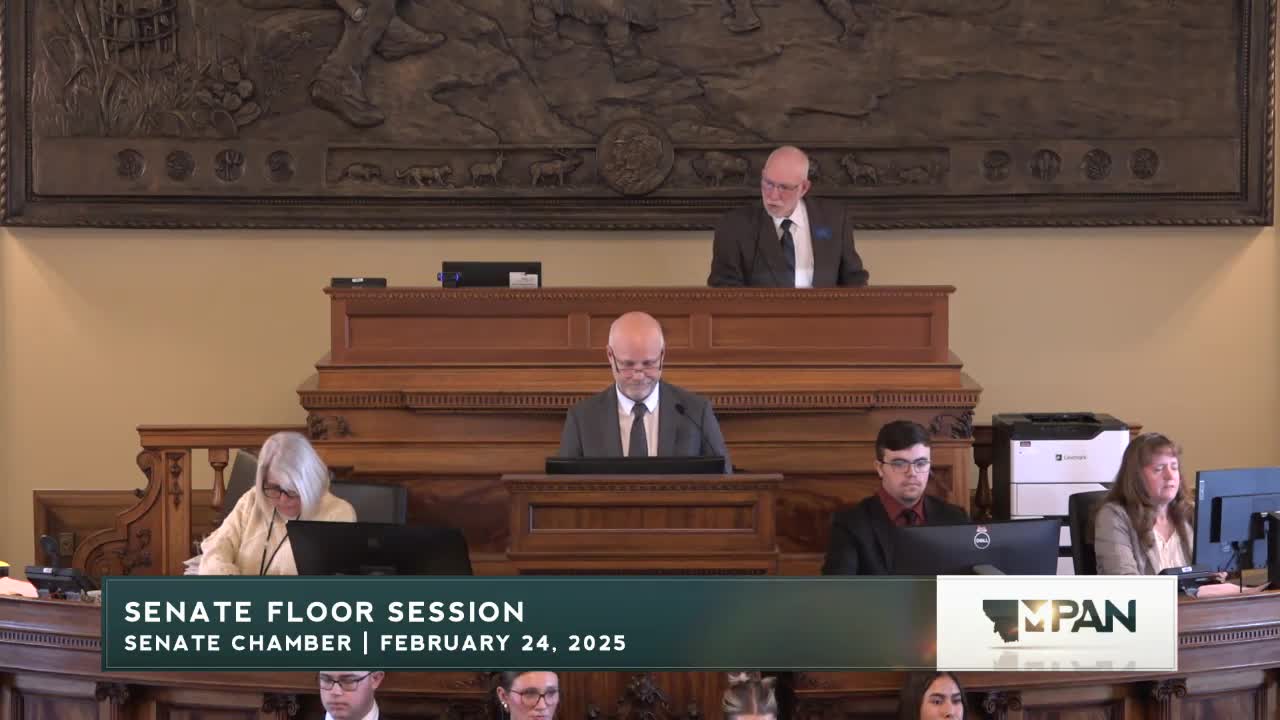
Senate Bill 228, which would clarify tax rules for public electric vehicle (EV) charging stations and revise meter requirements, was recommended for passage by the Montana Senate committee of the whole after a presentation by Senator Logie.
The bill is intended to clean up language enacted last session and to make tax and metering rules more uniform, particularly where cooperative electric utilities and public chargers intersect. Supporters told lawmakers the revisions aim to ensure only electricity consumed at a charging meter is taxed and to avoid taxing unrelated uses such as billboards.
Senator Logie, sponsor of the bill, told the committee the measure "comes back from last session" to address issues that arose as public charging infrastructure has grown. He said co-ops and utilities sought clearer rules and a uniform registration approach with the Department of Transportation so charging stations are tracked consistently.
"Everything now has to go right to the the charging meter, and the billboards, and any extra electricity doesn't does not get charged for, doesn't get that tax," Senator Logie said.
Committee materials show the bill covers Sections 1 through 6 and would: clarify public charging station tax provisions; revise electric meter requirements; eliminate an electric vehicle fee reduction; provide related definitions; and include an effective date. No amendments were offered during the committee consideration in the transcript excerpt.
After discussion, Senator Logie moved that the committee recommend the bill do pass; the motion carried and the committee report will be transmitted according to Senate procedure. The transcript does not record a roll-call tally for the committee recommendation in the provided excerpt.
The measure will continue through the Senate process for additional readings and any floor amendments.