
Gilbert officials cite safety, legal limits as cattle keep roaming into Adora Trails neighborhood
Get AI-powered insights, summaries, and transcripts
Sign Up Free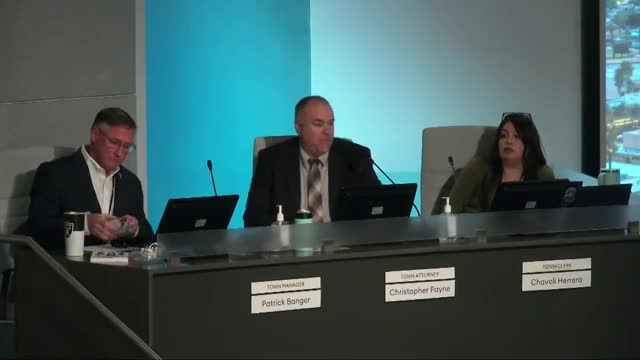
Summary
Gilbert police and town staff told the council the Adora Trails neighborhood has seen recurring cattle incursions that damage property and create roadway hazards; officials said Arizona open-range statutes and tribal sovereignty limit enforcement and urged collaborative solutions including expedited HOA fencing permits.
At a Gilbert Town Council study session, police and town staff described recurring incidents of cattle roaming into the Adora Trails subdivision, damaging yards and underground irrigation lines and raising traffic-safety concerns on Riggs Road.
The issue matters because repeated incursions have produced property damage, sanitation problems and several vehicle collisions; officials said state open-range laws and the sovereign status of the neighboring Gila River Indian Community constrain Gilbert’s ability to enforce against livestock owners and complicate legal remedies.
Chief Chris Angstaedt, assistant chief, Gilbert Police Department, told the council that officers have long encountered cattle in South Gilbert but that the Adora Trails area south of Riggs Road has seen a recent influx. “These cattle are persistent,” Angstaedt said, and residents have reported damaged landscaping, broken underground irrigation lines and animal waste in private yards and common areas. Gilbert recorded 17 distinct cattle-related calls for service so far in 2025 and 74 in 2024, Angstaedt said; the department also documented seven vehicle collisions involving cattle in recent years.
Angstaedt and other staff described multi-agency engagement that includes the Gila River Indian Community, the Arizona Department of Agriculture and Maricopa County. Ed Morales, lieutenant and Central Region supervisor for livestock officers at the Arizona Department of Agriculture, said the agency can seize and impound stray livestock under Title 3 of Arizona law, inspect them and — if ownership is established — return animals to owners or send them to auction. Morales confirmed the department’s enforcement is limited to the authority granted by state statute and that captured animals often must be returned or sold according to those rules.
Town staff explained how Arizona’s open-range statutes interact with fencing law. Under the statutes discussed at the meeting, land located inside a “no-fence” district shifts certain responsibilities and can place civil liability for damage on livestock owners, but county no-fence designations generally apply only to unincorporated areas. Town staff said the county and the town cannot unilaterally create a no-fence district that covers incorporated portions of Gilbert, and tribal sovereignty prevents the town from enforcing its at-large livestock ordinance against ranchers who remain on reservation lands.
Council members asked practical questions about fencing and liability. Staff said an HOA or private property owner may erect a lawful enclosure; state statute then can make the livestock owner civilly liable for damage that occurs after livestock penetrate a lawfully enclosed fence. Town staff also said the town will expedite permit review for an Adora Trails wrought-iron fence the homeowners association is planning; waiver of permit fees would require a formal council action.
Officials described limits to enforcement tools. Angstaedt and Department of Agriculture staff said the department’s practice of impounding stray animals can have perverse incentives: when livestock are impounded and later returned or sold, some ranchers have responded by purchasing additional animals, which reduces the deterrent effect. Staff repeatedly urged residents not to attempt to enter reservation property to retrieve animals, noting Gila River police have authority to seize vehicles and property from trespassers.
The session closed with a town statement that staff will continue working with the HOA, the Arizona Department of Agriculture, Maricopa County, the Gila River Indian Community and other stakeholders to seek voluntary, collaborative solutions and to provide safety guidance to residents and drivers.
Ending: Council members said they would continue to press for practical measures — expedited permits, fencing options and outreach — while recognizing the legal and jurisdictional limits the town faces.