Gilbert council adopts higher wastewater and reclaimed-water rates after lengthy public hearing
Loading...
Summary
After hours of testimony and staff presentations, the Gilbert Town Council approved a $29.26 wastewater rate increase under the town's all-cash option (Resolution No. 4537) by a 6-1 vote and a separate reclaimed-water rate increase unanimously. Council also approved several unrelated consent and land items.
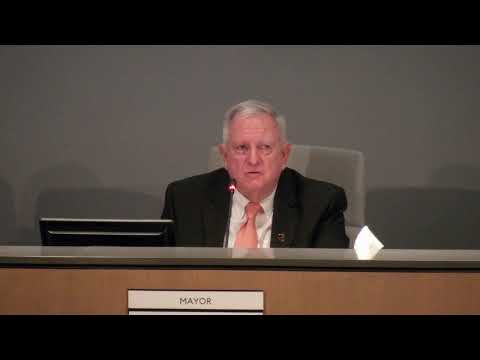
Gilbert Town Council on Feb. 11 adopted new wastewater and reclaimed-water rates after a public hearing that lasted more than three hours.
The council voted 6-1 to approve Resolution No. 4537, which implements an "all-cash" funding option for an identified five-year capital plan to repair and replace aging sewer infrastructure. Council member Jim Torgerson cast the lone dissenting vote. The council separately approved a reclaimed-water rate increase unanimously (7-0).
The vote follows months of study and a two-month public outreach campaign. "Sanitary sewer service is the critical inflection point in human history that has saved the most lives," said Eric (Utilities staff), presenting the need for repairs and replacement and outlining two alternatives: an all-cash option that front-loads projects and a phased cash-and-bond approach that spreads costs but generates long-term interest expense. Eric said the all-cash option would avoid about $72 million in interest costs associated with a proposed $110 million bond.
Why it matters: Much of Gilbert's sewer infrastructure was installed between about 1990 and 2010, and several high-degradation components have reached or passed expected lifespans. Staff showed video and photos of failing force mains and said some emergency repairs and slip-lining contracts are already in progress. The council was asked to decide between a near-term higher rate that places cash on hand into a repair-and-replacement fund or to borrow and phase the cost, which would reduce near-term bills but increase lifetime costs.
What the rates mean: Staff presented residential impacts under each option. Under the all-cash option adopted by the council, the residential flat fee increase shown on staff slides was $29.26 (on top of a current $32.75 baseline figure referenced in the presentation). Under the phased approach discussed during the hearing, the increase would have been smaller in the first two years ($8.73 this year and $5.52 next year), but would have required long-term debt service and, staff warned, likely another substantial rate action later.
Public comment and council concerns: More than a dozen residents spoke at the hearing. Speakers who opposed the all-cash approach said the increase would be a hardship for seniors and residents on fixed incomes. Kevin Carpenter, a Gilbert Ranch resident who said he is retired, said his utility costs have risen sharply in recent years and urged the council to spread the cost. "I cannot afford this any more than they can," Carpenter said, urging the phased approach.
Other commenters faulted past planning and asked whether incorrect materials or insufficient maintenance contributed to the problem. Rick Carabetta asked why piping installed decades ago is failing and called for accountability. Scott Hoffman urged staff and council to review services and costs rather than passing the full burden to ratepayers: "This madness has got to stop," he said.
Supporters of the all-cash option argued it is fiscally prudent over the long run. Council member Koprowski, who moved the all-cash motion, said the approach avoids paying substantial interest and leaves more cash in the town's repair fund to address subsequent needs. Several council members asked staff to expand utility-assistance programs for low-income residents; Koprowski said modest expansions could target help directly without incurring the interest that a bond would require.
Staff outreach and evidence: Candace (Outreach staff) summarized the public engagement: the town mailed more than 90,000 notices, hosted in-person and virtual open houses, ran social media with more than 128,000 views, and received roughly 600 survey responses (about 0.7% of utility customers). She reported that about 530 respondents favored the phased (Alt D) option and 13 favored the cash (Alt B) option in the online survey, and that staff received roughly 400 open-ended comments with themes of affordability, fairness, and requests for clearer information on spending.
Technical and financial details provided at the hearing included: - Staff said three force-main spans (three 500-foot sections under a freeway) required emergency retrofit work and that a slip-lining contract for that work is coming to council for about $26 million. - Staff described a $13.8 million riparian grant the town was awarded; staff said uncertainty about federal timing prevented assuming those funds in the adopted rate but that any grant revenue received later would be applied to reduce the rate in future reviews. - Under staff analysis, the all-cash option would leave roughly $39 million in the repair-and-replacement fund after five years versus about $17 million under the phased approach; staff said those funds are "fenced" for wastewater repair and replacement and could not be used for general fund purposes. - The phased option staff displayed would require issuing approximately $110 million in bonds and could cost about $72 million in interest over the life of the debt.
Council action and next steps: After discussion that included questions about inspection cycles, material longevity, and outreach, Council member Koprowski moved to adopt the all-cash option (Resolution No. 4537). The motion was seconded by Council member Kenny Buckland and carried 6-1 with Council member Jim Torgerson dissenting.
The council also unanimously approved a separate reclaimed-water rate increase (motion by Council member Koprowski, seconded by Vice Mayor Bobby Buckley; vote 7-0). Staff told council that reclaimed-water customers had been notified in June and would not see compounding landscape charges because of how reclaimed water is billed.
Other votes recorded during the meeting: The council approved two land and annexation items (annexation case A24-01 and a land acquisition for Mews Road drainage basins), accepted multiple consent items and contracts, and approved the town's second-quarter budget/contingency report as noted in the "Votes at a glance" below.
Taper: Council members asked staff to return with further work on utility assistance options and said rates will be reexamined under the town's biennial rate review cycle. Staff noted that if promised federal grant money arrives, the council can consider rate reductions or adjustments at the next formal review.
Votes at a glance: - Item 4 (Resolution No. 4537) ' Wastewater rates (all-cash option): Moved by Council Member Young Koprowski; seconded by Council Member Kenny Buckland; outcome: approved 6-1 (yes: Mayor Scott Anderson; Vice Mayor Bobby Buckley; Council Members Chuck Mangione, Kenny Buckland, Young Koprowski, Monte Lyons; no: Jim Torgerson). - Item 5 ' Reclaimed-water rate increase: Moved by Council Member Koprowski; seconded by Vice Mayor Bobby Buckley; outcome: approved 7-0. - Item 3 ' Land acquisition for Mews Road improvements (drainage basins): Moved by Council Member Koprowski; seconded by Vice Mayor Bobby Buckley; outcome: approved 7-0. - Item 1 ' Annexation case A24-01 (East Pecos Road & S. 160th St.): Moved by Vice Mayor Bobby Buckley; seconded by Council Member Jim Torgerson; outcome: approved 7-0. - Consent items 6-13 (contracts, grants, routine procurement and claims report): Moved by Council Member Jim Torgerson; seconded by Council Member Kenny Buckland; outcome: approved 7-0. - Item 14 ' Acceptance of second-quarter budget/contingency report: outcome: approved 7-0.
(Full motion text, mover/second, and vote records for each vote are recorded in the meeting minutes and the actions array below.)