Get Full Government Meeting Transcripts, Videos, & Alerts Forever!
Get email alerts on the Downtown Development topic
No spam. Unsubscribe anytime.
Developer cites legal delays and ACDA requirements as reasons Sixth Avenue hotel project failed
Summary
Jamie Kenworthy, a project partner, told the committee the planned downtown hotel failed after seven years, citing protracted legal review, shifting ACDA conditions and rising construction costs; he urged ACDA to stay 'in its lane' and simplify deal terms for private investors.
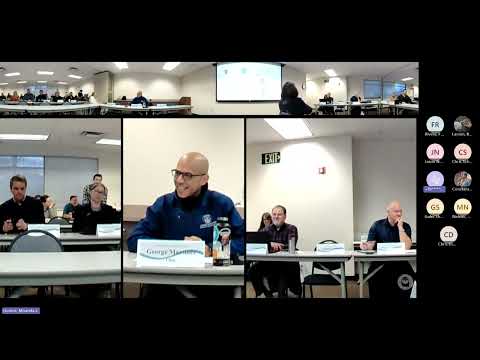
Jamie Kenworthy, manager of the 49th Fund and a partner in the Sixth Avenue Center project, told the Community and Economic Development Committee on Feb. 6 that a proposed 242-room higher-end hotel failed after years of work and rising costs.
Kenworthy said the project received initial approvals but later stalled because the Anchorage Community Development Authority (ACDA) and municipal lawyers added protracted conditions and contract terms that drove legal fees up and spooked investors. "The first lesson is you may approve a project, but the lawyers can screw it up," Kenworthy said.
Why it matters: Kenworthy and his partners reported roughly seven years of development work and a multi‑million-dollar local investment that they say was lost when legal and procedural delays coincided with sharply higher construction costs and tightened lending terms.
Kenworthy described repeated cycles of negotiation in which ACDA imposed conditions (including a requested third‑party release) that private attorneys called unusual. He said ACDA initially insisted on a 60‑day approval window to select a hotel operator, later reduced to 30 days, and that ACDA required continued high monthly payments for lease or site control even as lenders and equity investors grew more cautious.
Kenworthy also said investor economics were difficult to reconcile with ACDA demands. He described equity commitments he and partners had assembled and said construction estimates rose from about $58 million to more than $100 million as costs climbed. He told the committee ACDA rejected some commercially viable options that might have preserved the project, including extended‑stay uses in lieu of on‑site condos or apartments.
Kenworthy urged ACDA and the municipality to simplify the public‑private interface for projects that rely on private capital: "ACDA should change its attitude, stay in its lane, and execute its role in that lane," he said, recommending simpler, commercially reasonable deal terms and, as one option, sale of the adjacent parking garage to reduce deal complexity for investors.
Committee members thanked Kenworthy and asked him to submit his full remarks for the record. No committee action or vote was taken; members said they will review the lesson points as background for future discussions about public‑private development and downtown revitalization.
Ending: Kenworthy’s testimony will be entered for the record and committee members said they will consider the procedural lessons as the municipality continues downtown redevelopment work.