Get Full Government Meeting Transcripts, Videos, & Alerts Forever!
Get email alerts on the Housing topic
No spam. Unsubscribe anytime.
Assembly members preview three-year pause on multifamily design standards to study housing impacts
Summary
Sponsors of AO 2024-104S told the Community and Economic Development Committee they seek a temporary pause on selected Title 21 residential design standards for multifamily and townhouse projects, with annual reporting and a workgroup to study effects on housing production.
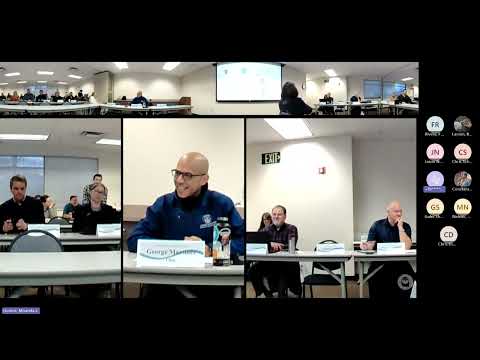
Assemblymember Bridal, sponsor of AO 2024-104S, told the Community and Economic Development Committee on Feb. 6 that the ordinance would pause selected multifamily and townhouse design standards in Title 21 for three years while staff and stakeholders study whether the rules impede housing construction.
The pause, Bridal said, would apply only to specific sections of the zoning code — including building spacing, façade articulation, certain landscaping and site-access (pedestrian frontage) rules — and would not change zoning districts, use tables, subdivision rules or building code requirements. "We obviously need to take many steps to address our housing issues, especially recognizing the very high cost and other barriers for construction," Bridal said during a slide presentation.
Why it matters: Planning staff and sponsors said they want to test whether relaxing specific design requirements on infill and mid-rise projects results in more economically feasible multifamily development. Planning staff will report annually to the assembly on outcomes and the sponsors proposed a working group to craft follow-up code changes if the pause identifies concrete barriers.
Glenn, a long-range planning staffer who summarized a December memo, told members the planning division has documented industry concerns dating back to earlier versions of the comprehensive plan and zoning updates. He said design standards have been cited in multiple reports, including housing studies and recent consultant work, as a factor that can reduce unit yield on constrained sites. "Some developers have said standards contributed to a reduction in proposed unit counts for particular projects," Glenn said.
Planning staff recommended three complementary steps in their memo: (1) extend the pause if the assembly chooses that path to give projects time to take advantage; (2) form a working group to evaluate and redesign standards where warranted; and (3) update plan guidance to better align goals and measurable outcomes.
Committee members asked for examples and outcomes; staff cited a developer case where preliminary proposals of 71 units likely would yield fewer units after code-driven adjustments. Planning staff emphasized that design standards are difficult to measure and that monitoring data are necessary to determine whether the standards are meeting the comprehensive plan’s goals.
No formal vote or amendment was recorded in the committee meeting. Sponsors said more substantive discussion will occur at a scheduled work session the following day and at upcoming assembly hearings.
The sponsors also noted an FAQ and legal memo have been added to the assembly packet; one community council offered an alternative to allow a small number of projects in transit corridors, but the ordinance sponsors said they did not intend to pursue that alternative based on staff guidance.
Ending: The ordinance will be on the assembly agenda for further consideration; planning staff will provide the December memo, annual reporting requirements, and the FAQ as part of the legislative record.