Get Full Government Meeting Transcripts, Videos, & Alerts Forever!
Get email alerts on the Open Meetings And Quasi Judicial Training topic
No spam. Unsubscribe anytime.
Wasilla planning commissioners receive refresher on Open Meetings Act, quasi‑judicial duties and upcoming Title 16 changes
Summary
City attorney and city clerk led a Committee of the Whole training on the Open Meetings Act, ex parte communications, the commission's legislative vs. quasi‑judicial roles, the city's comp plan process and impending Title 16 code updates; commissioners discussed agenda authority, notice rules and options for site visits and executive session.
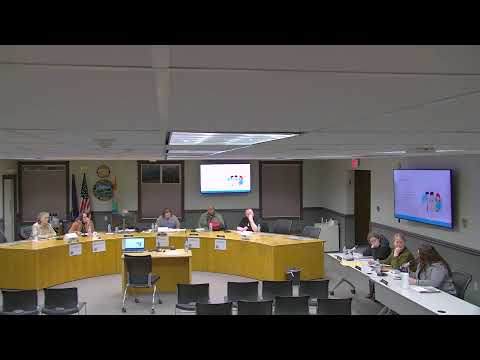
City Attorney Jamie Wells and City Clerk Jennifer Newman led a Committee of the Whole training for the Wasilla Planning Commission on Jan. 29, 2025, that reviewed the Open Meetings Act, the difference between the commission's quasi‑judicial and legislative roles, rules on ex parte communications and how pending changes to Title 16 could alter notice and hearing procedures.
Wells told commissioners, "Public servants have not been given the right to decide what is good or not good for the people to know," and repeatedly urged developing an Open Meetings Act (OMA) "spidey sense" for when a discussion could become an unlawful meeting. On handling inadvertent off‑record contacts, Wells emphasized: "Cure, cure, cure," instructing commissioners that the statute provides steps to disclose and remedy disallowed contacts.
The training covered routine duties in the commission's code (reviewing the comprehensive plan, recommending rezones and deciding permit applications such as variances and conditional‑use permits) and stressed the difference between legislative matters (amending Title 16, the comp plan) and quasi‑judicial proceedings (individual permit decisions that may affect property rights and trigger due‑process protections). Wells and City Planner Cindy Wellman also noted that the city is close to enacting major Title 16 updates that will change notice, interested‑party definitions and hearing procedures; the presenters said training will be repeated after those changes are codified.
Commissioners discussed how items reach the planning commission agenda. Planner Cindy Wellman confirmed the planner prepares the agenda and coordinates notice; commissioners were told they may request items through the planner or raise concerns during the commission's comment period, but individual commissioners do not have unilateral authority to place items on a noticed agenda. Several members said they want a clearer, scheduled calendar for recurring items such as comp‑plan review so that commissioners and the public can plan ahead.
Wells and Newman walked through common pitfalls under the OMA for a small five‑member commission, including "serial" communications (passing messages through a third party) and social‑media interactions that may function like a virtual meeting. They noted that a majority of the commission (three members) in informal contact about city business can trigger OMA requirements and urged commissioners to avoid substantive off‑record conversations with applicants or other commissioners. Commissioners were advised to disclose any off‑record contacts at the next hearing; Wells said such disclosure is the usual "cure" mechanism the statute contemplates.
On quasi‑judicial hearings, Wells explained that evidence admitted to the record must be available to all parties and that the applicant bears the burden of proof to show criteria are met. The training reviewed practical tools: postponing hearings to obtain additional evidence, conducting properly noticed site visits for the whole commission, and using executive session carefully (with legal signoff) for deliberations when permitted. Wells said well‑drafted written findings are essential and announced a follow‑up training focused on drafting findings.
The training also reviewed a handful of specific code and process items: a notice radius used for certain land‑use hearings (discussed in the session as 1,200 feet for some notice mailings), the city's neighborhood‑plan provisions (neighborhood plans may be adopted as comp‑plan amendments and given deference), and the commission's unusual role in reviewing state construction projects under AS 35.30.010. Planner Wellman noted the council agenda item AM 2455 (the contract with the comp‑plan consultant Dowell) and said staff will work to ensure the planning commission is integrated into the consultant's public‑engagement schedule.
Councilmember Cathy Cottle attended and encouraged recurring training: "No knowledge is wasted," she said, praising commissioners and staff for the discussion and urging more cross‑board engagement.
The training closed with agreement to schedule the follow‑up session on drafting findings and parliamentary procedure; Wells said the attorney's office will provide a worksheet to help commissioners prepare written decisions going forward.
Votes at a glance: The body voted unanimously on procedural motions during the meeting. Two unanimous procedural motions passed: to enter the Committee of the Whole for the training, and to exit the Committee of the Whole at the session's close.