Get Full Government Meeting Transcripts, Videos, & Alerts Forever!
Get email alerts on the Water Utilities topic
No spam. Unsubscribe anytime.
Wasilla council discusses reimbursing backflow-preventer testing as city moves to enforce cross-connection rule
Summary
City staff reported progress on a cross-connection/backflow reporting effort and councilmembers signaled support for a limited reimbursement program and vendor RFP to help owners meet testing requirements; staff will return with draft ordinance, resolution and procurement plan.
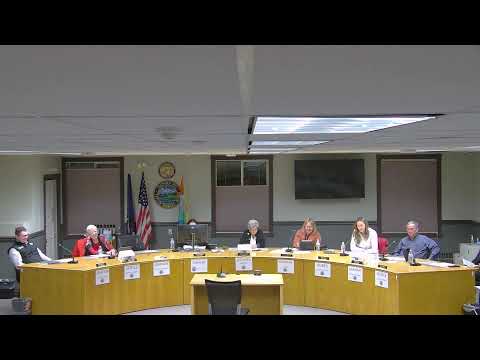
Public Works staff told the Wasilla City Council they have reached out to utility customers about a city requirement for backflow-prevention device testing and are prepared to seek council direction on a short-term reimbursement or vendor contract to reduce the cost barrier for small businesses and other affected users.
Public Works Director Eric Shaw said staff sent 279 initial notices to water customers the city identified as needing a backflow device evaluation; after inspections and follow-up the list is now 223 customers. “Of those 279 letters that we sent out, we've been able to reduce the required number down to 223 at this time,” Shaw said. He said 31 customers have submitted passing tests and five tests were submitted that did not pass and require repairs.
Shaw told the council his staff has initiated or completed 38 on-site evaluations and has worked with local testing firms to educate customers about the devices and public-health rationale. He said average test cost reported by local contractors is about $300.
Council discussion centered on whether the city should absorb testing fees as a one-time assistance and how to structure that help. One council member calculated that covering tests for the remaining customers would cost roughly $56,100 (based on 187 remaining customers) or about $66,900 using an earlier 02/23 count; those figures reflect average per-test fees cited by vendors.
Councilmembers and staff raised procurement and administrative questions. Finance Director Cassie Lund said a vendor procurement and contract would take time and would likely push any contract award into April or May: “It may not come back to you until April at the very earliest just because RFP process does take a a little bit of time… it will probably be about May before it is effective and we begin,” Lund said. Shaw and the clerk’s office discussed options for paying invoices directly from the water enterprise fund rather than providing utility bill credits.
Council members generally supported sending the idea forward for formal consideration. The clerk and administration said they would prepare an appropriation ordinance and a companion resolution that would authorize payment of invoices and outline program parameters; staff said they would return with a proposed procurement approach (RFP) for testing vendors and recommended that the council consider extending the compliance timeline while the program and vendor contract are procured.
No appropriation or contract was approved at the meeting. Staff said they would draft the ordinance and procurement plan and return to the council with details on scope, timeline and the option to include prior tests within a defined program window.