Get Full Government Meeting Transcripts, Videos, & Alerts Forever!
Get email alerts on the Land Development Code topic
No spam. Unsubscribe anytime.
Wasilla commission begins detailed review of draft Title 16 land-development code rewrite
Summary
City staff and the planning commission discussed a broad rewrite of Wasilla Municipal Code Title 16, addressing nonconforming uses, permitting, appeals and enforcement; commissioners debated notification radius, permit deadlines and borough coordination and voted to enter Committee of the Whole for extended discussion.
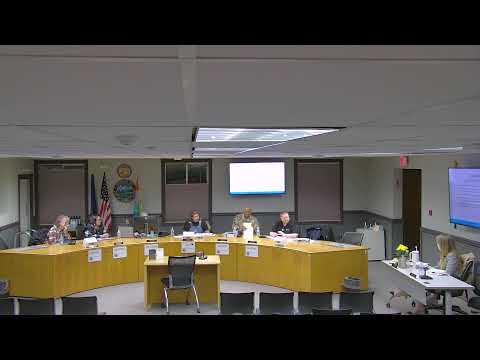
The Wasilla Planning Commission on Jan. 28 began an extended review of a draft rewrite of Wasilla Municipal Code Title 16, a rewrite that would reorganize the city’s land-development rules and change permitting, variance, subdivision and enforcement procedures.
City Attorney Zoe Isberg, leading the presentation in Committee of the Whole, told commissioners the rewrite is being done in phases so policy-level changes that depend on the upcoming comprehensive plan can be addressed later in Phase 2. “Division 4 is our most substantive division,” Isberg said, describing how the draft clarifies nonconforming-lot and variance provisions and removes most bond requirements except for public-utility guarantees.
Why it matters: The rewrite moves many procedural details—permits, conditional uses, variances, subdivision rules and enforcement—into clearer, centralized chapters intended to reduce confusion for applicants and staff. The Commission debated how those changes would affect builders, neighbors and the city’s workload and directed staff to continue the line-by-line review in future meetings.
Key changes presented
- Nonconforming uses: The draft separates variance procedures from nonconforming-use provisions and defers major policy changes that depend on the comprehensive plan to Phase 2.
- Permits and reviews: The three-tiered permitting system would be simplified to two tiers—administrative permits and conditional-use permits—and clarify a set of actions that do not require a permit (for example, certain repairs or fences, small non‑expanding alterations and amateur radio towers under 35 feet).
- Timing: An administrative permit decision deadline for planners would be 30 business days after receipt of a complete application; the planning commission would be required to act on a complete conditional-use application within 60 days, after which inaction would be treated as an approval.
- Variances and conditional uses: Criteria were broadened so the commission can consider a wider range of impacts and adopt conditions intended to protect adjoining properties, infrastructure and public health and safety.
- Enforcement and remedies: The draft consolidates enforcement procedures, defines “violations” and “violators,” restates remedies available to the city (injunction, abatement, stop-work orders, restoration, civil penalties up to $1,000 per violation) and clarifies that abatement costs may become liens on the property if unpaid.
Discussion highlights and concerns
Commissioners pressed staff about practical effects and implementation. Commissioner Brown said the 30‑day planner timeline feels long to some builders but staff noted the deadline applies only on complete applications and that the department’s pre-application process aims to reduce incomplete submittals. Isberg noted applicants may seek court remedies when deadlines are missed but said the city prefers to work with permit applicants to meet timelines.
Commissioners also debated public-notice distance for land-use actions. Staff proposed reducing a very large existing radius used by the city; several commissioners argued for retaining a 1,200‑foot notice radius because Wasilla’s lot sizes are often larger than denser municipalities. “I would hate to cut that back a whole lot from 1,200,” Commissioner Brown said.
On subdivisions, staff reported ongoing coordination with the Matanuska-Susitna Borough to eliminate redundant review steps; borough code currently does not require developers to obtain city preapproval before filing a subdivision application with the borough, and staff said clarifying the city’s role remains a work in progress.
Appeals and hearings
The draft distinguishes appeals to the planning commission (shorter hearings, strict notice requirements, five minutes for presentations) from appeals to an administrative hearing officer (longer, trial-like procedure with written decisions posted online and a further right to appeal to court). The draft also permits decision-makers to stay a permit during an appeal or to vacate a stay to avoid an immediate public-health or safety danger.
Formal actions taken
- The commission approved the consent agenda (minutes of the Jan.14 regular meeting). Motion to approve consent agenda: Commissioner Stafford; second: Commissioner Landshill; outcome: approved (no roll-call details).
- The commission moved into Committee of the Whole to discuss the Title 16 draft. Motion: Commissioner Stafford; second: Commissioner Brown; outcome: passed unanimously; time noted as 6:30 p.m.
- The commission later moved to exit Committee of the Whole. Motion: Commissioner Stafford; second: Commissioner Brown; outcome: passed unanimously; time noted as 7:58 p.m.
What’s next
City staff and the commission will continue line-by-line review of the draft Title 16 at upcoming Planning Commission meetings. Isberg and staff emphasized that many of the more policy‑sensitive changes will be finalized after the comprehensive plan update provides guidance on long‑range goals.
Ending
Commissioners agreed the rewrite aims to make code more predictable and easier for developers and residents to use, while preserving flexibility for future administrations and the forthcoming comprehensive plan.