Get Full Government Meeting Transcripts, Videos, & Alerts Forever!
Get email alerts on the Disaster Recovery topic
No spam. Unsubscribe anytime.
Erwin organizers establish Long-Term Recovery Group to coordinate post-flood aid
Summary
Community leaders, churches and nonprofit partners in Erwin reported forming a Long-Term Recovery Group, approving bylaws and naming First Tennessee Development District as fiscal sponsor to coordinate case management, vet resources and reduce duplicated recovery efforts following recent flooding.
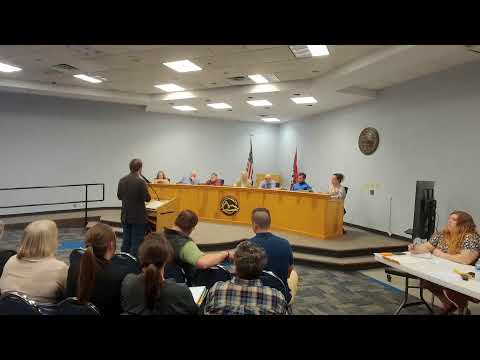
Organizers, churches and nonprofit partners in Erwin said they have formed a Long-Term Recovery Group to coordinate long-term recovery after recent flooding and to centralize communication and case management for survivors.
The group’s steering committee voted to approve bylaws about two and a half weeks before the meeting, organizers said, and identified First Tennessee Development District as the fiscal sponsor to receive and manage external funding. The steering committee will sit at up to 12 members drawn from faith-based organizations, nonprofits, businesses and community volunteers.
The Long-Term Recovery Group is intended to connect existing local resources — churches, nonprofits and volunteer teams — so residents can find trusted assistance without facing duplicative or conflicting offers. An executive director participating in the meeting described the structure as essential for local nonprofit coordination: “This is a necessary thing for us to effectively respond to recovery,” the executive director said. The group will focus on resource visibility, vetting outside offers and directing case management for residents with unmet needs.
“Churches of this county have been and continue to be the primary source of help for so many different people,” said Pastor Lance Hamby, who identified himself as pastor at Christian Church and a member of the county ministerial association. Hamby described churches’ role in immediate shelter, distribution and longer-term rebuilding work and urged continued cooperation across denominations.
Organizers said the Long-Term Recovery Group will not replace partner organizations’ authority over their own funds or processes. “The long term recovery is not a measure of partner control,” an organizer said; instead, the group will provide an infrastructure to share information, reduce duplicated efforts and present a consolidated point of contact for potential external funders.
Participants said the steering committee will build a roster of partner organizations and a community-facing resource list, maintain quarterly meetings, and invite further volunteers to sign up for specific roles (case management, volunteer coordination, fundraising and resource vetting). Organizers emphasized the importance of a transparent, vetted list of resources after participants reported instances of fraud and unvetted offerors in the immediate aftermath of the flood.
Not all attendees were convinced. A resident identified as Robert said he supports the idea but raised transparency concerns: “Until there’s transparency, I don’t know that you’re gonna get that,” he said, calling for broader representation on leadership and for publicly accessible records of decisions and funding distributions.
Next steps listed by organizers include finalizing the steering committee roster, publishing bylaws and the community resource list, and developing a case-management approach aligned with national long-term recovery standards. Organizers also requested informal feedback from elected officials while noting that government officials will not serve in leadership roles on the committee to preserve the group’s independent partnership model.
The meeting included multiple volunteer and faith-based leaders offering to serve on committees and a request that community members direct case referrals to the recovery group so volunteers and funders can be matched more efficiently.