Get Full Government Meeting Transcripts, Videos, & Alerts Forever!
Get email alerts on the Infrastructure Inspections topic
No spam. Unsubscribe anytime.
County engineering manager seeks authorization to solicit bids for 2025–26 bridge inspections; offers culvert‑inventory alternate
Summary
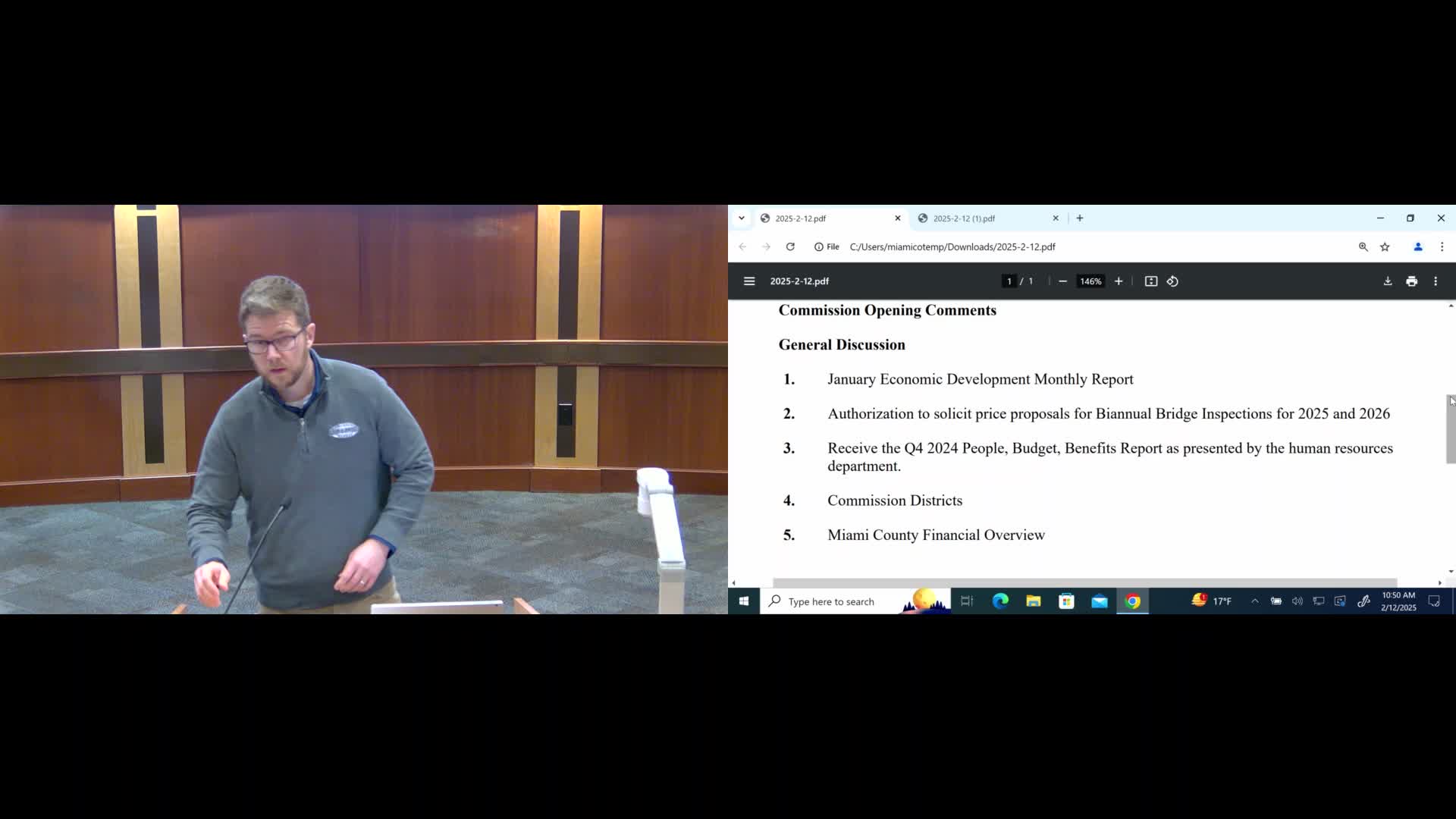
Matthew Oler, Miami County engineering project manager, asked the commission to authorize solicitation of price proposals for 2025–26 biannual bridge inspections and proposed a culvert‑inventory alternate for openings 5–20 feet.
Matthew Oler, Miami County engineering project manager, told commissioners the Federal Highway Administration and Kansas Department of Transportation require the county to perform routine bridge inspections. He said that the county’s inventory includes 237 bridges (defined as openings 20 feet or larger) and nine structures that require annual inspections.
Oler urged the commission to authorize solicitation of price proposals for the 2025–26 biannual bridge inspections and to include a culvert inventory (openings between 5 feet and 20 feet) as an alternate bid item. He explained the county previously undertook a five‑year culvert inventory that identified 28 short‑span structures needing rehabilitation or replacement; crews and contractors completed that work last year.
Cost history and estimates provided by Oler: the prior full culvert cataloguing cost about $130,000; Oler said typical bridge‑inspection solicitations for the county are in the mid‑tens of thousands and he expected the bridge inspection solicitation to return bids in the roughly "$45,000" range (transcript phrasing ambiguous). He said the culvert inventory alternate would likely add roughly $80,000 to the solicitation; the joint bid approach lets the commission split cost across fiscal years and capture maintenance recommendations that could prevent later, costlier replacements.
Oler highlighted the trade‑offs: a periodic culvert re‑inventory helps identify scour and other issues before they become critical, while deferring inspections could expose the county to higher replacement costs, emergency closures and liability if known deficiencies later cause failures. He also described material life spans: modern cast‑in‑place or precast concrete structures are expected to last 70+ years, while metal pipe options typically have materially shorter service lives.
No formal authorization vote is recorded in the transcript; Oler told commissioners the solicitation request would appear on the afternoon agenda for formal consideration later the same day.
Ending: Commissioners asked about prioritizing culverts by risk and the feasibility of splitting costs across two fiscal years; Oler said he would structure the solicitation so the commission could accept the base bridge inspection alone or include the culvert inventory alternate and stagger work across 2025–26 if desired.