Get Full Government Meeting Transcripts, Videos, & Alerts Forever!
Get email alerts on the Assessment Capable Learners topic
No spam. Unsubscribe anytime.
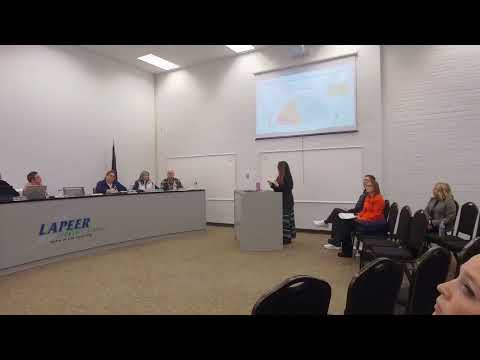
Long building staff describe program to make students "assessment‑capable learners" and show early classroom results
Summary
School leaders at Lapeer Community Schools described a push to teach students to self‑assess, align learning activities to clear success criteria and use peer feedback. Presenters cited research (John Hattie) and classroom examples, and presented early internal results including an example class that reached 87% proficiency on a final exam.
Long building staff on the Lapeer Community Schools campus told the school board that their goal is to make students "assessment‑capable learners" — students who can identify where they are in relation to a standard, set short‑term goals and take concrete steps to close the gap.
The presenters said the approach focuses on teaching students to use success criteria, rubrics, mentor texts and peer feedback so they can answer, "Here's where I am, but over here is where I need to be." That phrasing was presented as the central diagnostic question students will use to plan study and revision.
The presentation cited educational researcher John Hattie and a reported effect size for assessment‑capable learners of 1.44; presenters described that as substantially above the 0.4 “hinge point” Hattie identifies for practices that produce a year’s worth of learning. Presenters said they expect the practices to build student confidence, motivation and achievement. The presentation included classroom examples in ELA, social studies, coding and math and described classroom structures for self‑assessment, peer feedback and targeted practice.
Presenters offered early, internal examples rather than district‑wide standardized results: a teacher’s class that used study plans and flashcards was reported to reach an 87% proficiency rate on a final exam, and other classrooms reported gains on interim measures such as NWEA. Presenters said the work is aligned to district goals and depends on collaborative professional learning (professional learning communities, curriculum unpacking, data days) and coaching support.
"Assessment‑capable learners actually has this effect size of 1.44," one learning coach told the board, and added that the strategy gives students a clear sequence: identify where I am, identify where I need to be, then plan how to get there. The presenters also described a math pilot that used graphic learning targets, short diagnostic checks at the start of units and linked practice resources so students could practice prerequisite skills immediately.
Board members thanked the presenters and praised the classroom examples; board discussion that night did not include formal policy changes or votes tied to the presentation. Presenters said the initiative is ongoing and that school leaders will continue to track data and refine implementation.
The presentation was delivered during the school‑building report portion of the meeting and was followed later in the agenda by public comments and budget reports.