Get Full Government Meeting Transcripts, Videos, & Alerts Forever!
Get email alerts on the Municipal Budget Hearing topic
No spam. Unsubscribe anytime.
Council questions subsidies, grants and staffing during multi‑topic budget hearing
Summary
Cleveland City Council’s Finance Committee spent a Feb. 12 budget hearing pressing city staff for more detail on subsidies, contract payments and staffing tied to Highland Park Golf Course’s nonprofit operator, the $1.125 million annual transfer to Cleveland schools that members say stems from a stadium‑era commitment, the West Side Market management contract, Huntington Bank Stadium expenses and other budgeted items.
Cleveland City Council’s Finance Committee spent much of its Feb. 12 budget hearing pressing city departments for more detail on subsidies, contract payments and staffing as the administration advances the 2025 proposed budget.
Council members focused first on the city’s subsidies for municipally owned assets managed by outside operators: Highland Park Golf Course, which the city turned over to a nonprofit operator two years ago; the West Side Market, operated under a management contract; and Huntington Bank Stadium (the Browns stadium), whose annual city costs include debt service and transfers from the general fund.
Council members repeatedly asked for concrete financial reports and timetables. On Highland, members asked when the city would stop subsidizing operations after management moved to an operator (identified in the hearing as Troon / Trune). City staff said the original business plan expected subsidies to end within five years of the operator taking over (the city is two years into that schedule) and promised to provide updated profit‑and‑loss statements, the operator’s capital contributions and a recalibrated forecast. Multiple council members said they want ongoing, annual or quarterly financial reporting from nonprofit operators when the city owns the asset.
Council members also pressed staff about a longstanding $1,125,000 annual transfer labeled “Schools, Recreation and Cultural,” which several council members tied to a stadium‑era commitment and asked the administration and the Cleveland Municipal School District for documentation of the original source and current use. Several members called for a five‑year audit of how Cleveland Municipal School District (CMSD) spent the funds, and for a report on what the district contributes toward the programs the city supports.
On the West Side Market, council members and staff described a one‑year-old operating arrangement under which the nonprofit market operator receives a quarterly payment from the city for reimbursable operating expenses, while vendor rents are still collected into the market fund. City staff said some subsidies remain while the operator scales up and that the budgeted 2025 “transfers in” reflect a general‑fund subsidy to cover shortfalls; council members asked for the operator’s 2024 accounting and warned the council will track year‑to‑year increases in transfers.
Huntington Bank Stadium remained a central question. City finance staff explained the stadium fund’s 2025 budget includes about $16.2 million in expenditures (including debt service and capital repairs) and an additional recurring $2.0 million transfer out of the general fund that funds a 15‑year payment schedule tied to earlier stadium upgrades. Staff said the stadium’s debt service payments continue through 2028 and that once the debt is retired, annual city costs tied to debt service will decline substantially. Council members asked for documentation of recent property tax increases and confirmation of which costs the Browns cover and which the city retains; staff pledged to supply the written quotes for insurance, the property tax appeal status and line‑by‑line back‑up for projected capital repairs.
Park maintenance and related reorganizations drew sustained scrutiny. Finance staff walked the committee through line‑by‑line moves after the administration split park maintenance into separate units (park maintenance, urban forestry and vacant lots), and explained seasonal staffing and contractual service moves accounting for large shifts in those line items. Council members pressed whether the seasonal workforce and other contractual dollars were sufficient for spring and summer operations and asked for a roster of parks and the locations the department maintains; staff said they would provide a full list of the city’s 161 parks.
Cemetery funding and maintenance showed smaller but focused debate: the department is budgeted for added seasonal workers and a few full‑time positions to handle grounds work. Council members asked how the budget covers heavy‑equipment work such as resetting long‑settled headstones and whether that would be handled under other contractual services.
Public Auditorium budgeting prompted questions about revenue, added full‑time positions (ten new full‑time roles moved into the auditorium’s budget this year) and a projected decline in “charges for services” despite higher use. Staff said the auditorium now hosts more events, that some costs are chargebacks from other city divisions, and that the administration will re‑examine revenue estimates and supply schedules and concession terms (including whether the city receives concession commissions).
Technology and customer service were also on the agenda. The Department of Innovation and Technology presented a budget request that adds roughly 18 permanent positions (project staff, application and operations technicians, and administrative roles) to support large enterprise projects (including Workday, Motorola Premier 1 for public safety and other key systems) and to strengthen cybersecurity. IT staff said the department is consolidating several previously separate help desks, continues to expand 3‑1‑1 and has a contractual arrangement with United Way 2‑1‑1 to answer nights/weekend calls; 2‑1‑1 staff log directly into the city’s 3‑1‑1 software to create seamless service. Council members requested more 3‑1‑1 output metrics (growth of user accounts, number of requests answered by phone vs. web, language access performance) and asked the administration to confirm language‑access options and to add an explicit Spanish prompt to recorded messages.
On cyber security, the IT chief said the city did not pay ransom in a recent incident, replaced about 15 compromised computers, has expanded monitoring and detection contracts, and is hiring additional security staff. Staff noted municipal court runs a separate IT environment but that the city is providing supportive technical assistance.
Community Relations Board (CRB), prevention and intervention work also received detailed attention. CRB staff and the Office of Prevention, Intervention and Opportunity described grants and partnerships that fund violence interrupter programs, youth diversion, and safe‑streets/schools initiatives. Council members asked for a list of grant funds, program deliverables, and details on which organizations are funded and how the administration monitors performance (daily reporting forms, placement metrics and a new data analyst position were described). Several council members asked for quick delivery of financial reports from partners (including West Side Market and the nonprofit operating Highland) and for copies of grants and contracts so the council can assess deliverables and compliance.
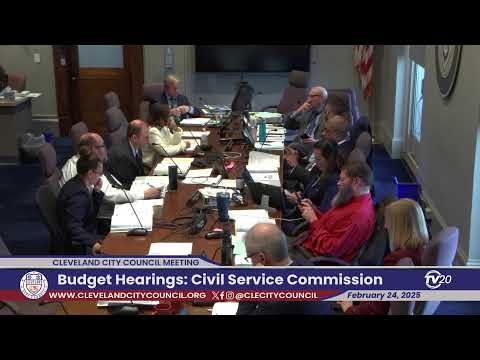
Finally, Human Resources and Civil Service presented recruiting and staffing numbers. HR said time‑to‑hire has been reduced substantially (the department reported an average around 80 days and is working to lower it further), the administration has issued “total rewards” material to market city benefits, and that HR moved to centralize ADA accommodation spending so requests for devices or accommodations are logged and tracked centrally. Civil Service described steps to shorten requisition and testing timelines, run more frequent classification tests and improve candidate flow for high‑volume titles. Finance and HR confirmed 2025 proposed increases in the health self‑insurance and prescription self‑insurance budgets reflect negotiated provider rates and the administration’s claim‑experience projections; staff said projected increases for the health fund are driven by a negotiated overall rate increase in the mid‑single digits and the city will provide actuarial back‑up on request.
Where council members demanded follow‑up, staff promised to deliver by written memo or green sheet: (1) Highland operator (Troon/Trune) P&Ls, capital contributions and updated subsidy forecast; (2) West Side Market 2024 financials and the management corporation’s accounting; (3) documentation tying the $1,125,000 annual transfer to its original stadium/gateway authority and a five‑year expenditure audit of CMSD uses of those funds; (4) stadium insurance quotes, property tax appeal status, capital assessment details and line‑by‑line showings of transfers supporting the stadium (including the $2 million general‑fund transfer for the major upgrade program); (5) Public Auditorium revenue back‑up and schedule of charge events; (6) a department‑by‑department list of active federal/state grants and their fund numbers; (7) an itemization of professional/contractual dollars in Park Maintenance and Recreation expanded‑programs (which partner runs which programs and which tasks have been contracted); and (8) 3‑1‑1 operational metrics and 2‑1‑1 contract deliverables and reporting expectations.
Council and administration agreed to reconvene for a second day of hearings; the committee scheduled follow‑up memos and green sheets so members have the documentation they requested before finalizing budget amendments.
Ending
The hearing made clear several cross‑cutting themes for the committee: the council wants clearer, recurring financial reporting whenever the city’s assets are managed by nonprofit or private operators; the council requested audits or multi‑year back checks where money traces to multi‑decade development deals; and members want to ensure that budgeted increases for staffing and contracts are accompanied by concrete performance metrics and written back‑up. Staff promised a range of follow‑up documents and said they will return with more detail in the next session.