Get Full Government Meeting Transcripts, Videos, & Alerts Forever!
Senate hearing spotlights New York maternal mortality; health officials cite preventable deaths, workforce gaps
Summary
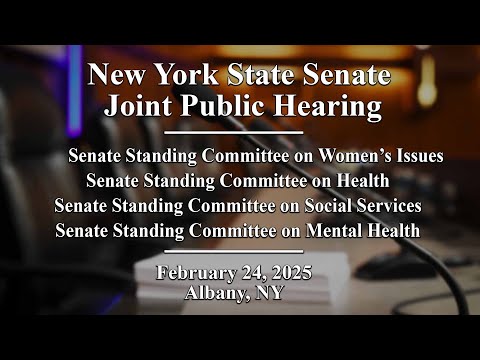
New York State senators convened a joint hearing on maternal mortality and morbidity in a session dominated by Department of Health officials, clinicians and community advocates who said most pregnancy‑related deaths in the state are preventable and urged faster implementation of programs and investments to close racial and geographic gaps.
New York State senators convened a joint hearing on maternal mortality and morbidity in a session dominated by state Department of Health officials, clinicians and community advocates who said most pregnancy‑related deaths in the state are preventable and urged faster implementation of programs and investments to close racial and geographic gaps.
The hearing opened with New York State Senator Leah Webb, chair of the Senate Committee on Women's Issues, who framed the session around recent state data and the heavy toll borne by Black birthing people. Joanne Morne, Executive Deputy Commissioner of the New York State Department of Health, and Dr. Kirsten Siegenthaler, director of the Division of Family Health, presented the department's overview of programs already in place and the limits those programs face.
The numbers cited at the hearing underscored the officials' urgency. Department staff said a CDC‑supported review of 2018–2020 data identified 386 pregnancy‑associated deaths in New York; of those, 121 were classified as pregnancy‑related. Department figures presented at the hearing showed Black people accounted for roughly 14.3 percent of live births but about 42.1 percent of pregnancy‑related deaths in that period. The department and legislators repeatedly described roughly three‑quarters of pregnancy‑related deaths as having some or good likelihood of being preventable.
Why it matters: senators and witnesses said prevention requires both clinical quality improvement and broader social‑services investments. “There is a critical influence of economic, societal, and environmental factors on maternal health,” Morne told the committee, listing workforce…
Already have an account? Log in
Subscribe to keep reading
Unlock the rest of this article — and every article on Citizen Portal.
- Unlimited articles
- AI-powered breakdowns of topics, speakers, decisions, and budgets
- Instant alerts when your location has a new meeting
- Follow topics and more locations
- 1,000 AI Insights / month, plus AI Chat