Get Full Government Meeting Transcripts, Videos, & Alerts Forever!
Get email alerts on the Delaware Energy Actions topic
No spam. Unsubscribe anytime.
Delaware officials point to solar, storage and interconnection reforms as tools to bolster reliability
Summary
State energy officials said Delaware will pursue distributed solar, community solar expansion, energy storage and grid modernization while coordinating with PJM to reduce interconnection and permitting delays; lawmakers pressed on costs and the role of Indian River RMR charges.
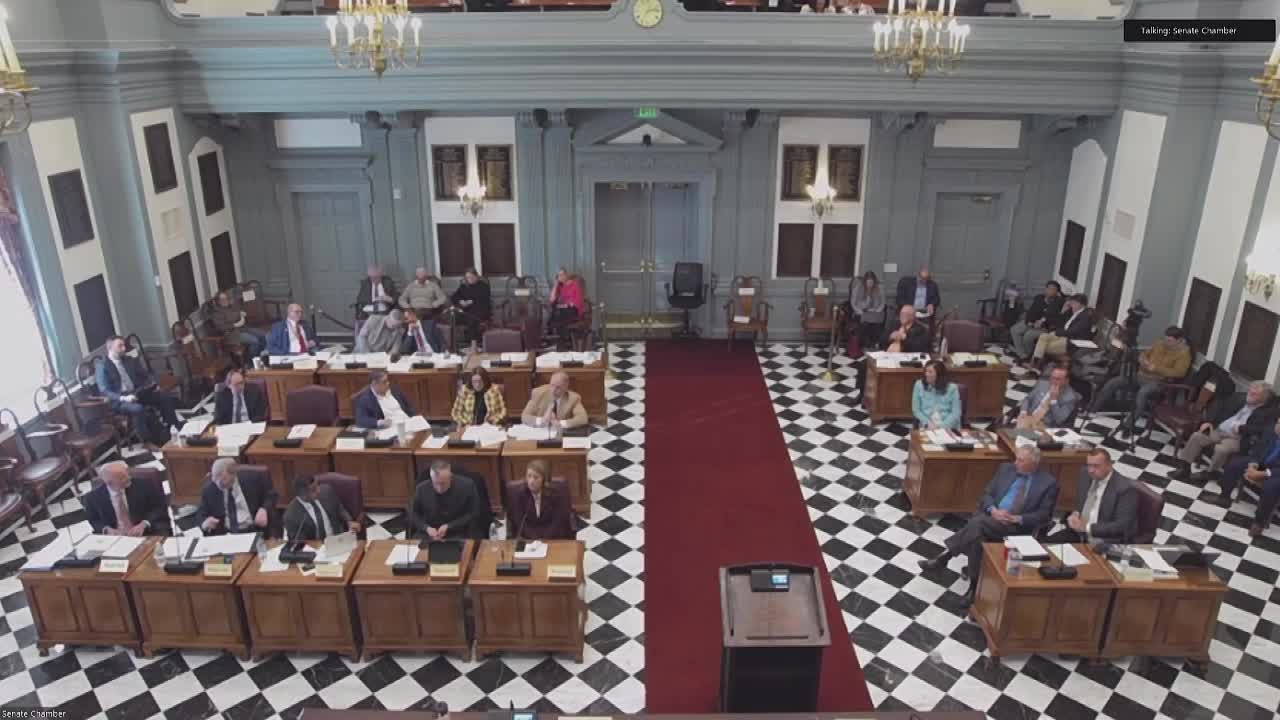
Delaware state energy officials and the Sustainable Energy Utility told a joint legislative hearing that the state’s response to regional resource adequacy pressures will emphasize solar at multiple scales, energy storage, community solar and distribution‑level grid modernization — while coordinating with PJM on interconnection and permitting bottlenecks.
Tom Noyes, acting energy administrator at the Delaware Department of Natural Resources and Environmental Control (DNREC) State Energy Office, said the state’s 2024 Delaware State Energy Plan guides those efforts and listed five strategy areas: energy justice, renewable and clean technologies, energy efficiency and beneficial electrification, grid modernization, and workforce development. “Most of these strategies bear directly on the conversation we’re having here today,” Noyes said.
Noyes provided progress metrics: Delaware has roughly 241 megawatts of installed solar and about 10,000 installations statewide, and the Public Service Commission has issued 16 final community‑solar certifications totaling about 52 megawatts. He also said roughly 700 megawatts of proposed solar projects are working their way through local land‑use processes.
Drew (presenting for the Delaware Sustainable Energy Utility) told lawmakers that a major limiting factor is not a lack of queued projects but the pace of construction and interconnection: “There’s about 40 gigawatts of energy that’s already outside of the interconnection queue ready to be built,” he said, and added that permitting, siting flexibility and timeline certainty are essential if developers are to proceed.
Noyes and presenters said energy storage and time‑of‑use rate designs can increase distribution resilience and allow solar to contribute to peak evening demand. Noyes said the state will study grid modernization, encourage utility investment in smart systems, and pursue community solar expansion; Delmarva Power is working on interconnection processes that Noyes said are beginning to yield more community projects.
On local impacts and concerns: lawmakers asked whether state environmental policy choices were driving retirements. PJM’s Asim Haque told the committee that PJM’s Feb. 2023 analysis of retirements and replacements did not identify Delaware policy as a primary driver of retirements. Lawmakers also questioned the distribution of RMR costs tied to keeping Indian River online while transmission upgrades were completed; presenters said RMR arrangements are managed through PJM and can be reflected on utility bills during the contract period.
What comes next: State officials urged faster permitting and clearer interconnection processes to translate pipeline projects into built capacity. Noyes said the State Energy Office is coordinating with neighboring states, PJM and the Public Service Commission on transmission reform and on studies supported by federal infrastructure funding.
Ending: The hearing left lawmakers with concrete metrics and options to weigh — more distributed solar and storage, community solar expansion, regulatory and permitting changes — while they continue to press PJM and utilities for near‑term reliability assurance and clearer cost impacts on ratepayers.