Get Full Government Meeting Transcripts, Videos, & Alerts Forever!
Get email alerts on the Tobacco And Vaping Policy topic
No spam. Unsubscribe anytime.
Senate hearing on raising tobacco age to 21 and taxing vaping products draws public‑health support; committee sets bill aside
Summary
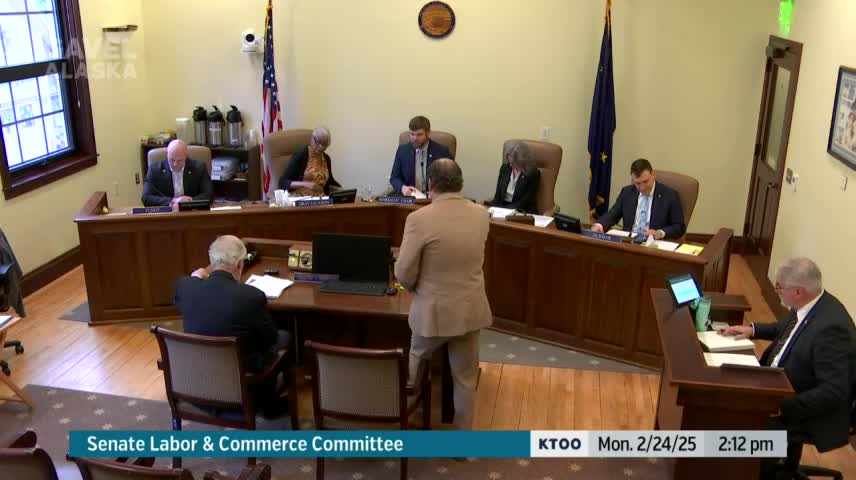
Senate Labor and Commerce Committee members heard a first presentation Monday on Senate Bill 24, which would raise the minimum age for tobacco and e‑cigarette sales and possession to 21 and impose a retail tax on vaping products.
Senators heard a first presentation on Senate Bill 24 on Monday, a measure that would raise the minimum age to buy, possess and use cigarettes, other tobacco products and e‑cigarette products from 19 to 21 and create a retail tax on e‑cigarette products and vaping liquids.
Senator Gary Stevens, sponsor (Senator, Sekodiak), told the Senate Labor and Commerce Committee the bill is intended to “protect our children from becoming addicted to nicotine” by raising the legal age and applying a tax to e‑cigarette products. Tim Lampkin, staff to Senator Stevens, provided a sectional summary that highlighted conforming changes across existing statutes, expanded definitions to capture synthetic nicotine, and online sales restrictions affecting other tobacco products beyond e‑cigarettes.
Public‑health witnesses urged the committee to act. Katie Stephens, deputy program manager for the state Tobacco Prevention and Control program, said tobacco remains a leading cause of preventable death in Alaska and noted that 17 percent of Alaska high‑school students reported current e‑cigarette use in recent surveys. Mike Bridges, speaking on behalf of the American Cancer Society, described vaping products’ flavors and marketing as “an insidious way to sell their new, addictive products” and said he supported the bill’s current language.
Staff highlighted several provisions: (1) the bill raises the legal age from 19 to 21 for sales, possession and distribution across multiple product categories; (2) it would lower the possession fine from $500 to $300 for certain violations but create an alternate bail‑schedule option that could avoid a court appearance for 18‑ to 20‑year‑olds; (3) it adds a definition to include synthetic nicotine to prevent manufacturers from using that ingredient to avoid taxation; (4) it would apply online‑sales restrictions to other tobacco products (chewing tobacco, nicotine gum, cigars, etc.), not only cigarettes and e‑cigarettes; and (5) it proposes a 25% retail tax on vaping products rather than a wholesale tax structure used for cigarettes in some statutes, with tax and licensing changes staged to take effect Jan. 1, 2027 and the age change Jan. 1, 2026, per staff presentation.
Senator Jon Dunbar (committee member) praised sponsor work on the employment carve‑out that protects 18‑to‑20‑year‑olds who work in retail settings that sell tobacco products. Several senators said they had heard from students and educators about pervasive vaping in schools.
No formal committee action was taken on SB 24 during the hearing. At the close of the meeting, Chair Bjorkman announced the committee would set SB 24 aside for further consideration at a future meeting.
Ending: The sponsor and health officials urged follow‑up work; staff and the sponsor said there are technical items they will continue to refine, and the bill will return for further hearings and potential amendment before any committee vote.