
OIR semiannual audit: 20 cases reviewed, 63 of 88 allegations sustained; department updates taser policy and supervisor training
Get AI-powered insights, summaries, and transcripts
Subscribe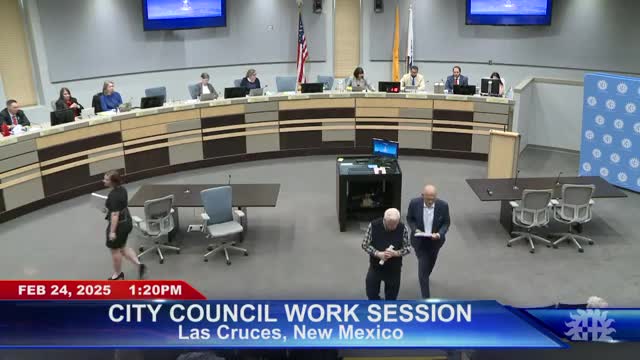
Summary
The OIR Group presented its seventh semiannual audit of the Las Cruces Police Department on Feb. 24, reporting that auditors reviewed 20 internal affairs cases in the July–Dec. 2024 window and that 63 of 88 framed allegations were sustained.
The OIR Group presented its seventh semiannual audit of the Las Cruces Police Department to the City Council work session on Monday, Feb. 24, reporting that auditors reviewed 20 internal affairs cases that were investigated and closed between July 1 and Dec. 30, 2024.
Theresa Magula of the OIR Group summarized the audit’s principal findings: the audit covered 20 cases that generated 88 total framed allegations and that “63 of the 88 were sustained,” meaning investigators found policy violations supported by the evidence. Magula said 17 of the 20 cases were internally generated by the department and three were external complaints from members of the public.
Steve Conley, also with OIR, said the cases covered a range of issues including multiple uses of a conducted-energy device (taser), a response to a mental-health crisis call, and integrity issues that included academic cheating at the department academy. Conley said the department had made “a concerted effort to complete cases in a more timely manner” after a backlog, and OIR found timeliness improving.
Magula and Conley detailed outcomes and follow-up actions. OIR said 33 named Las Cruces Police Department employees were involved across the cases reviewed; the report noted 20 were sworn officers (two incidents involved the same officer, who no longer works for LCPD). Where misconduct findings fell short of termination, OIR reported the department increasingly documents remedial measures such as training, counseling and supervisory debriefs and tracks those actions in internal‑affairs files.
A recurring subject in the audit was taser deployment. OIR said the department reviewed four incidents involving taser use and the department’s use‑of‑force review cadre concluded in those incidents that taser deployment was not reasonable given the threat level. The department revised its taser policy to define threat thresholds more explicitly, add steps for deployment and require a verbal warning before using the device in the circumstances described by OIR. Magula noted OIR reviewed drafts of the revised policy and provided language suggestions that were incorporated.
OIR also recommended strengthening supervisor development. Auditors pointed to two contrasting cases: one in which a supervisor proactively redirected an officer’s handling of a domestic‑violence investigation, and another where a supervisor’s involvement blurred supervisory and operational roles. OIR suggested expanded supervisory field training and mentorship to bridge a gap auditors see when officers are promoted to sergeant.
On civil claims and litigation, OIR said two closed civil claims in the audit period triggered internal investigations (one a mental‑health response that also featured a use‑of‑force review and another alleging workplace harassment) and that the city settled both claims. OIR emphasized that civil claims should trigger administrative investigations and reported the department is aligning those processes.
Auditors also reported a basic statistical review for disproportionality and said they did not find evidence of a disproportionate number of complaints from particular demographic groups based on available data; OIR cautioned that the absence of a statistical signal does not prove disparate treatment and encouraged community members to file complaints when appropriate so patterns can be detected.
Chief Story (chief of police) told council the department has improved its supervisor training program and that formal supervisor field training began about two years ago and has been recently refined. Story also praised Project Light, the city’s clinician‑led crisis response run by the fire department and partner social‑service teams, saying it has worked well for mental‑health crisis response. He said domestic‑violence responses remain complex and may require different approaches.
Members of the public raised questions about OIR’s contract scope and whether OIR reviews officer‑involved shootings. Magula said OIR has previously reviewed at least one officer‑involved shooting and that OIR will review shootings that are subject to completed administrative investigations; where litigation is pending, OIR reviews cases after they are closed. Magula said two officer‑involved shootings were expected to be part of the next audit cycle once administrative processes and litigation are resolved.
Public commenters also disagreed about the size and adequacy of a recent OIR community listening session; one commenter said the town hall was “well attended,” while another visitor said it was not. OIR said it would host a second community session that evening at the Munson Senior Center to continue public engagement.
OIR made several recommendations and stated the relationship with LCPD has moved from addressing lower‑hanging procedural items to more targeted refinements. The report encouraged continued emphasis on timely investigations, clear allegation framing, supervision training and use‑of‑force policy clarity.
Votes at a glance: the work session ended on a procedural motion to adjourn. Council voted on a motion to adjourn (mover and seconder not recorded in the transcript); recorded votes were: Councilor McClure — yes; Councilor Matisse — absent; Councilor Graham — yes; Councilor Kran — yes; Councilor Flores — absent; Mayor Pro Tem — yes; Mayor — absent. The motion passed.