Get Full Government Meeting Transcripts, Videos, & Alerts Forever!
Get email alerts on the Religious Expression Schools topic
No spam. Unsubscribe anytime.
Committee advances bill clarifying religious expression and notification; opponents warn of indoctrination risks
Summary
A bill reiterating existing law on religious expression in schools and clarifying how schools may notify students and staff of First Amendment rights passed the Senate Education Committee amid public comment opposing classroom or off-campus religious instruction.
The Senate Education Committee advanced a bill that restates existing statutory language about religious expression in public schools and clarifies how school districts may notify students and staff of their First Amendment rights.
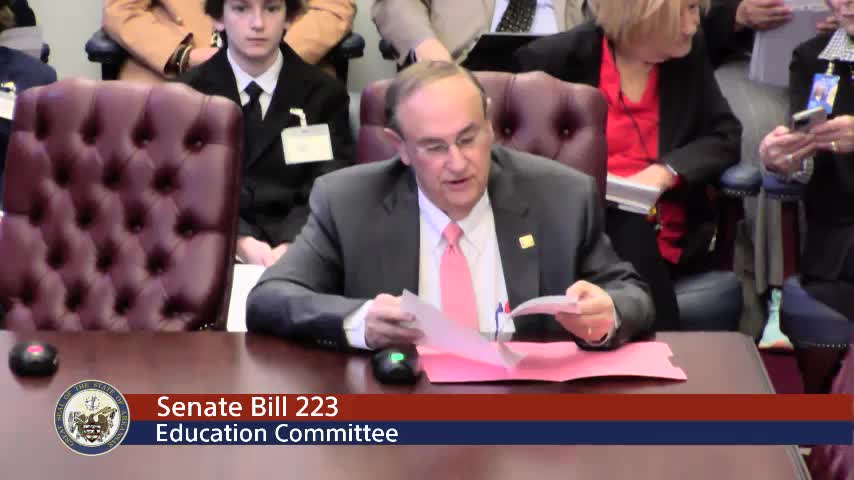
Representative Lee Johnson, sponsor, told the committee the amendment clarifies that the required notification about students' and employees' religious rights can be communicated electronically or by placement in a handbook or policy manual, and emphasized that "this does not add or take away any rights" in the statute. Representative Johnson and others said the change is intended to provide a single, clear place for administrators to point when questions arise.
The bill reiterates language in Arkansas Code section 6-16-145 regarding an "academic study of the Bible" course. That provision was a focal point of committee discussion and public comment. Senator Flowers and other members voiced concern that allowing off-campus activities tied to a Bible study could lead to "indoctrination" or permit activities that would take students off campus for religious instruction. Senator Flowers asked whether the bill allows the Department of Education to set curriculum; Representative Johnson responded, "this bill does not at all amend any part of Arkansas Code 6-16-145."
Public testimony included Reverend Maxine Allen, who said she supports separation of church and state and expressed concern about burdening teachers and the potential for unequal or biased curriculum development: "I do believe in the separation of church and state...I have some real concerns about this." Toni Rose of the National Association of Christian Lawmakers spoke in favor, saying she found nothing in the bill that requires teachers to teach religion and that the measure simply clarifies rights of religious expression in schools.
On a recorded voice and roll-call sequence in the transcript, several senators were named as voting. The transcript identifies Senator Dodson, Senator Bryant and Senator Davis as voting "Aye," Senator Flowers voting "No," and Senator Sullivan indicating support; the committee chair stated she also voted in favor. The chair noted a five-vote threshold was required and that threshold was met; the committee advanced the bill.
Supporters framed the bill as aligning with recent federal guidance and similar measures in other states to reaffirm students' religious expression rights; opponents warned that repetition of the "academic study of the Bible" language could create or revive pressure to provide curricular religious study or off-campus activities without clear curricular and safety safeguards.
Committee sponsors and commenters said the Department of Education would remain responsible for any curriculum-related questions, though the bill text itself does not specify who would teach an academic study course or how an off-campus activity would be authorized.