Get Full Government Meeting Transcripts, Videos, & Alerts Forever!
Get email alerts on the Community College Funding topic
No spam. Unsubscribe anytime.
Baltimore City Community College leaders urge rejection of proposed cuts, cite fire, deferred maintenance and staffing shortfalls
Summary
BCCC administrators, faculty and union representatives asked the subcommittee to reject a proposed $3.6 million funding reduction, described a January instructional building fire, large deferred maintenance needs and high vacancy rates, and outlined strategies for the Mayor’s Scholars program.
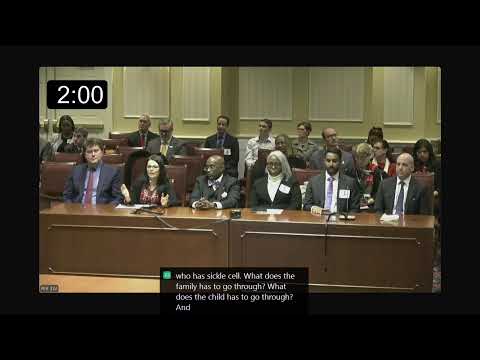
Officials from Baltimore City Community College told the Education, Business and Administration Subcommittee on Feb. 14 that proposed state reductions would damage operations as the college continues realignment and responds to a recent fire and persistent facility needs.
Kelly Norton, a DLS analyst, told the panel that BCCC’s total enrollment increased for the second consecutive year, with fall 2024 credit enrollment up 11.1% from fall 2023. Norton’s presentation noted the college remains in hold‑harmless under the funding formula and that the BRFAA of 2025 language would set a new funding floor and, if enacted, would reduce the college’s general fund appropriation by $3,600,000 in fiscal 2026.
President Deborah McCurdy and members of her administrative team described the college’s progress under a state‑mandated realignment process and highlighted accreditation advances for multiple programs. McCurdy said that in early January the college’s main instructional building on the Liberty campus—about 80,000 square feet—suffered a fire that displaced course sections, faculty offices and technology services. She told senators classes were moved online or to alternate sites and that the college has not yet seen a drop in enrollment despite the disruption.
McCurdy and interim student affairs vice president Donna Thomas detailed Mayor’s Scholars Program retention strategies, including embedded tutors, an early‑alert system, and a dedicated director for the program. Thomas said the program remains a last‑dollar scholarship but that the college currently absorbs many operational costs previously expected to be covered by the city; the city’s direct funding for Mayor’s Scholars has been phased down.
Union and campus speakers pressed the committee about workplace conditions and resources. Nina Kaneski, president of AFSCME Local 1870 and a BCCC alumna, said employees work with outdated furnishings, cited a flawed ADA accommodation process (which she described as requiring requests to go through the college president before HR acts), and called for converting long‑term contract employees to permanent roles to reduce vacancy rates and stabilize operations. Professor Laura Pope, speaking for faculty, said the college’s student population is unique and that deeper, multi‑year support is required to sustain mission‑critical services.
Todd Reynolds of the American Federation of Teachers in Maryland urged the committee to reject the BRFAA component that would reduce state aid by $3.6 million, saying no other community college in the state faces comparable cuts across two consecutive years. DLS materials showed BCCC had 103 vacancies above expected turnover as of Dec. 31, 2024 and noted state support per FTE rose to $24,470 in fiscal 2024 due in part to declining enrollment in earlier years.
The college accepted the committee narrative requesting a report on Mayor’s Scholars enrollment and noted an inconsistency in FTE reporting between DBM/MHEC and the college that it asked to be reviewed collaboratively. Administrators said proposed deficiency funds cited in the DLS presentation are HEERF dollars intended for student services, textbooks and technology, and that further capital and deferred maintenance funding are required to address longstanding facility shortfalls.