Get Full Government Meeting Transcripts, Videos, & Alerts Forever!
Get email alerts on the Education Oversight topic
No spam. Unsubscribe anytime.
Maryland Inspector General for Education outlines budget, finds payroll closeout error and ongoing investigations
Summary
The Office of the Inspector General for Education (OIGE) presented its first independent budget and told the subcommittee it identified a payroll closeout error while reporting increased complaints and millions recovered from investigations.
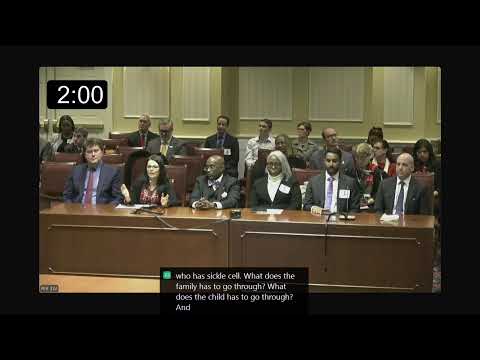
The Maryland Office of the Inspector General for Education (OIGE) appeared before the Education, Business and Administration Subcommittee on Feb. 14 to present its fiscal 2026 allowance and to describe recent reviews and investigations conducted by the office.
The presentation, delivered by Laura Hyde of the Department of Legislative Services and Inspector General Richard P. Henry, said OIGE’s fiscal 2026 operating allowance is $2.7 million, an increase of $44,000 (1.6%) from fiscal 2025. Hyde told the panel that in fiscal 2024 OIGE’s budget had been managed through the Maryland State Department of Education (MSDE) and that an apparent $1.3 million reversion reported by MSDE was later determined to be an error and prompted follow-up questions in the analyst report.
OIGE, the agency that “is responsible for accountability and transparency in the expenditure of public funds for state education,” was described by Henry as an independent, fact‑based state agency that adheres to state and national standards. Henry said his office completed administrative investigations, audits and management alerts in calendar 2024 and that those efforts identified “over $13,000,000 in financial mismanagement,” representing what he characterized as a taxpayer return of $5.13 for every dollar spent on the office.
Hyde told the committee that salaries and fringe benefits represent about 91% of OIGE's fiscal 2026 allowance and that the agency carries 16 positions, a decline of 0.5 positions from fiscal 2025 due to converting a contractual position to meet targets. The analyst's exhibit summary reported completion of four administrative investigations, three audits, and issuance of four management alerts in 2024; three of 11 investigations resulted in findings with recommended policy or practice changes.
Henry described a payroll closeout issue that occurred while OIGE’s budget was managed within MSDE. He said MSDE initially reported a reversion of roughly $1.3 million to the Department of Budget and Management; an internal review by OIGE determined that MSDE had stopped applying the office’s payroll expenditures and had routed those credits to an MSDE default account, producing an approximately $1,250,000 payroll error. Henry said, “this error has been corrected.”
The inspector general also listed corrective items he has recommended to MSDE, including updated guidance on mandatory reporting, amending the statewide teacher employment history review form to add an under‑penalty‑of‑perjury clause, and working with stakeholders to align and amend COMAR regulations to ensure consistent mandatory reporting language.
Senator Bailey asked for more detail about the closeout error; Henry and Hyde described OIGE’s prior status as a line item under MSDE’s master budget code, turnover at MSDE, and the resulting misapplied payroll charges. Hyde and Henry said the agency and MSDE have acted to separate the OIGE budget into its own appropriation and that the error had been fixed.
The Department of Legislative Services recommended concurrence with the governor’s allowance. Henry told the committee his office continues to see rising complaint volumes (a 62% increase over the previous year and a 918% increase since 2020) and that staffing constraints have limited growth; he said the fiscal 2026 staffing change will remove the office’s certified public accountant position when a contractual slot is converted. Henry said he intends to follow up with the committee in writing about staffing and any appeal requests.
The subcommittee did not take formal action on the OIGE allowance during the hearing; the DLS analysis and OIGE responses were entered into the record for the fiscal process.