Get Full Government Meeting Transcripts, Videos, & Alerts Forever!
Get email alerts on the Public Safety Funding topic
No spam. Unsubscribe anytime.
House bill would let counties, cities add 0.1% sales tax for criminal justice and create CJTC grant program
Summary
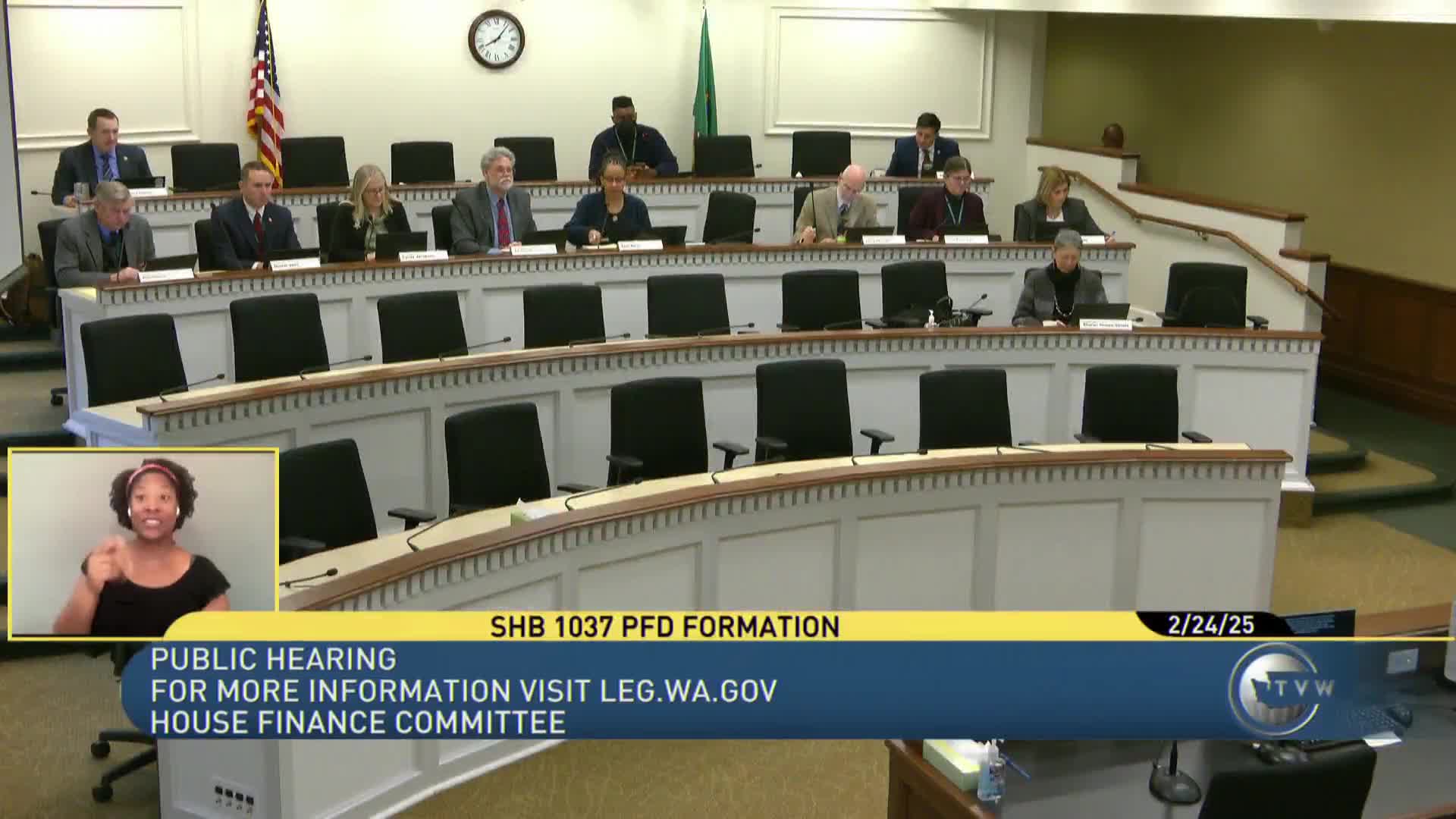
A bill that would allow cities and counties to impose a 0.1% local sales-and-use tax to fund criminal-justice purposes and create a Criminal Justice Training Commission grant program drew support at a House Finance hearing Feb. 24.
A bill that would let counties and cities impose a local 0.1% sales-and-use tax to raise money for criminal justice purposes drew broad support in the House Finance Committee on Feb. 24.
The measure, House Bill 20‑15, would authorize a city or county legislative authority to adopt a 0.1% local sales-and-use tax, with revenues required to be used for "criminal justice purposes," and would create a supplemental criminal justice account in the state treasury and a Local Law Enforcement Grant Program administered by the Criminal Justice Training Commission (CJTC).
The CJTC briefing said the local option would be limited to a 0.1% rate and that, under the proposal, 10% of revenue from the existing criminal‑justice sales tax is retained by the county and 90% is shared per capita with cities. The CJTC grant program would provide quarterly distributions and awards to qualified local or tribal law enforcement agencies that adopt the tax and meet the program's requirements.
Rep. Deborah Entenman, the bill's prime sponsor, told the committee she intends the measure to support a broader definition of public safety: “There has to be more than just more police on the streets,” she said, noting the bill would fund services that include housing, youth programs and crisis-response training in addition to hiring and retention incentives.
Supporters at the hearing included the governor’s public safety adviser, county and city officials, and public-safety associations. Nathan Olsen, a public safety policy adviser to the governor, said the governor is “committed to a hundred million dollars in grant funding for local governments to hire well trained law enforcement” and urged committee approval. James McMahon of the Association of Sheriffs and Police Chiefs said Washington ranks last in law enforcement officers per capita and called the bill one of several approaches to address that shortage.
The CJTC would be required to establish procedures and criteria to award grants and to publish application materials and reporting requirements, and grants would include metrics such as changes in officer retention and vacancy rates and training compliance. To qualify, agencies would need written and published policies consistent with the Keep Washington Working Act and CJTC and Attorney General guidance, including use-of-force and duty-to-intervene policies, and specified training compliance thresholds (for example, a target of 80% compliance with a 40‑hour crisis intervention training for officers and 100% compliance with CJTC‑approved trauma‑informed training for newly hired officers).
Testimony from King County and the Association of Counties characterized the bill as providing flexibility and resources to local governments facing fiscal pressure. King County officials noted the county’s general fund faces substantial deficits and that a local option could help maintain criminal‑justice services otherwise at risk of cuts.
Several supporting witnesses asked the committee to clarify how the new local option would interact with existing public-safety sales taxes and whether jurisdictions that already levy public-safety sales taxes would qualify for the new program’s grants.
No final action or vote on the bill was recorded in the transcript.
Ending: The committee heard a broad range of local and statewide stakeholders endorse the bill's goals; staff and witnesses signaled follow-up questions on interaction with existing local taxes and specific grant eligibility language as the measure proceeds.