Get Full Government Meeting Transcripts, Videos, & Alerts Forever!
Get email alerts on the K12 Mental Health Substance Prevention topic
No spam. Unsubscribe anytime.
Newnan School official asks Porter County grant panel for $5,000–$8,000 to expand K–12 substance‑abuse and mental‑health programming
Summary
Chelsea Brantfeld, student support services coordinator for Newnan School Corporation, asked the Porter County grant review panel for $5,000–$8,000 to buy curriculum and expand a school diversion and prevention program to align K–12 services and improve early intervention for mental health and substance use risk.
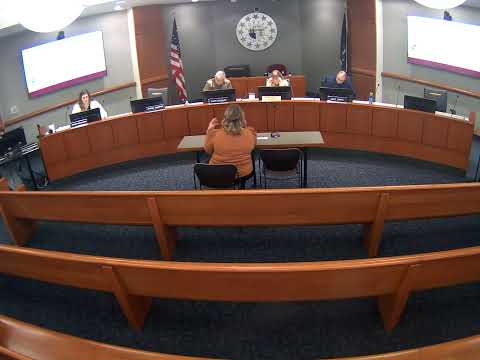
Chelsea Brantfeld, student support services coordinator for Newnan School Corporation, told the Porter County grant review panel she is seeking $5,000–$8,000 to expand substance‑abuse prevention and social‑emotional learning across the district.
Brantfeld said the money would be used to buy curriculum, digital content and classroom materials to build a consistent K–12 program and to scale the district’s Positive Life diversion program for students who violate activity or conduct rules. "One of the biggest things I do is just kind of coordinate and facilitate and serve as a liaison between districts, our families, our community, and all the schools within the district," Brantfeld said.
Newnan School Corporation serves about 5,800 students and employs roughly 860 staff, Brantfeld said; about 350 are certified staff. She described a districtwide approach based on a multi‑tiered system of supports (MTSS) that she wants aligned from kindergarten through 12th grade so interventions are consistent: tier 1 universal supports, tier 2 targeted intervention and tier 3 wraparound supports for students with ongoing needs.
Brantfeld said the district already partners with community providers for higher‑level services and identified attendance, behavior and academic decline as the common early warning signs staff use to spot students who need help. She described existing partnerships with local counseling providers and named the Positive Life program as a school‑level diversion that currently serves students who participate in extracurricular activities.
As an example of the kinds of purchases the grant would fund, Brantfeld told the panel that "our high school uses a program called Human Relations Media, and it costs about $2,500 for a set of the CDs." She said digital curriculum packages exist that would be more portable and that, if funded, her plan would be to pilot purchases and begin larger rollout this spring with an aim to have consistent K–12 programming in place next school year.
Panel members asked follow‑up questions about who would deliver any expanded programming and whether counselors or teachers would be paid for additional work. Brantfeld said the superintendent is aware of the application and that expansion would rely on partnerships with school counselors and teachers rather than a single person carrying the workload alone.
Brantfeld characterized her request as seed funding to buy sustainable curriculum and tools rather than to fund new ongoing personnel costs. The panel indicated they would review the application and follow up with applicants next week.