Get Full Government Meeting Transcripts, Videos, & Alerts Forever!
Get email alerts on the Municipal Finance And Contracts topic
No spam. Unsubscribe anytime.
Barberton council approves series of capital measures, authorizes demolition contract for 107 Fifth Street
Summary
At its Feb. 24 legislative meeting the council adopted six emergency ordinances to issue notes for infrastructure projects, and authorized a demolition contract for the city‑owned building at 107 Fifth Street after committee debate about grant timing and cost exposure.
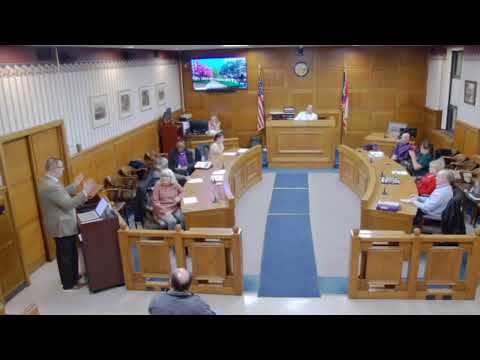
Barberton City Council on Feb. 24 adopted multiple short‑term borrowing measures to fund infrastructure projects and voted to authorize a contract for demolition of the city‑owned building at 107 Fifth Street.
The council passed emergency ordinances to issue notes in anticipation of bonds covering meter‑reading equipment, a trickling filter rehabilitation at the wastewater plant, street resurfacing, water‑main replacement, stormwater improvements, and a front‑loader vehicle for road and storm sewer work. Council also adopted an ordinance authorizing the mayor or his designee to enter into a demolition contract for 107 Fifth Street with emergency wording.
Why it matters: The package advances several capital projects the administration says are needed to maintain water and sewer operations, keep the street program funded amid rising asphalt costs, and replace aging equipment. Council’s approval of the demolition authorization was the outcome of several weeks of committee review and public discussion about grant timing and the city’s exposure if state grant waivers are delayed.
Council debate and context on 107 Fifth Street: Committee members spent considerable time in the City Properties, Parks & Recreation committee weighing whether to proceed now or wait for word on a pending grant waiver. Michael Tiedecki, the city engineer, and other staff warned that delaying contract award could shrink the construction window, might prompt higher contractor prices (including a stated possible 5% labor cost increase tied to a May union wage change), and reduce the portion of work that could be reimbursed by grant funds. Opponents said some council members and constituents still had unanswered questions and asked for a second reading so more information could arrive before final action. City officials clarified that council approval would give the city authority to sign a contract but would not force the mayor to sign if the grant/waiver were not secured; staff also said they would not begin demolition until the waiver was confirmed.
Administration and next steps: Finance director Jeremy Flaker provided the fiscal certificates required for the note issues, listing estimated maximum maturities and useful lives per Ohio law. City staff said the demolition authorization positions the city to award a contract quickly if the grant is approved; if not, staff said they would negotiate with the contractor about holding pricing or rebidding.
Votes at a glance (council action summaries) - Enter into contract — demolition of 107 Fifth Street (Ordinance 23‑2025): motion to adopt made by Councilman Easterling, seconded by Councilwoman Gerhardt; outcome: adopted (recorded roll call in transcript). Notes: committee debate focused on timing tied to a pending grant waiver and potential future cost increases; staff said no demolition would commence until the waiver outcome is known.
- Meter‑reading system replacement (Ordinance 24‑2025): emergency ordinance authorizing notes not to exceed $225,000 for advanced radio metering equipment for water and sewer; outcome: adopted (roll call recorded).
- Trickling filter system at wastewater plant (Ordinance 25‑2025): emergency ordinance authorizing notes not to exceed $25,000 for reconstructing and improving the trickling filter; outcome: adopted (roll call recorded).
- Street improvement program (Ordinance 26‑2025): emergency ordinance authorizing notes not to exceed $1,600,000 for resurfacing, reconstruction and related street work; outcome: adopted (roll call recorded).
- Water main replacement project (Ordinance 27‑2025): emergency ordinance authorizing notes not to exceed $1,300,000 to replace water mains; outcome: adopted (roll call recorded).
- Stormwater management improvements (Ordinance 28‑2025): emergency ordinance authorizing notes not to exceed $325,000 for stormwater drainage and retention facilities; outcome: adopted (roll call recorded).
- Front‑loader acquisition (Ordinance 29‑2025): emergency ordinance authorizing notes not to exceed $115,000 to acquire a front loader for road and storm sewer departments; outcome: adopted (roll call recorded).
What the ordinances say about timing and cost: Each fiscal certificate filed by the finance director included the estimated useful life of the project and a maximum maturity for the bonds in line with Ohio Revised Code requirements. Council used emergency language to speed the borrowing and contracting processes in several items because staff said market timing (construction windows, rising material and labor costs) and grant timing counseled more rapid action.
Outlook: Staff said the next steps include contract award processes where applicable, continued grant coordination when state funding or waivers are involved, and execution of note sales and bond anticipation paperwork through finance. Council scheduled follow‑up committee meetings as needed and asked staff to provide more detailed scope and schedule information on several projects.
Ending note: Council also scheduled a special legislative session to address outstanding Charter Review Commission appointments after a vote on nominations failed on Feb. 24.