Get Full Government Meeting Transcripts, Videos, & Alerts Forever!
Get email alerts on the Transportation Workforce topic
No spam. Unsubscribe anytime.
University of Washington study finds transportation engineering workforce shortfall; recommends apprenticeships and short courses
Summary
A University of Washington Transportation Center presentation to the Senate Transportation Committee detailed surveys and analysis showing a projected shortfall of transportation engineering staff, with recommended actions including short‑term training, apprenticeship programs, curriculum updates and outreach to diversify recruitment.
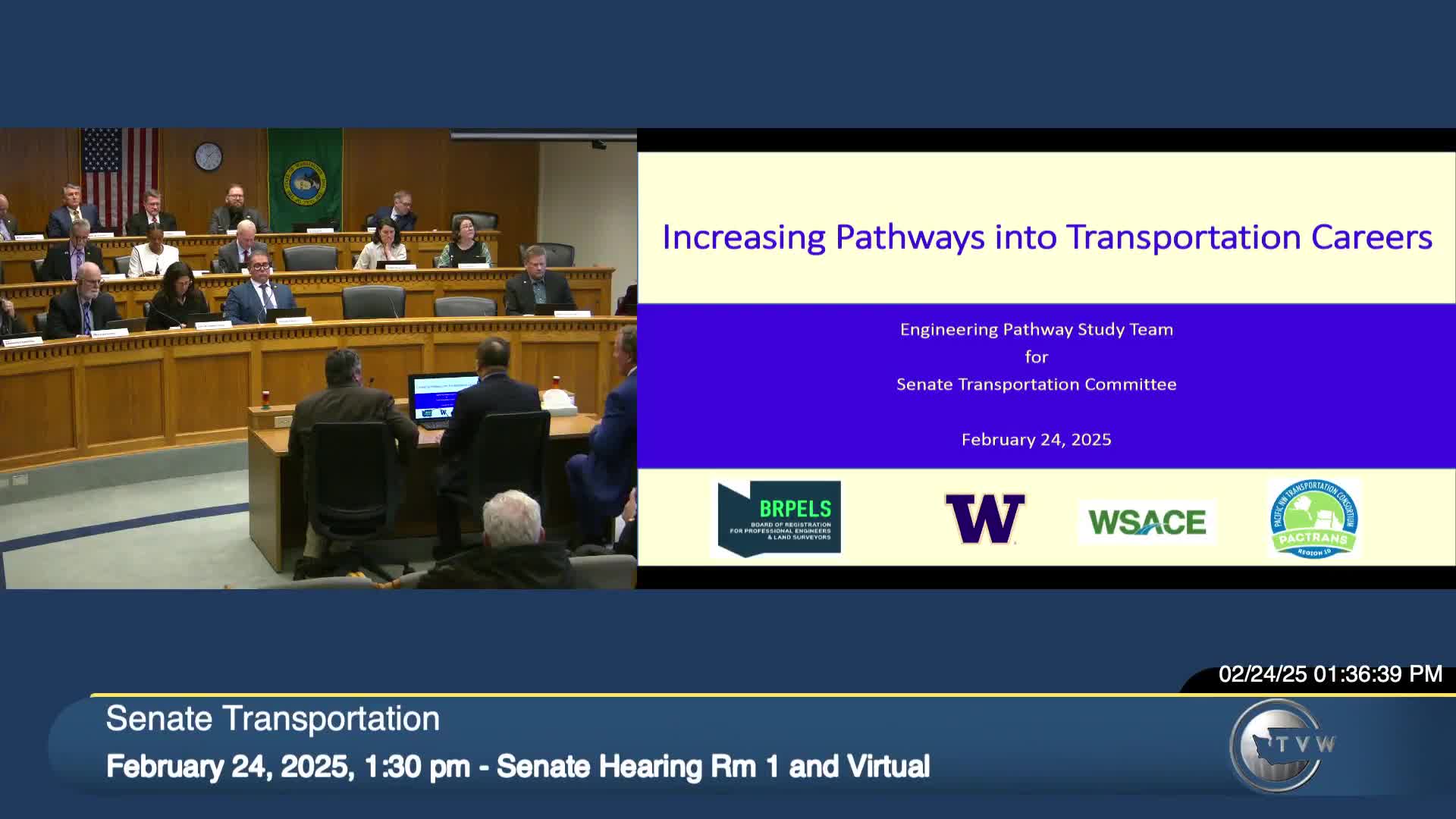
University of Washington researchers briefed the Senate Transportation Committee on findings from an engineering‑pathways study aimed at diagnosing and addressing shortages in the transportation engineering workforce.
Yin Hai Wong, director of the UW Transportation Center, said the team conducted two surveys (917 practitioner responses and 47 employer responses), interviewed agency and industry leaders and worked with transportation education program leaders to identify demand and skills gaps. The employer respondents reported combined staff of about 1,260; employers planned to hire roughly 613 new employees in the coming 12 months and about 1,455 over the next four to five years — roughly a 15 percent increase from current staffing, the presenters said.
The study identified near‑term retirement risk (22 percent of employees eligible within five years; 32 percent within ten) and hiring obstacles including lack of qualified candidates, salary competition with technology companies, limited field experience in recent graduates, and geographic challenges. Employers said 83 percent of local education programs do not fully produce graduates with the skills needed for immediate hire.
Recommendations presented included enhanced short‑term training (AutoCAD, GIS, modeling, licensing/EIT prep), apprenticeships and summer internships targeted at high‑school and college students, leadership and soft‑skills training for mid‑career staff, capacity expansion for civil engineering programs, and a WSDOT fellowship program to support advanced degrees. Wong said the team had already started 30 short‑term training courses and WSDOT fellowship placements under recent funding.
Committee members asked about entry wages and demand forecasts; UW staff said median UW graduate starting salary data indicated about $75,000 for midlevel surveyed roles and anecdotal entry‑level figures near $60,000, while noting technology firms (Amazon) attract many graduates. The presenters and senators indicated willingness to continue partnership work to adapt training to immediate workforce needs.