Get Full Government Meeting Transcripts, Videos, & Alerts Forever!
Get email alerts on the Labor Prevailing Wage topic
No spam. Unsubscribe anytime.
Senate committee hears bill to let prevailing wages in public-works contracts adjust during long projects
Summary
Substitute Senate Bill 5,061 would let prevailing wages in public‑works contracts increase to match the wage in effect when the work is performed rather than freezing the rate at bid time.
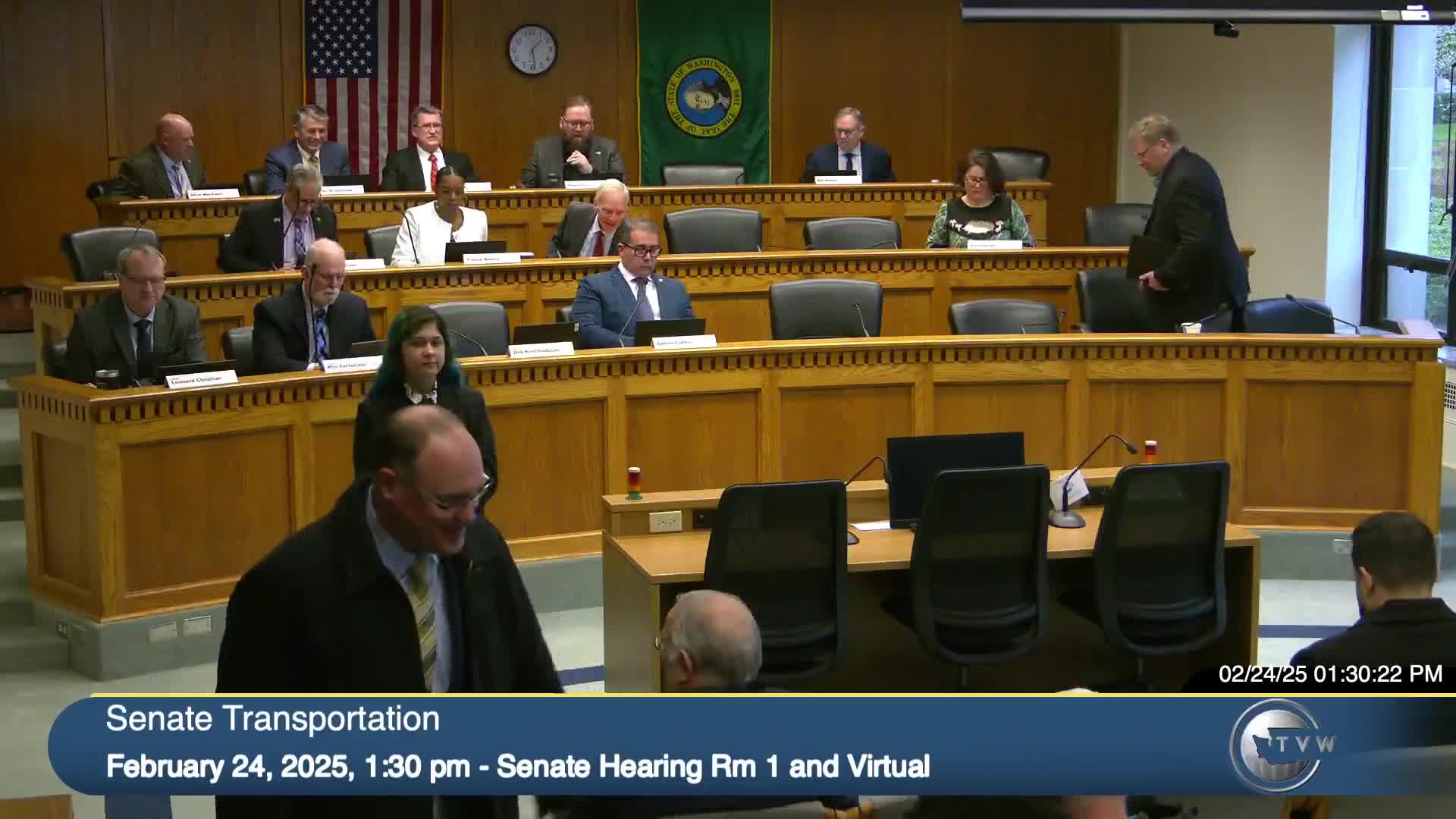
Substitute Senate Bill 5,061 would change how prevailing wages apply to public-works contracts by requiring contract wage language to state that the minimum hourly wage for laborers, workers and mechanics be adjusted “to no less than the latest prevailing rate of wage” in effect at the time the work is performed. The bill was the subject of a staff report and a lengthy public hearing before the Senate Transportation Committee on Feb. 24.
Supporters — including union representatives and construction-trades groups — told the committee that locking prevailing wages at bid date erodes pay on projects that span several years and can drive workers away. Erin Fraser of the Washington State Building Construction Trades Council said turnover and the loss of experienced workers increase project cost and delay timelines. Chris Ellis of Bricklayers and Allied Craftworkers Local 1 and Tim O’Donnell of Ironworkers Local 76 said the change would align pay on long projects with twice-yearly L&I (Labor & Industries) wage updates and protect workers’ benefits and purchasing power.
Opponents — representing cities, counties, some contractors and affordable-housing developers — urged caution. Lowell Krueger of the Yakima Housing Authority said sudden, mid-contract wage increases could jeopardize affordable housing financings and recommended an exemption for affordable housing. Carolyn Logue of Associated Builders and Contractors (Inland Pacific Chapter) and representatives of the Associated General Contractors warned the change could make bidding unpredictable for smaller, nonunion contractors and could shift risk to public owners if change orders are automatic.
Committee staff reported a pending rulemaking by L&I to address situations where multiple collective bargaining agreements (CBAs) or wage sources apply in a county; proponents said they remain engaged on implementation details. Several witnesses said they support targeted exemptions — for small public works roster projects, for example — and a delayed effective date. County engineers and ports associations asked the committee to avoid a mandatory, automatic change-order mechanism that would transfer project cost risk to public owners.
The bill’s sponsor, Senator Steve Conway, described the change as an attempt to align contract language with the twice‑yearly updates issued by L&I and to prevent a project from effectively reducing workers’ pay because a wage was set at bid time and frozen for the life of a multiyear job. Conway and proponents noted some collective-bargaining agreements and a subset of contractors already include escalators, but they argued a statutory rule would standardize the approach across public works.
The committee set an amendment deadline for the next day. Committee staff and multiple stakeholders said they would continue negotiations — topics still under discussion included exactly which contracts would be exempt, whether increases should be applied annually instead of immediately, and how any required change orders would be handled.