Get Full Government Meeting Transcripts, Videos, & Alerts Forever!
Get email alerts on the Bottle Deposit Recycling topic
No spam. Unsubscribe anytime.
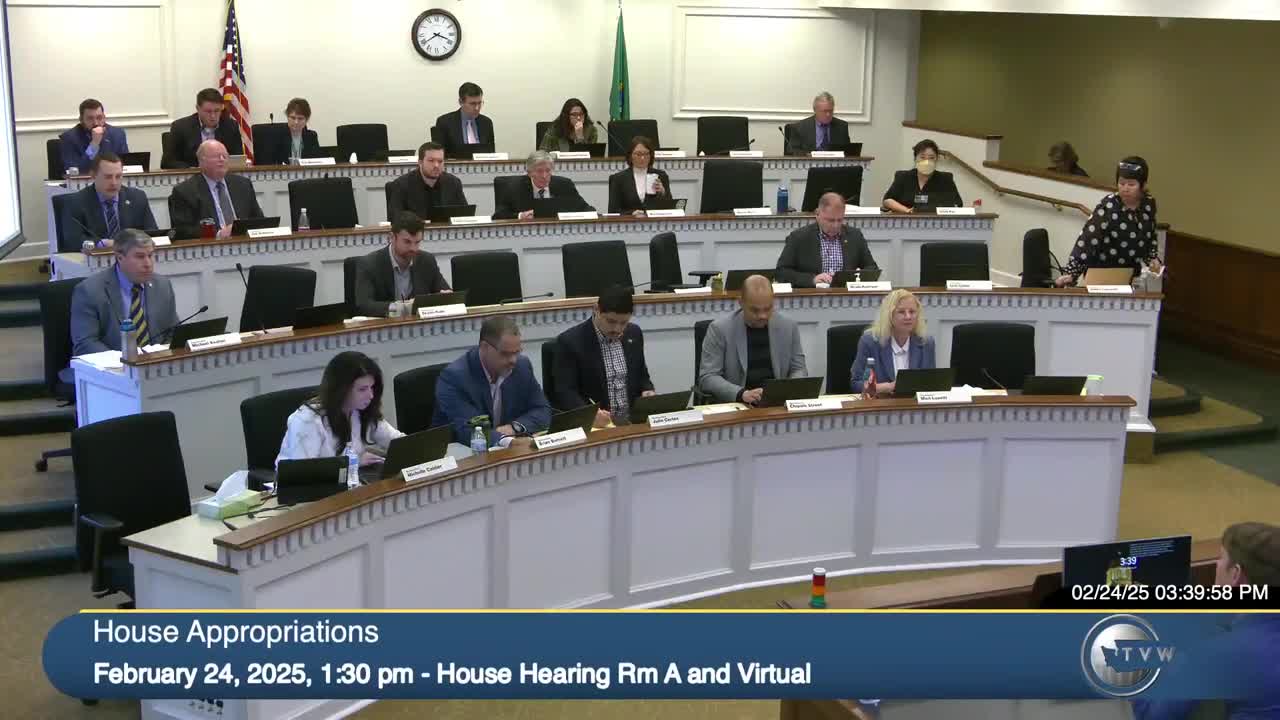
House committee hears competing views on refundable recycling program for beverage containers
Summary
Substitute House Bill 16-07 would create a 10¢ refundable value on covered beverage containers, require producers to form a producer responsibility organization and fund program oversight at Ecology. Supporters—recyclers and recycled feedstock users—said a return system would increase high-quality material recovery; opponents—retail,
The House Appropriations Committee heard a staff briefing and extensive public testimony on substitute House Bill 16-07, a proposal to create a refundable recycling-return program for covered glass, metal and plastic beverage containers with a 10¢ refund value.
Staff described the program's structure: beverage brand owners would join a producer responsibility organization (PRO) responsible for establishing a refund-and-redemption system, creating a fee structure to fund the PRO until the recycling refund program began, and filing implementation plans with the Department of Ecology. Ecology would approve PRO plans, conduct oversight and set administrative fees payable by the PRO. The bill would require a sufficient network of redemption sites—including full-service and express sites—and set performance targets for redemption rates. The proposal would also allow retailers to opt out of providing collection sites and would make the 10¢ refund value deductible for business-and-occupation tax purposes.
Supporters, including recycling industry associations and plastic-recycling trade groups, argued a refund system delivers cleaner, higher-quality material and greater overall recovery than curbside collection alone, enabling investment in domestic recycling infrastructure and consistent feedstock for manufacturers. The Coalition for High Performance Recycling and the Association of Plastic Recyclers said the policy would help supply recycled-content manufacturing and reduce litter.
Opponents included major retail, grocery and hospitality trade associations and local refuse and recycling companies that warned the bill would create a costly parallel collection system, shift administrative and operational costs onto consumers and retailers, and increase burdens on small businesses. Witnesses described operational costs experienced in Oregon, concerns about public safety and site cleanliness, and the potential for higher consumer prices because deposits would be added on purchase.
Staff noted prior estimates from similar programs and a Department of Revenue memo that assumed the producer fees paid to the PRO would generate taxable revenue flows; the department projected significant B&O tax collections tied to PRO payments (tens of millions in later biennia under illustrative estimates). Ecology would seek initial administrative funding from the waste reduction, recycling and litter control account until PRO fees commence, and staff said a fiscal note on the substitute was pending.
Committee members asked about glass markets, collection cleanliness and the logistics of operating full-service and express redemption sites; supporters said the separate refund system collects containers in a cleaner, more marketable way than curbside collection, which mixes materials and reduces glass value.
No committee action was taken Tuesday; staff will provide revised fiscal notes and additional analysis.