Get Full Government Meeting Transcripts, Videos, & Alerts Forever!
Get email alerts on the Ea Justice Act Reform topic
No spam. Unsubscribe anytime.
Committee forwards memorial asking Congress to reconsider fee-shifting rules used in environmental litigation
Summary
House Joint Memorial 6 asks Congress to review the Equal Access to Justice Act's application to environmental and natural-resource cases; supporters said current practice encourages prolonged litigation, while others said reforms should be narrowly targeted.
BOISE
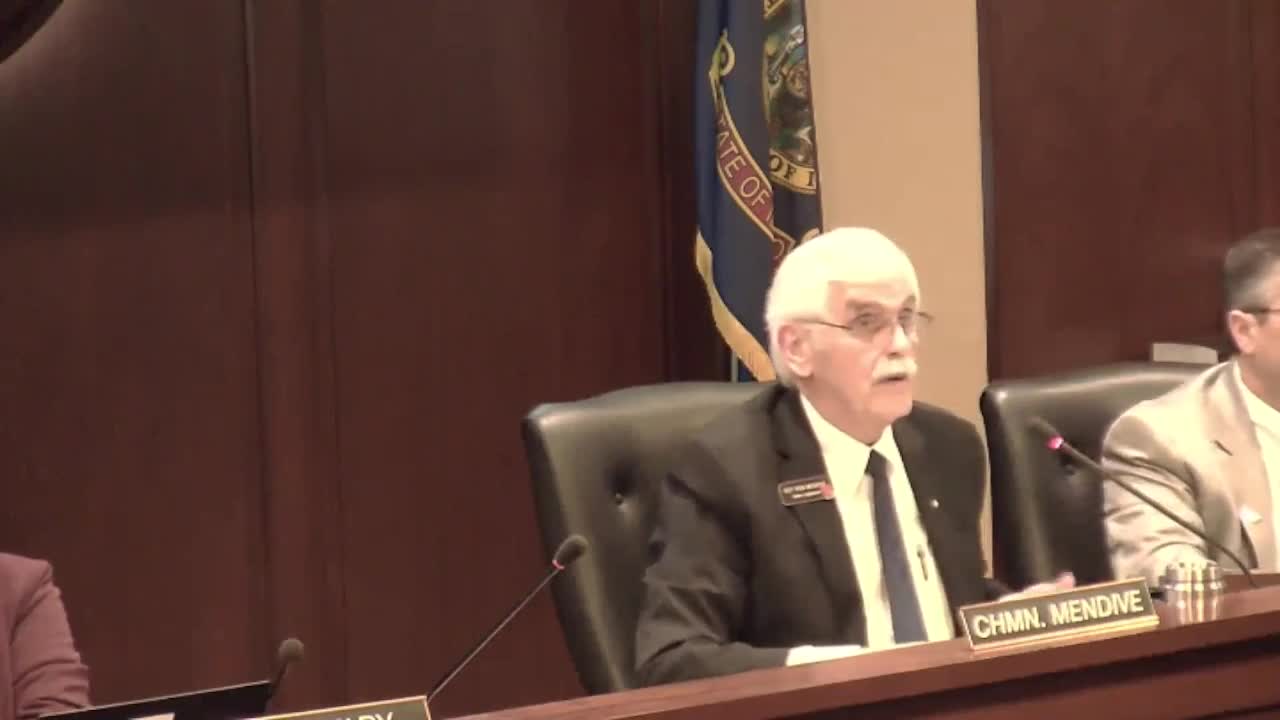
The Resource and Conservation Committee voted to send House Joint Memorial 6 to the floor with a do-pass recommendation. The memorial asks Congress to review the Equal Access to Justice Act (EAJA) to limit awards of legal fees in environmental and natural-resource litigation.
Representative Mark Souder, sponsor of HJM6, told the committee EAJA was intended to make federal agencies accountable and to help citizens in disputes such as Social Security and veterans— claims, but he said court interpretations have broadened EAJA and increased its use in environmental litigation. The memorial asks Congress to narrow EAJA—s application for environmental and natural-resource cases so that awards are limited to parties who prevail on substantial issues.
Supporters from agricultural and resource constituencies testified in favor. Russ Hendricks of the Idaho Farm Bureau said members have long been concerned that EAJA is used to delay projects and that environmental plaintiffs recover attorney fees even when agencies later settle. Other lawmakers said reform would help counties that face repeated litigation that delays timber sales and other management activities.
Committee members voiced differing emphases: some said EAJA reform is warranted because litigation has hindered local resource economies; others cautioned against broad changes that could impede meritorious claims by citizens. The committee forwarded the memorial to the House floor; the transcript records the motion and approval by voice vote but no roll-call tally.
What happened next
House Joint Memorial 6 was advanced to the House floor with a do-pass recommendation.
Actions
- Motion: Send House Joint Memorial 6 to the floor with a do-pass recommendation. Mover: not specified in record. Outcome: approved by voice vote; no roll-call tally recorded in the transcript.