Get Full Government Meeting Transcripts, Videos, & Alerts Forever!
Get email alerts on the Grazing Rule Change And Lease Security topic
No spam. Unsubscribe anytime.
Committee removes contested grazing‑rule change after ranchers warn 180‑day cancelation would upend operations
Summary
The House Research and Conservation Committee voted to strike a final rule provision that would have permitted the Idaho Department of Lands to cancel grazing leases on 180 days’ notice when a higher‑return land use is proposed.
The committee struck a contested rule provision after ranchers and members of the Idaho Farm Bureau warned that an administrative change would leave long‑term grazing lessees vulnerable to sudden displacement.
Adi Faust, natural resource leasing program manager for the Idaho Department of Lands, summarized the department's negotiated rulemaking for the grazing, farming and conservation lease chapter. Faust said the department held two negotiated meetings in 2024 and mailed notices to 904 lessees; representatives from industry and conservation groups participated. She told the committee the department’s proposed rewrite decreased total word count by 10% and restrictive words by 38% and that the department retained an existing 180‑day notice provision for ‘‘change in land use.’’
Russ Hendricks of the Idaho Farm Bureau told the committee his membership ‘‘has a serious concern about 1 section of this rule … change in land use.’’ He said the rule as drafted would allow the department to cancel a grazing lease with 180 days’ notice if the Land Board approves a different, higher‑return use such as a solar farm. Hendricks warned that many ranch operations are built around multi‑year permits and that ‘‘there's not a lot of opportunity to negotiate on the state grazing lease’’ because terms and rents are formulaic; he asked the committee to reject section 050.02.
Department staff acknowledged the tension between contractual certainty for lessees and the constitutional duty to ‘‘secure the maximum long term financial return to the institution to which [land] was granted.’’ Director Dustin Miller told the committee he is ‘‘sympathetic to the concern’’ but added the department has an obligation to consider higher‑return uses; he said the department typically notifies lessees well in advance and that solar projects ‘‘don't go up in a day nor in 6 months.’’
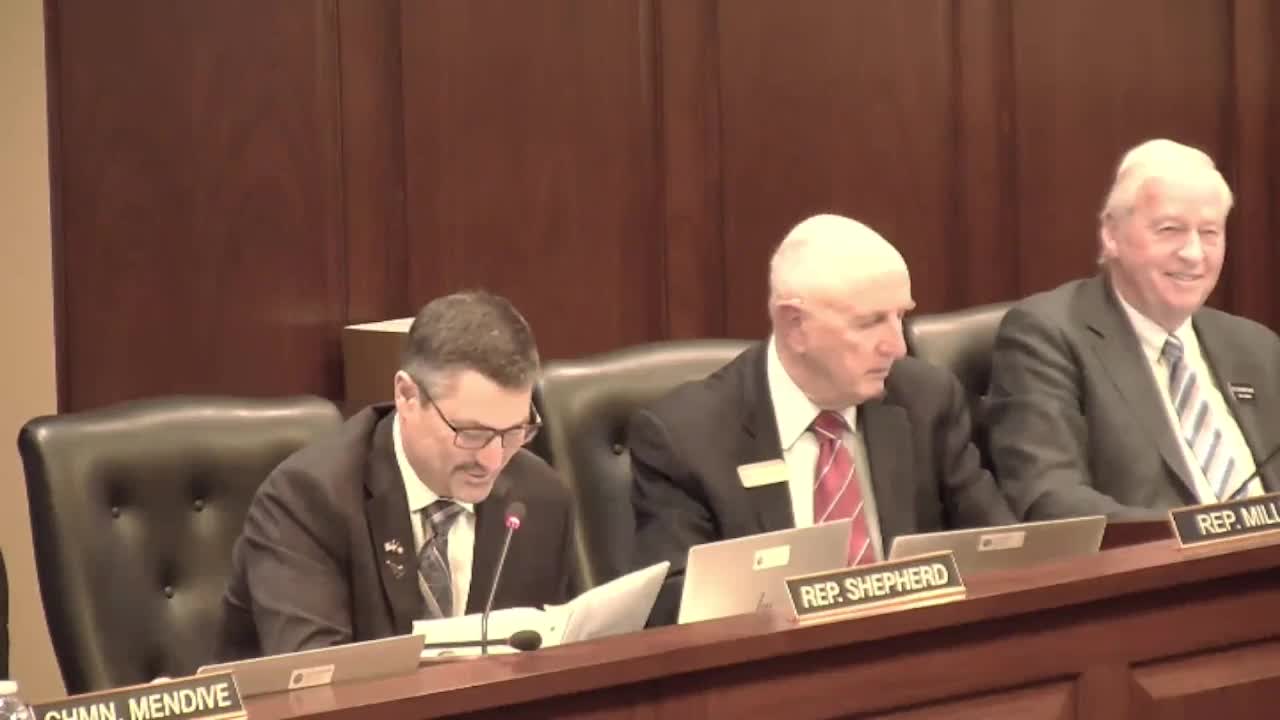
Committee action: Representative Miller moved to approve the pending grazing rule docket but exclude the amendments to section 050.02. The committee approved that motion. Representative Miller then moved to reject the final rule as codified in IDAPA 20.03.14.0.05.0.02; the committee voted to reject the final rule provision by voice vote, and the chair announced the docket would be stricken.
Why it matters: Idaho maintains many long‑term grazing leases that are economically essential to ranching operations. Lessees and industry groups argued that an administrative 180‑day cancelation authority would undermine the stability on which grazing operations depend and could leave lessees unable to replace lost forage or facilities in a single season.
Clarifying details provided during discussion: Faust said grazing, farming and conservation leases cover about 1,200 leases across roughly 1,800,000 acres and that negotiated rulemaking included industry participants. A department official told the committee the 180‑day provision has been in the rule since at least 2010 and staff found no historical instance where it was applied. Farm Bureau representatives described typical state grazing terms as commonly 10 years and sometimes up to 20 years; department testimony noted the legislature has authorized longer terms in some contexts.
Ending: The committee removed the contested provision and instructed that the remaining pending rule language proceed; members indicated they expect follow‑up work — either additional rulemaking or legislation — to resolve the tension between lessee certainty and the constitutional duty to maximize endowment returns.