Get Full Government Meeting Transcripts, Videos, & Alerts Forever!
Get email alerts on the Facility Sex Designation topic
No spam. Unsubscribe anytime.
Committee advances bill restricting multi-occupancy restrooms, sleeping spaces to biological sexes in prisons, shelters and public higher ed
Summary
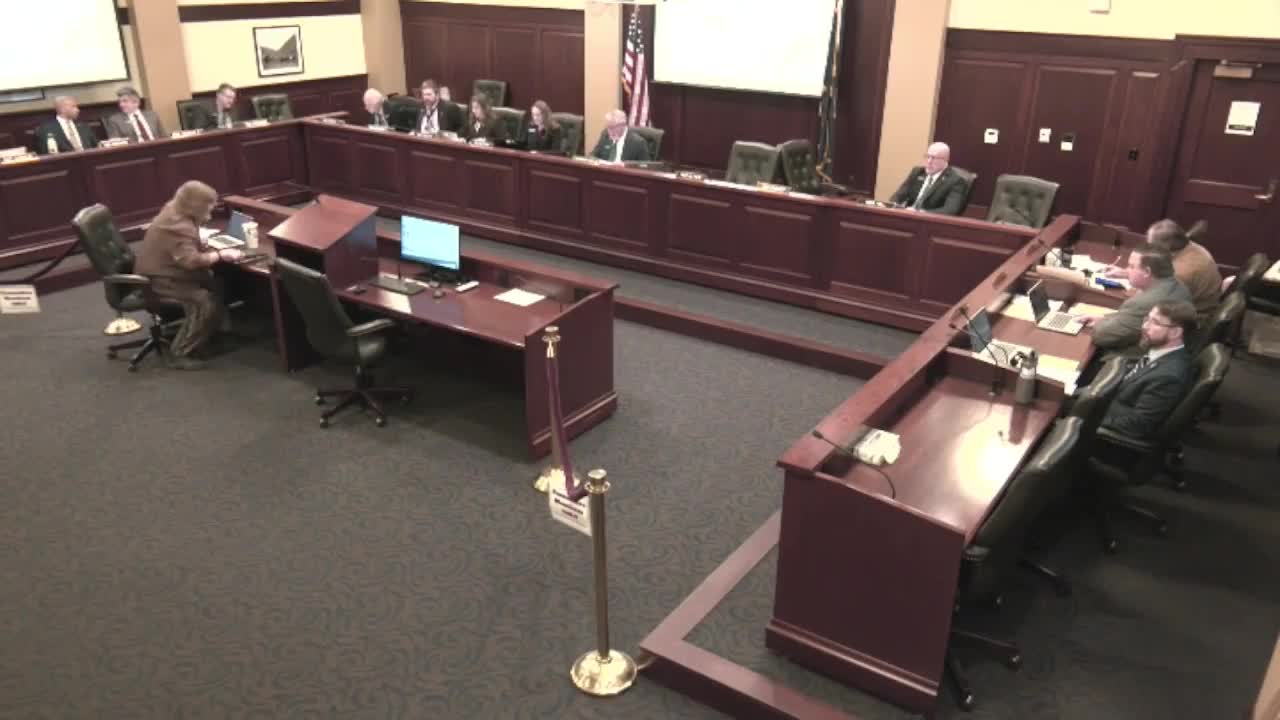
The House Judiciary, Rules and Administration Committee voted 11–2 to send House Bill 264 to the House floor with a “do pass” recommendation after a lengthy hearing that focused on whether covered facilities can feasibly enforce sex-designated multi-occupancy restrooms, changing spaces and sleeping accommodations.
The House Judiciary, Rules and Administration Committee voted 11–2 to send House Bill 264 to the House floor with a “do pass” recommendation after a lengthy hearing that drew more than two dozen public witnesses and extended debate over definitions, enforcement and civil remedies.
House Bill 264, sponsored by Representative Barbara Ehart, would require three types of state-covered entities—correctional facilities (including juvenile facilities), public institutions of higher education and state-operated domestic violence shelters—to designate multi-occupancy restrooms, changing spaces and sleeping accommodations as for either “male” or “female” as defined in Idaho law. Single-user facilities would not be required to be designated.
Sarah Beth Nolan, legal counsel for Alliance Defending Freedom, told the committee the bill “only addresses ***. There is no mention of gender, and that is purposeful,” and that the statutory language is intended to work in tandem with the Americans with Disabilities Act and other exceptions for medical care, custodial services and law-enforcement activity. Nolan said the bill’s “reasonable steps” standard is a flexible legal benchmark that would be interpreted according to facility type and that temporary designations would be allowed (for example, assigning the same locker room to different sexes at different times of day).
Nolan described remedies in the bill as creating a private cause of action: a person who encounters someone of the opposite *** in a designated multi-occupancy space could sue the covered entity if the entity either granted permission to the person to use the space or failed to take reasonable steps to provide privacy. The bill would include a two-year statute of limitations and is severable, Nolan said.
Supporters who testified—largely from conservative and faith-based groups—framed the bill as protecting the privacy and safety of women and girls in intimate spaces such as prison cells, dormitories and shelters. The Idaho Family Policy Center’s policy assistant said polling the group commissioned showed 74% of likely Idaho voters with an opinion supported barring biological males from female prison spaces; the testifier urged the committee to “stand with our girls.”
Opponents included students, university-affiliated speakers, transgender Idahoans, national and local LGBTQ and public-health advocates, and faith and civil-rights organizations. Testimony opposing the bill raised concerns that the bill would be impractical to enforce, could require invasive verification of a person’s biological characteristics, would expose transgender and intersex people to harm and harassment, and could generate a surge of civil litigation because the bill creates a private cause of action with an attorney-fee provision for prevailing plaintiffs.
Committee members pressed for clarifications on several points: Representative Gannon and others asked how “reasonable steps” would be defined and enforced in shelters and college settings; a member raised the effect of Title IX and past litigation in federal courts; Representative Mathias pressed on how a plaintiff would prove a defendant’s biological sex in civil litigation; and others called attention to the lack of an attorney-fee provision for prevailing covered institutions should they defend against frivolous suits.
Sponsor Representative Ehart said the bill had been narrowed from an earlier draft that also covered public spaces and that the measure focuses on prisons, shelters, juvenile facilities and public higher education. Ehart told the committee the measure is not about ‘identity’ and said it is intended to protect vulnerable women in institutional settings.
After debate, Representative Heather Scott moved to send the bill to the House floor with a due-pass recommendation. The committee took a roll-call vote; the clerk read names and the final tally was recorded in the hearing as 11 in favor and 2 opposed. The committee chair announced the motion carried 11–2. The bill will be returned to the committee for additional scheduling for two other bills and then proceed toward floor consideration.
The hearing record includes detailed testimony on enforcement challenges, exceptions for medical and safety interventions, the bill’s interaction with the ADA and Title IX, the 2-year statute of limitations, and a plaintiff attorney-fee provision that some committee members said could encourage litigation. Several witnesses described personal experiences; others provided organizational statements or cited academic studies or polling data.
Votes at a glance: House Bill 264 — Committee recommendation: Do pass (roll call 11–2).