Get Full Government Meeting Transcripts, Videos, & Alerts Forever!
Get email alerts on the Probation Parole Searches topic
No spam. Unsubscribe anytime.
Committee approves expansion of search authority for officers over convicted felons on supervision, 12-1
Summary
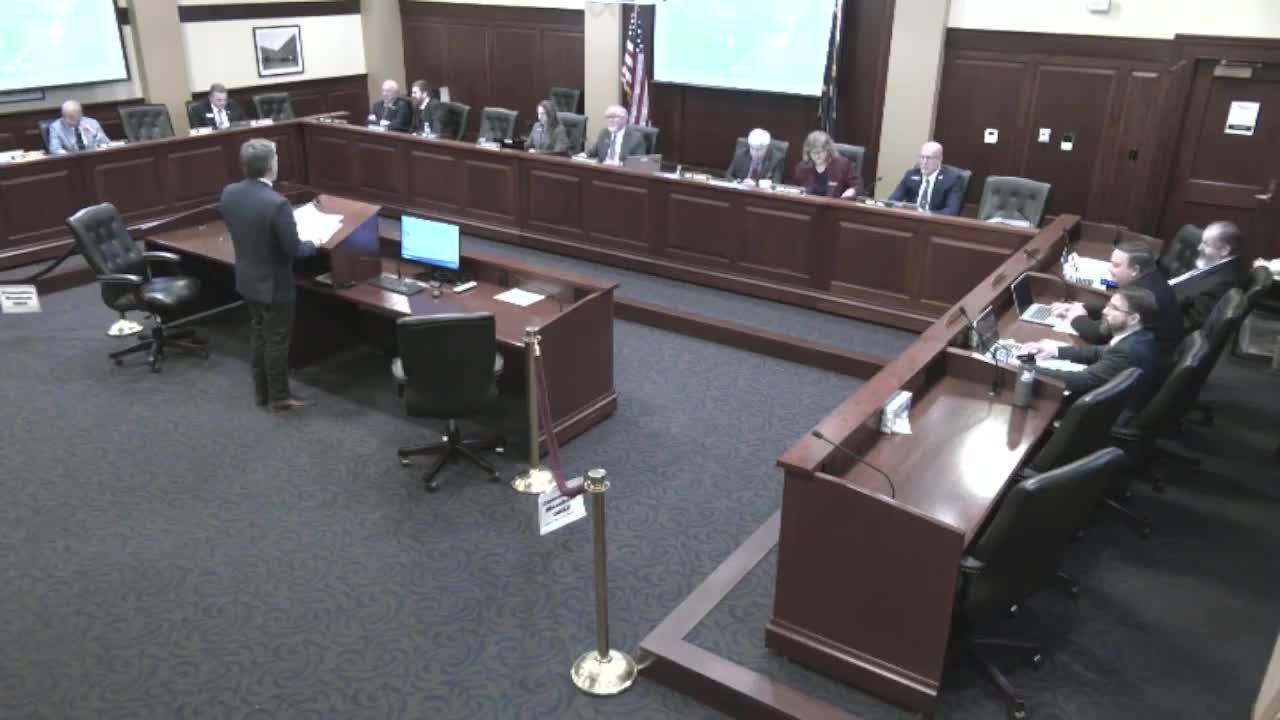
House Bill 187, which would extend the search authority now given to probation and parole officers to all peace officers when encountering convicted felons on supervision, passed the Judiciary committee 12–1 after extensive public-safety and civil-liberties debate.
House Bill 187, a public-safety bill that would extend the search authority currently held by probation and parole officers to all peace officers when they encounter convicted felons under active supervision, cleared the House Judiciary, Rules and Administration Committee on a 12–1 roll-call vote.
Sponsor Representative John Schertz (Western Treasure Valley) told the panel the statute aims to reduce risk to officers and the public by allowing prompt searches during routine contacts such as traffic stops instead of delaying while probation or parole staff are contacted. "This bill simply extends that search authority, not just to our IDOC members, but to our law enforcement members," Schertz said, calling the measure "a deterrent" and a way to provide uniformity across jurisdictions.
Law enforcement leaders across Idaho testified in favor. Rex Ingram, chief of police in Caldwell and president of the Idaho Chiefs of Police Association, said the bill "equips our officers with the essential tools needed to respond effectively to urgent situations" and emphasized safeguards in the draft to prevent abuse. Louis Sargent, who formerly served with IDOC as a probation and parole officer, described heavy caseloads — roughly 80 offenders per PO — and said local patrol officers often see the clearest evidence of noncompliance during routine contacts.
Chiefs and sheriffs said operational realities — late-night traffic stops, rural coverage and staffing shortages — make waiting for probation officers unsafe or impractical. "It is a tool local law enforcement can utilize to keep guns out of the hands of gang members, drugs away from aspiring young adults and to hold fast the oath made by all law enforcement officers to keep our great state of Idaho safe," Sargent said.
Opponents raised constitutional concerns. Michael Law, representing himself, argued the measure curtails Fourth Amendment protections and questioned whether consent tied to parole or probation is voluntary. "If you truly believe that our rights are inalienable, this bill is already violating that," he said. Representative Rubel — the lone no vote — told the committee he supports officers but would prefer narrower language limited to traffic stops or judge-by-judge discretion.
Prosecutors and other supporters said judges already impose broad search conditions in many felony-supervision orders and that the bill clarifies and standardizes existing court practice. Canyon County Prosecuting Attorney Christopher Boyd said probation and parole are a legislative substitute for incarceration that inherently imposes restrictions. "All of those rights are meaningless if someone can simply come in and at will take away those rights by force or by, by violation of the law at the expense of the other citizens," Boyd said, arguing the public expects supervision to include compliance checks.
Representative Hill moved to send HB 187 to the floor with a due-pass recommendation. The committee conducted a roll-call vote; the tally was 12 in favor, 1 opposed. The bill will be considered next by the full House.