Get Full Government Meeting Transcripts, Videos, & Alerts Forever!
Get email alerts on the Article V Convention topic
No spam. Unsubscribe anytime.
Idaho committee approves resolutions calling for balanced-budget, term-limits and pathway to Article V convention after hours of testimony
Summary
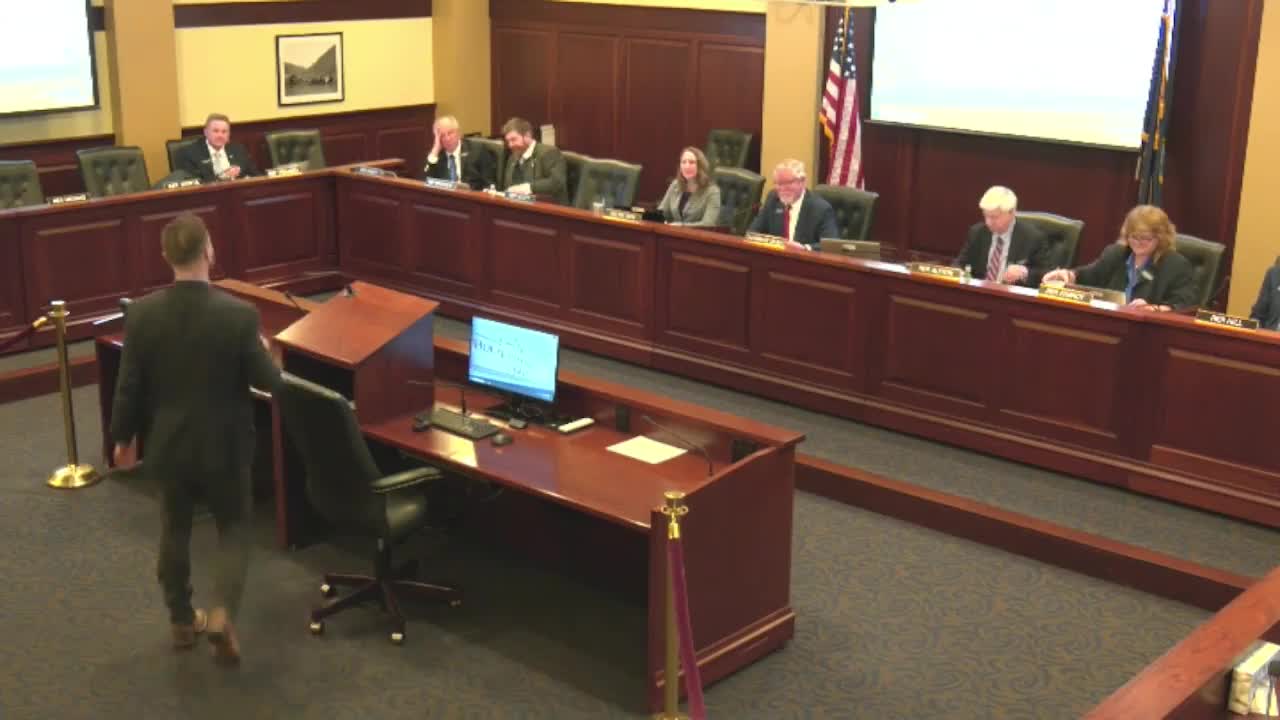
The Idaho House Judiciary, Rules and Administration Committee voted 8-7 on Thursday to send two related concurrent resolutions to the full House with a “do pass” recommendation after hours of public testimony and debate.
BOISE, Idaho — The Idaho House Judiciary, Rules and Administration Committee voted 8-7 on Thursday to send two related concurrent resolutions to the full House with a “do pass” recommendation after hours of public testimony and debate.
House Concurrent Resolution 10 (HCR 10) asks Congress to call an Article V convention to propose a balanced-budget amendment, congressional term limits and other limits on federal power; House Concurrent Resolution 9 (HCR 9) would lay out rules for how Idaho would select and constrain its commissioners if a convention were called. Committee members approved both measures separately, sending each to the House floor with a due-pass recommendation.
Supporters argued the measures are a legitimate, constitutional tool to rein in federal spending and limit what they described as federal overreach. Opponents warned the constitutional text is silent on many procedural questions about a convention and said HCR 9 cannot legally bind delegates if Congress or a convention chooses different procedures.
Representative Jordan Redmond, the bill sponsor, told the committee HCR 9 sets “safeguards and accountability to ensure that there would never be a runaway convention,” and said HCR 10 contains three calls — for a balanced budget amendment, congressional term limits and an Article V convention — and includes a seven-year sunset. “This resolution will allow Idaho to add its name to the growing list of states calling for a balanced budget amendment, congressional term limits and Article V convention of the states,” Redmond said.
League of Women Voters of Idaho volunteer Ann Carlson, testifying in opposition, told the committee the organization believes there are “many unresolved questions about the powers and processes of an Article V constitutional convention” and called the proposal “dangerous to our American democracy and the U.S. Constitution.” Carlson cited a 2014 Congressional Research Service study referenced during testimony and quoted former Supreme Court Justice Antonin Scalia’s skeptical comment, saying, “I certainly would not want a constitutional convention.”
Other opponents raised similar legal and historical concerns. Leah Southwell recounted the 1787 convention’s deviation from delegate commissions to argue that conventions can exceed instructions; Judy Koehler warned that delegate-control laws are “useless” if Congress determines delegate selection; Nina Beasley and others noted prior Idaho actions, saying earlier state resolutions called for Article V action and later rescinded calls in 1999.
Supporters emphasized the national debt and said state action is needed to force congressional change. John Green, a Meridian resident, said federal spending and perceived abuses justify using the Article V mechanism. Constantine Carrard of U.S. Term Limits and other backers argued the states retain primary authority in the process and that Idaho could set its own delegation rules.
HCR 9, as described during testimony, would: establish five commissioners per state delegation, require an oath to follow legislative instructions, allow for recall or suspension by the legislature, designate a single delegation chair to cast the state’s official delegation vote, and bar felony offenders from serving. HCR 10’s text, as read into the record, contains three separate calls (balanced-budget amendment, term limits, and a call for an Article V convention) and a seven-year sunset; the resolution also specifies that any or all calls can be rescinded by the legislature.
Committee procedure: Representative Alfieri moved that HCR 9 be sent to the floor with a due-pass recommendation; a substitute motion to hold HCR 9 in committee failed, and the original motion passed on a roll-call 8-7. Representative Alfieri then moved HCR 10 to the floor with a due-pass recommendation; substitute motions to hold or to send HCR 10 without recommendation failed, and the original motion to give HCR 10 a due-pass recommendation also passed 8-7. The committee’s roll-call tallies were recorded in the hearing transcript.
The hearing drew a large, divided turnout: dozens of citizens and organizational representatives registered to speak and roughly equal numbers testified for and against the two resolutions. Committee members repeatedly told witnesses they had three minutes for combined testimony on both measures and that the committee would take separate final votes on each.
Next steps: Both HCR 9 and HCR 10 will be scheduled for consideration by the full Idaho House. Committee members and many witnesses said the measures are intended to pressure Congress or to prompt debate in state legislatures about limits on federal power and fiscal rules. Opponents said the committee should instead focus on other remedies and cautioned that a convention could raise legal uncertainty that would likely be litigated through the federal courts.