Get Full Government Meeting Transcripts, Videos, & Alerts Forever!
Get email alerts on the Forensic Evidence topic
No spam. Unsubscribe anytime.
Committee moves bill to expand DNA collection to select misdemeanors; lawmakers debate scope and privacy
Summary
House Bill 157, which would require DNA samples and thumbprints for certain misdemeanor convictions and clarify collection responsibilities, was sent to general orders after supporters said expanded collection aids investigations and opponents raised privacy and scope concerns.
The House Judiciary, Rules and Administration Committee voted to send House Bill 157 to general orders after testimony from the Idaho State Police urging expansion of the state DNA collection program to include a narrow list of misdemeanor offenses.
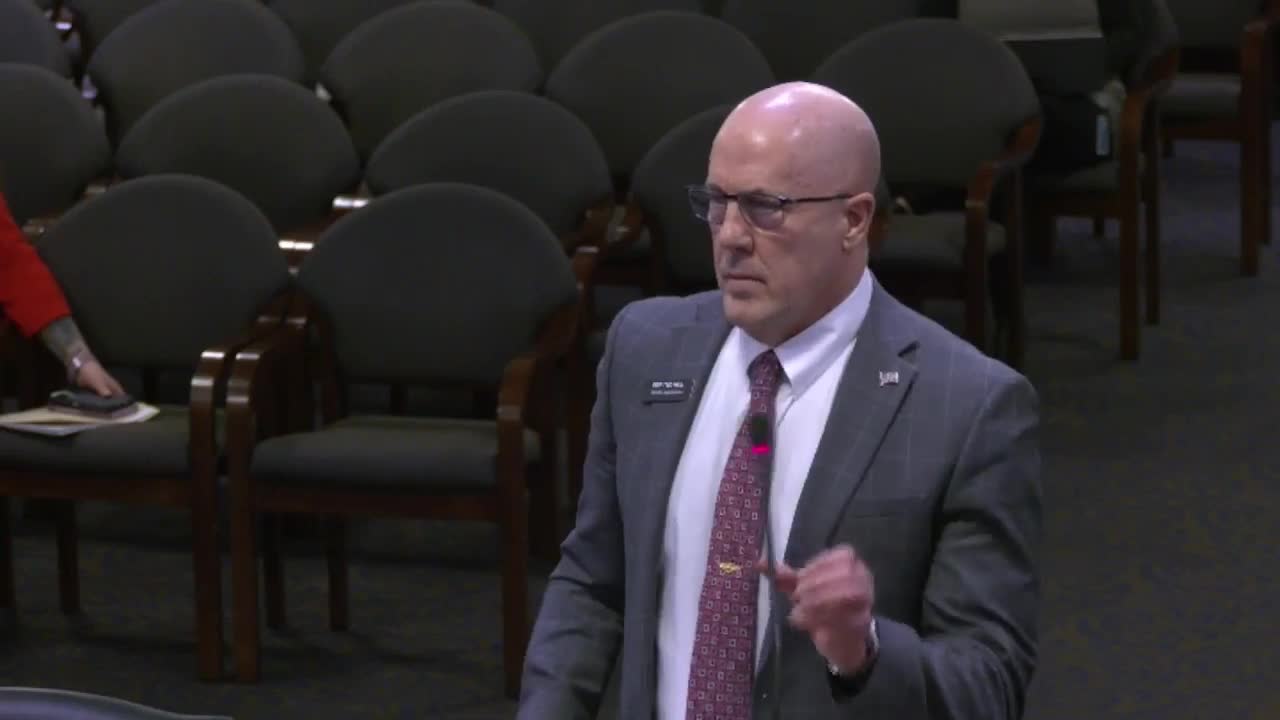
Representative Ted Hill, sponsor of HB157, said the bill would add specific misdemeanors as qualifying offenses for DNA and thumbprint collection because those crimes can be “precursors to more violent activities.” He listed offenses in the bill that would trigger collection, including certain sex‑offense–related misdemeanors, stalking (second degree), misdemeanor domestic violence, indecent exposure, and misdemeanor injury to a child.
Lieutenant Colonel Russ Wheatley of the Idaho State Police described the forensic lab’s work and supported the proposal, noting Idaho has collected DNA for qualifying felonies since 1996 and that the State Police currently see roughly a 1% hit rate from reference samples in the database. “The collection and storage of DNA information have allowed law enforcement to solve crimes within communities,” Wheatley said, and he urged the committee to approve the measure to help solve and prevent crimes.
Committee members raised questions about privacy, retroactivity, and the breadth of some misdemeanor classifications. Representative Rubel asked specifically about “injury to a child,” saying that charge can sometimes encompass non‑violent conditions such as neglect or a messy home; he asked whether that offense should be included. Representative Hill said he would be open to negotiating language on general orders.
Members also asked whether the bill would be retroactive. Sponsors and law‑enforcement witnesses said the misdemeanor collection would not be retroactive; existing felony collection rules remain in place for past felony convictions that lacked DNA collection.
The committee approved a motion to send HB157 to general orders with the handout amendments discussed at the hearing so the language can be tightened in the amending process.