Get Full Government Meeting Transcripts, Videos, & Alerts Forever!
Get email alerts on the Child Welfare topic
No spam. Unsubscribe anytime.
Committee approves tweak to runaway-harboring law to remove minor’s consent exception in one clause
Summary
Lawmakers advanced House Bill 46 to the House floor after the sponsor said she would remove a provision that treated a minor’s consent to shelter as a defense; supporters said the change prevents facilities from being treated as harboring runaways while opponents asked whether the change could make it harder for some minors to reach shelter.
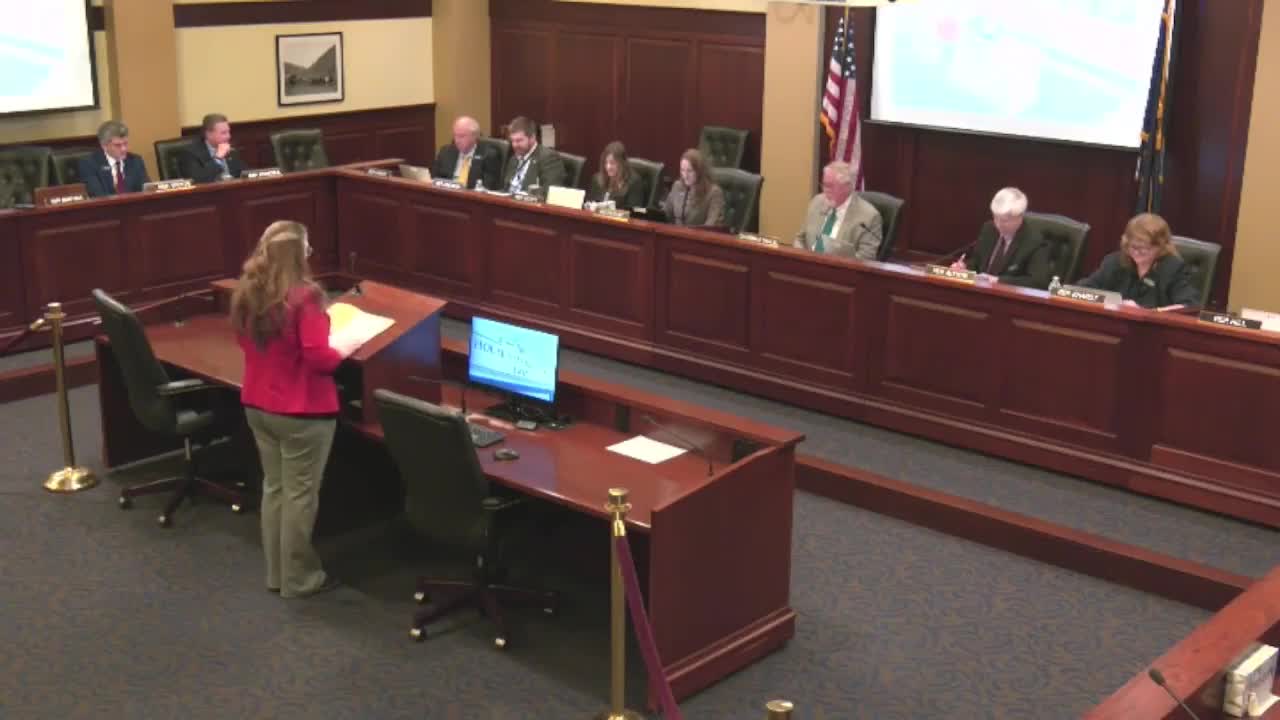
The House Judiciary, Rules and Administration Committee voted to advance House Bill 46 to the floor with a due-pass recommendation after debate over a provision that allowed facilities to avoid runaway‑harboring liability when a minor “consents to shelter care and licensed services.”
Representative Elaine Price, sponsor of H46, told the committee the amendment she offered would remove the first of three safe-harbor provisions in Idaho Code §18-15-10 because minors lack the maturity to consent to licensed services. “They don't have the maturity to understand what they're consenting to,” Price said, and she noted the remaining two provisions would continue to protect residential care facilities that comply with reporting and licensure requirements.
Opponents and questioners raised concerns about unintended consequences for minors seeking safety. Representative Rubel asked whether removing the consent clause could increase the risk that runaway youth end up homeless or exploited. Price replied the change was narrowly targeted to avoid creating criminal liability for facilities that satisfy the other two statutory conditions — including required reporting under the Child Protective Act, which she referenced as Section 16-6165 — and said the sponsor of the original law supported her requested change.
Representative Hawkins moved to send HB46 to the floor with a due pass recommendation; the motion carried by voice vote. Several members noted existing licensure and reporting rules provide protections: committee members said many residential providers perform background checks and that licensed facilities are required to notify local law enforcement and comply with child-protective reporting rules.
Committee members said the bill seeks to balance enforcement of the runaway/harboring statute with protecting minors and licensed care providers; the legislation will go to the House floor for further debate and possible amendments.