Get Full Government Meeting Transcripts, Videos, & Alerts Forever!
Get email alerts on the Daycare Licensing topic
No spam. Unsubscribe anytime.
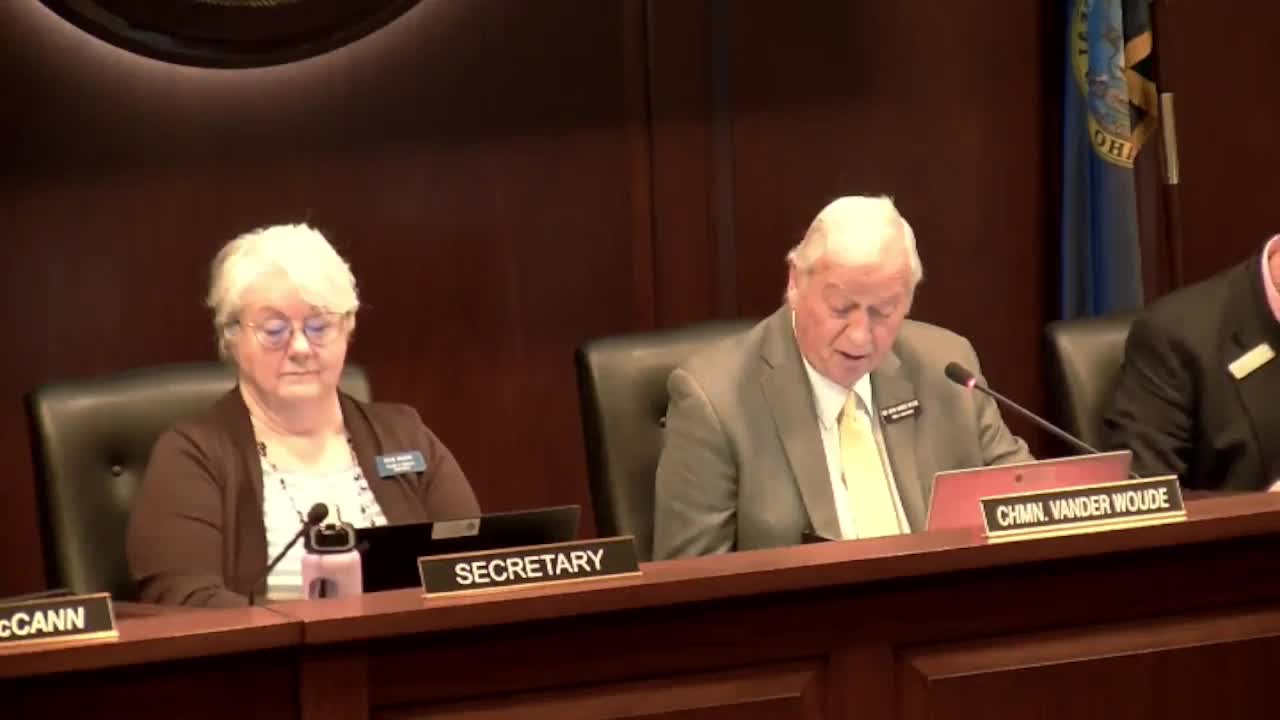
Committee sends childcare licensing bill to House floor after hours-long hearing
Summary
The House Health and Welfare Committee voted 11-4 to send House Bill 243 — which would preempt local daycare licensing, remove statutory staff-to-child ratios and create a state rulemaking process — to the House floor with a "due pass" recommendation after a three-hour hearing that drew providers, parents and local officials.
The Idaho House Health and Welfare Committee voted 11-4 to send House Bill 243, a measure that would replace statutory child-to-staff ratios with provider-set policies and preempt municipal daycare licensing, to the full House with a "due pass" recommendation after an hours-long hearing.
Supporters including the bill sponsor, Representative Earhart, and Rep. Rob Furnas said the measure is intended to reduce regulatory barriers and expand childcare capacity. Representative Furnas told the committee the bill "helps provide the Idaho way by reducing onerous regulations and helping parents and students find affordable daycare." Kate Haas, a bill analyst representing Wonder School, said the measure does not eliminate background checks and that the bill sets up a rulemaking process this summer to establish ratios for providers who accept federal subsidy money. "It is still a misdemeanor to operate a day care without a license. This bill does not change that," Haas said, adding that the change removes the misdemeanor penalty for failing to post a license.
Opponents — who included child advocates, daycare owners, teachers and the City of Boise — said the bill would reduce safety protections. Christine Tiddens, executive director of Idaho Voices for Children, told the committee, "House Bill 243 falls short of this intent at the expense of children's safety," and warned that striking statutory ratios would place too much discretion with individual providers. Justin Snyder, an owner of a Boise early childhood center, said providers want more childcare but not at the cost of minimum standards: "I don't want to break from licensing standards," he said.
City of Boise policy director Kathy Gismeyer said the city currently licenses roughly 200 facilities and about 2,000 workers and that local oversight provides customer service and enforcement the city fears losing under the bill. "We question the fiscal note on this bill," Gismeyer said, noting the city conducts background checks, inspections and responds to complaints.
The bill would repeal Idaho Code section 39-1108 (the current municipal preemption allowance), remove numerical ratios from statute and move some rule-based standards into a summer rulemaking process. Kate Haas said the statute would continue to require background checks and some statutory safety standards remain in place. Opponents and several committee members pressed for more detail on supervision, background-check scope (including which household members must be screened) and the length of time a suspension or revocation bars reapplication.
After public testimony and committee questions, Representative Redmond moved to send the bill to the floor with a due pass recommendation. The motion passed on a roll call vote of 11 in favor and 4 opposed. The committee recorded several named dissenters during debate and the roll call recorded four "no" votes (Representatives Wheeler, McCann, Rubel and Egbert). The committee chair said the bill's supporters want to "reduce unnecessary regulatory burden" to encourage more home-based providers; opponents warned against removing statutory safeguards for children's safety.
Votes at a glance: The committee moved House Bill 243 to the House floor with a "due pass" recommendation. Vote tally: Yes 11, No 4. (Motion moved by Representative Redmond; outcome: approved.)
The bill now goes to the House floor for further consideration and potential amendment. Committee members and multiple public witnesses said they would continue engagement between the health department, cities, providers and child-advocacy groups during subsequent stages of review.