Get Full Government Meeting Transcripts, Videos, & Alerts Forever!
Get email alerts on the Breast Cancer Screening topic
No spam. Unsubscribe anytime.
Idaho committee advances bill to require private insurers to cover supplemental breast imaging for high‑risk patients
Summary
The Idaho House Health and Welfare Committee voted to send House Bill 134 to the floor with a due‑pass recommendation after hours of testimony from physicians, survivors and insurers about the cost and life‑saving potential of MRI and other supplemental breast screening for women at high risk.
The Idaho House Health and Welfare Committee voted to send House Bill 134 to the floor with a due‑pass recommendation after hearing hours of testimony from physicians, survivors and insurers urging coverage of supplemental breast imaging for people at heightened risk of breast cancer.
Supporters told the committee the bill would require private health plans other than Medicaid and self‑insured plans to cover supplemental breast screening — including MRI, contrast‑enhanced mammography or ultrasound — for those with clinical high‑risk factors such as BRCA1/2 mutations, prior chest radiation, very dense breast tissue or a strong family history.
The bill’s sponsors and medical witnesses said supplemental imaging finds cancers that standard mammography can miss. “If we detect one case of early breast cancer through adjunct screening, the financial cost of that screening is more than justified by the savings on chemotherapy alone,” said Dr. Barbara White, a fellowship‑trained breast radiologist practicing in Meridian. Dr. White testified that mammography detects about 70 to 80 percent of cancers, while adjunct screening can raise detection to roughly 95 percent.
Representative Brooke Green, who said she is a two‑time breast cancer survivor, introduced the bill alongside Representative Healy. Green, representing District 18 (Southeast Boise), described her personal experience with dense breasts and a cancer found on a contrast mammogram in December 2024 after a prior imaging had not detected it. “This bill ensures payment parity for diagnostic and supplemental breast imaging that are already necessary for certain individuals,” Green said.
Physicians who testified described both clinical and economic rationale. Dr. Menon, a breast surgeon who trained at MD Anderson Cancer Center, said early detection reduces the need for more extensive treatment and lowers overall costs: “An early stage breast cancer with a lumpectomy can be around $60,000 on average…advanced stage cancer treatment can be $250,000 to $500,000.” Dr. Menon and other clinicians gave out‑of‑pocket figures they said patients currently face: diagnostic mammography around $800 and MRI about $3,000 per year.
Survivors described delays and hardships when advanced imaging was not covered. Amber Mosling said she waited 10 months for a diagnosis after alarming symptoms and subsequently required 16 rounds of chemotherapy and a bilateral mastectomy. Misty Tolman said an annual MRI caught a pea‑sized tumor early enough that she expected a long recovery and life with her family; she also reported thousands of dollars in medical debt.
A representative of a local self‑insured trust, Amy Manning, said her organization, IIIA, covers all breast screenings and has seen measurable cost reductions, reporting a 10 percent decrease in cancers year‑over‑year and a $2 million reduction in cancer‑related costs for its membership after expanding screening. Manning described IIIA as a self‑funded health trust created by a group of Idaho cities.
Committee members debated fiscal and market questions. Representative Kaler (phonetic in transcript) asked whether costs would affect the state health exchange; Representative Green said the fiscal note estimates $300,000 to $600,000 to the state health insurance plan but that earlier diagnosis could yield net savings by avoiding expensive treatments. Representative Kahler spoke in opposition on grounds of expanding mandates on private health care, saying he would vote no. Other members, including Representative McCann and Representative Bell, argued prevention would reduce overall costs and urged support.
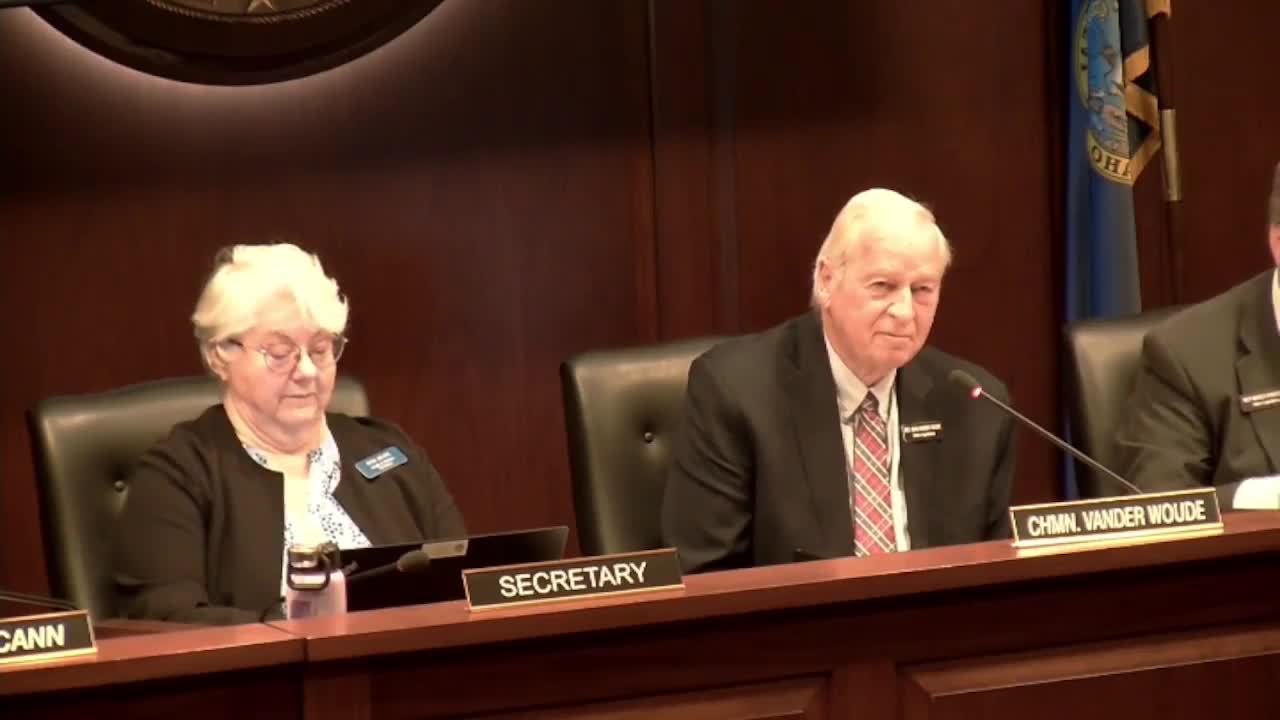
A motion by Representative Redmond to send House Bill 134 to the floor with a due‑pass recommendation carried after the committee recorded two nays; the record does not name which members voted against the motion. The chair ordered the bill placed on the calendar for floor consideration.
Why it matters: Supporters say the bill targets a narrow, clinically defined group and would remove financial barriers that lead high‑risk people to skip recommended supplemental imaging; opponents said the requirement expands government mandates into private insurance and raised concerns about state cost exposure.
The bill now moves to the full House for further consideration. Testimony and the committee record show strong personal and clinical advocacy for coverage parity alongside questions about fiscal impact and private‑market response.