Get Full Government Meeting Transcripts, Videos, & Alerts Forever!
Get email alerts on the Health And Welfare Budget topic
No spam. Unsubscribe anytime.
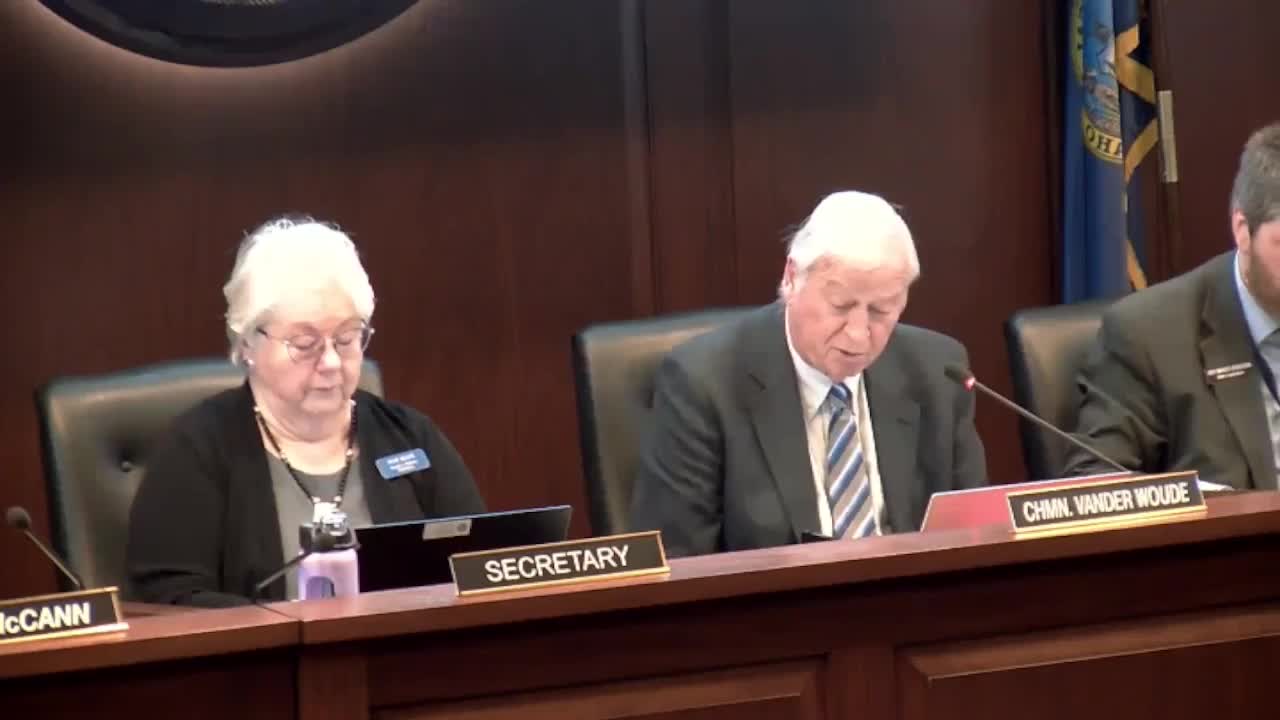
House Health and Welfare Committee reviews Health and Welfare budget; foster care supplemental highlighted
Summary
The House Health and Welfare Committee on Wednesday reviewed the Department of Health and Welfare’s budget, focusing on a $14 million supplemental for foster care, Medicaid population-forecast adjustments and federal grants tied to behavioral health and public-health programs.
BOISE — The House Health and Welfare Committee on the morning it convened approved routine minutes and spent the remainder of its session reviewing the Department of Health and Welfare’s budget request, focusing on a $14 million supplemental for foster care, updated Medicaid population forecasts and several federal grants that require spending authority.
The presentation was led by Alex Williamson, budget and policy analyst with the Legislative Services Office, and Director Alex Adams of the Department of Health and Welfare answered committee questions. Representative Egbert moved to approve the committee minutes from Feb. 5, Feb. 6 and Feb. 10; the motion passed on a voice vote.
The supplemental most discussed was a $14 million request to cover fiscal-year 2025 overages in child welfare, which the department described as driven by rising mental-health and substance-use needs, a shortage of community-based placements and increased use of higher-cost congregate care settings. "When I started, we had 176 kids in short term rentals. As of November, we have 0," Director Adams said, describing the Payette Assessment and Care Center and other placements as part of a strategy to move children out of short-term rentals into more home-like settings. Adams said the department originally projected the current-year shortfall at $24 million before reducing it to $14 million after recruitment and placement efforts.
Adams and Williamson described two related lines of work: short-term payments to cover current overages (the supplemental) and the department’s FY2026 enhancement requests to reduce future reliance on congregate care. The governor’s recommendation reduces a department request for roughly 100 new full-time positions to 58, including 36 prevention specialists intended to help keep children safely at home and ease the licensing process for new foster families.
Committee members pressed for specifics. Williamson said the supplemental reflects program trends that have produced escalating supplementals in recent years (previous supplementals were described in the presentation as rising from $1 million to $2 million to $5 million and now $14 million). Adams testified that the department’s foster recruitment efforts have improved the ratio of foster families to foster children from about 74 per 100 children to about 93 per 100, and he said congregate-care population counts had fallen from roughly 268 children to about 190.
The committee also discussed Medicaid-related items: a Medicaid updated forecast supplemental (presented at about $113 million), the hospital assessment and related upper-payment-limit changes (noted at about $77.2 million in dedicated funds), and the multi-year Medicaid Management Information System (MMIS) replacement, a federally matched IT procurement (about 90% federal, 10% state). Williamson said the updated forecasts are intended to reflect real-time utilization and federal medical-assistance-percentage (FMAP) changes; the presentation listed Idaho’s FMAP moving from 67.59% to 66.91%.
On behavioral health, the committee reviewed authority requests to access previously awarded federal grants connected to the Idaho Behavioral Health Plan, which Williamson said went live later than planned and therefore requires additional spending authority to draw down federal cash already awarded. The committee noted a $6.743 million federal supplemental tied to behavioral-health contract implementation.
Members raised questions about the Payette Assessment and Care Center. The governor’s recommendation did not include a purchase of the facility, which Adams said had a purchase price of about $1.7 million and remained under lease while the department evaluates longer-term facility needs. "It might not be the best location for it long term," Adams said, arguing continued leasing while a long-term plan is developed is "in the best interest of taxpayers."
Committee members also asked about federal grants (including several ARPA-funded projects and multi-year public-health grants). Williamson outlined grant durations: the Public Health Infrastructure Grant (year 3 of 5), Vital Statistics Data Modernization (year 2 of 4), WIC system modernization (year 2 of 3) and other multi-year awards. Director Adams said the department has exit strategies for discretionary grants should federal funding be rescinded and that entitlement programs such as Medicaid and child welfare were not intended to be impacted by recent federal grant-hold actions.
The committee was given a high-level FY2026 maintenance and enhancement summary: the governor’s recommendation would yield approximately 3,073.94 FTP and about $6 billion in all-funds appropriation (Williamson cited roughly $1.2 billion general fund in the FY2026 request). The presentation noted a governor initiative line of $15 million related to an Idaho childcare program.
Committee leaders asked members to bring recommendations for JFAC (Joint Finance-Appropriations Committee) the following day; Williamson said she would provide requested breakout details (including which restored public-health programs and associated FTP had been switched from ongoing to one-time during the prior session). With that, the chair closed the hearing.
Ending: The committee will reconvene the following day for recommendations to JFAC; no final appropriations were adopted at this meeting.