Get Full Government Meeting Transcripts, Videos, & Alerts Forever!
Get email alerts on the Sports Regulation Public Safety topic
No spam. Unsubscribe anytime.
House rejects bare‑knuckle boxing rule while Senate recommends approval; committee split follows safety, insurance concerns
Summary
The Tennessee Athletic Commission presented rules to license and regulate bare‑knuckle boxing events using Association of Boxing Commissions model rules; the House returned a negative recommendation while the Senate approved the rule, reflecting safety and insurance concerns raised by members.
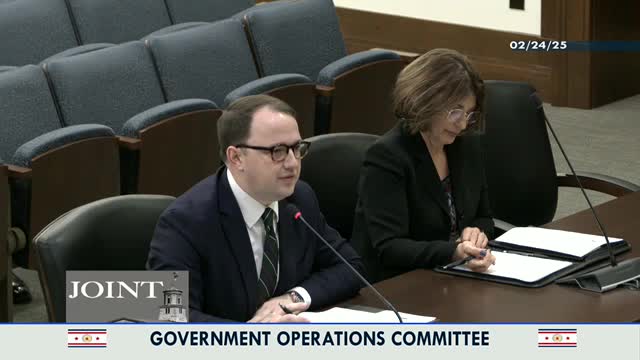
The Tennessee Athletic Commission asked the committee to adopt rules licensing bare‑knuckle boxing events and to adopt the model rules of the Association of Boxing Commissions to regulate licensing for combatants, referees, seconds and promoters and to set safety measures such as a ringside physician, weight classes, bout lengths and minimum insurance.
Presenters said the rules prohibit amateur bare‑knuckle events and that the model framework promotes safety. Roxanna Gamusio, executive director of the Tennessee Athletic Commission, told members the rules were intended to make contests comparable in safety to other regulated combat sports. Several legislators, including Representative McKenzie, Representative Hartley and Representative Clinton, expressed strong qualms about the sport’s safety and morality. Medical‑safety questions focused on concussion risk; the commission cited studies it had provided to legislators and said medical analysis found a lower concussion rate in bare‑knuckle matches than in gloved boxing.
Senator Rose and other members questioned the sufficiency of the minimum insurance requirement; the commission cited a $25,000 minimum insurance requirement in the rule. Senator Rose cautioned that $25,000 likely would not cover more serious or lifetime medical costs and said uncovered costs could fall back on taxpayers.
On the final votes the House returned a negative recommendation ("the no's have it") and the Senate returned a positive recommendation (five ayes, one no). The committee record therefore shows a split recommendation: disapproval by the House and approval by the Senate. Office of Legal Services staff clarified that the rule received a negative recommendation in the House and a positive recommendation in the Senate; the rule will proceed consistent with committee procedures.