
Legislative hearing reviews budget, staffing and licensure changes for Oregon Board of Tax Practitioners
Get AI-powered insights, summaries, and transcripts
Sign Up Free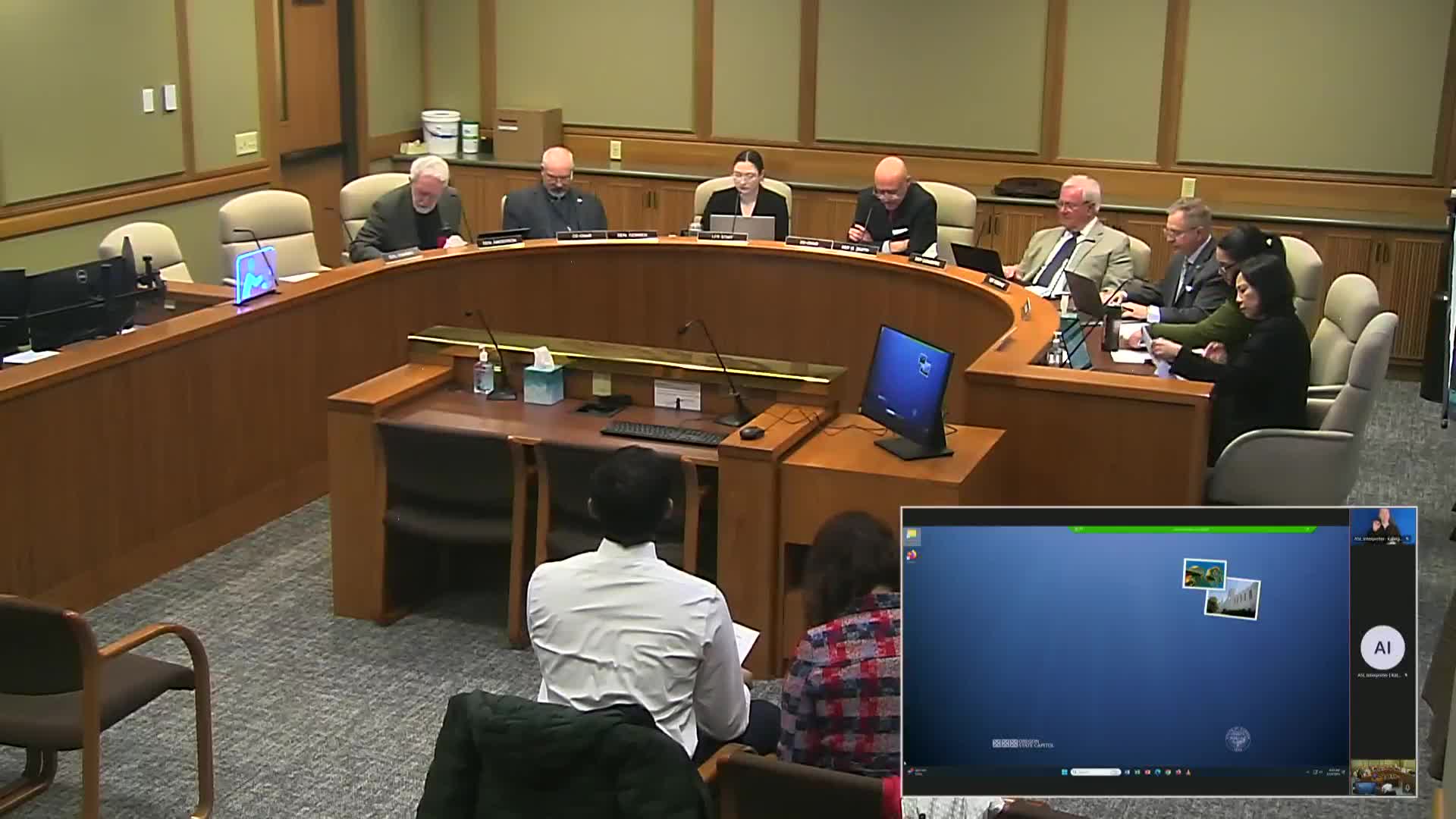
Summary
The most important details first: On Feb. 24, 2025, a legislative committee held an informational public hearing on Senate Bill 5540, the governor's recommended appropriation for the Oregon Board of Tax Practitioners.
The most important details first: On Feb. 24, 2025, a legislative committee held an informational public hearing on Senate Bill 5540, the governor's recommended appropriation for the Oregon Board of Tax Practitioners. Harry Velopondian, representing the Department of Administrative Services Chief Financial Office, and Laura Cardokas, executive director of the Oregon Board of Tax Practitioners, described a largely self-funded agency seeking authority to cover higher testing costs, a sublease for office space and support for a proposed new entry-level license in House Bill 2338.
Why it matters: The board licenses and regulates paid preparers and consultants who file Oregon personal income tax returns for a fee. Workshop testimony focused on consumer protection, staffing limitations at the small agency, and how licensure and enforcement affect taxpayers and the state's tax-preparer workforce.
At the hearing, Velopondian said he would "give a brief presentation on the governor's recommended budget for the board of tax practitioners," noting the agency's request mainly covers current services and the cost of increased testing. Cardokas described the board's mission: "to protect consumers by ensuring Oregon tax practitioners are competent and ethical in their professional activities," and summarized the agency's licensing structure and recent trends.
Cardokas said the board is an other-funded agency financed primarily by exam and licensing fees and civil penalties. She told committee members the agency currently has two professional staff (down from three in prior biennia) and that recent additions in the governor's budget are intended to pay for higher testing costs and a sublease of office space with the Board of Accountancy.
On licensing and workforce, Cardokas said the board has two individual license levels (an entry-level preparer and a higher-level tax consultant) and two types of business registrations. She explained that preparers must complete an 80-hour course (unless they have equivalent college credits) and pass the board's preparer exam; consultants must document at least 1,100 hours of experience and pass a more rigorous exam and typically supervise preparers. "Everyone that prepares or offers tax advice for a fee in Oregon, needs to be licensed," Cardokas said.
The board reported administering roughly 600 licensing exams annually using PSI as the proctor; reported pass rates were about 76% for preparers, 72% for consultants and 99% for a consultant state-only exam referenced for enrolled agents. Cardokas described an increase in out-of-state licensees and an overall decline in in-state preparers over the past decade, with recent upticks in total license counts. The transcript includes inconsistent counts: in one slide Cardokas said the board's January totals were 2,045 licensed consultants, 400 licensed preparers and 112 businesses/branches; later remarks referenced "1,400 active licensed tax preparers." The committee record did not resolve which figure is accurate.
The board described its enforcement and consumer-protection work: it handles about 40 to 50 complaints annually, pursuing restitution and civil penalties when it finds errors or unlicensed practice. Cardokas said the board maintains a matrix to reduce penalties for respondents who cooperate; unpaid cases are sent to collections. The board reported 16 receivable civil-penalty accounts as of Dec. 31: 12 with licensees (three paid in full; nine on payment plans) and four accounts in a collection firm. Cardokas gave outstanding balances of $25,661.85 for the board-held receivables and $85,284.80 for the collection-firm accounts.
Several legislators asked about areas outside the board's authority. Representative David Gomberg (as recorded) pressed whether volunteers or no-cost advice (for example, from nonprofit VITA programs or the Department of Revenue's online guidance) are subject to board oversight; Cardokas said they are not regulated if the service is not provided for a fee. Representative Khanh Tran asked about national chains and out-of-state firms; Cardokas said larger companies providing paid Oregon returns should ensure an Oregon-licensed consultant oversees those locations.
Lawmakers also questioned auditing and financial oversight. Cardokas said the agency is subject to periodic review and that she would follow up with committee staff on audit details; she said the board had paid litigation costs from its budget in prior litigation and that, per a contractual provision, it might be reimbursed if the board prevailed in that litigation.
On policy changes, Cardokas described HB 2338, a proposed entry-level certificate the board calls a "certified tax aid" program intended to create an apprenticeship-style path. The certificate would permit supervised data entry and hands-on experience but would not allow the certificate-holder to complete a return for pay. Cardokas said the board hopes the program will expand the pipeline into paid preparer and consultant roles.
Cardokas and Velopondian described a proposed sublease with the Board of Accountancy intended to restore a physical presence after a recent period of full remote operation; the board said the sublease produced an estimated 89% reduction from prior rental costs. The governor's recommended budget, as described in testimony, is split roughly half for personal services and half for services and supplies; the board reported that about 95.5% of its revenues come from licensing and exam fees, and about 4.5% come from civil penalties.
The committee did not take formal votes during the session. Members offered to assist the small agency with questions about audits, budget impacts from litigation and other operational concerns. The Legislative Fiscal Office (LFO) staff noted upcoming agenda items for the committee.
What's next: SB 5540 remained at the informational/hearing stage at the close of testimony; HB 2338 was discussed as a pending policy proposal. Neither bill received a committee vote during the Feb. 24 hearing.
Ending note: The hearing provided lawmakers with operational and fiscal context for the Board of Tax Practitioners, highlighting enforcement limits, staffing constraints and a policy proposal intended to grow Oregon's licensed preparer pipeline.