Get Full Government Meeting Transcripts, Videos, & Alerts Forever!
Get email alerts on the Landlord Tenant topic
No spam. Unsubscribe anytime.
Courts cite surge in landlord‑tenant filings, high self‑representation and need for mediation and oversight in guardianship cases
Summary
Oregon court officials said landlord‑tenant filings are now above pre‑pandemic levels, most tenants appear without lawyers, mediation helps where available, and conservatorship oversight programs have identified concerns in audited assets.
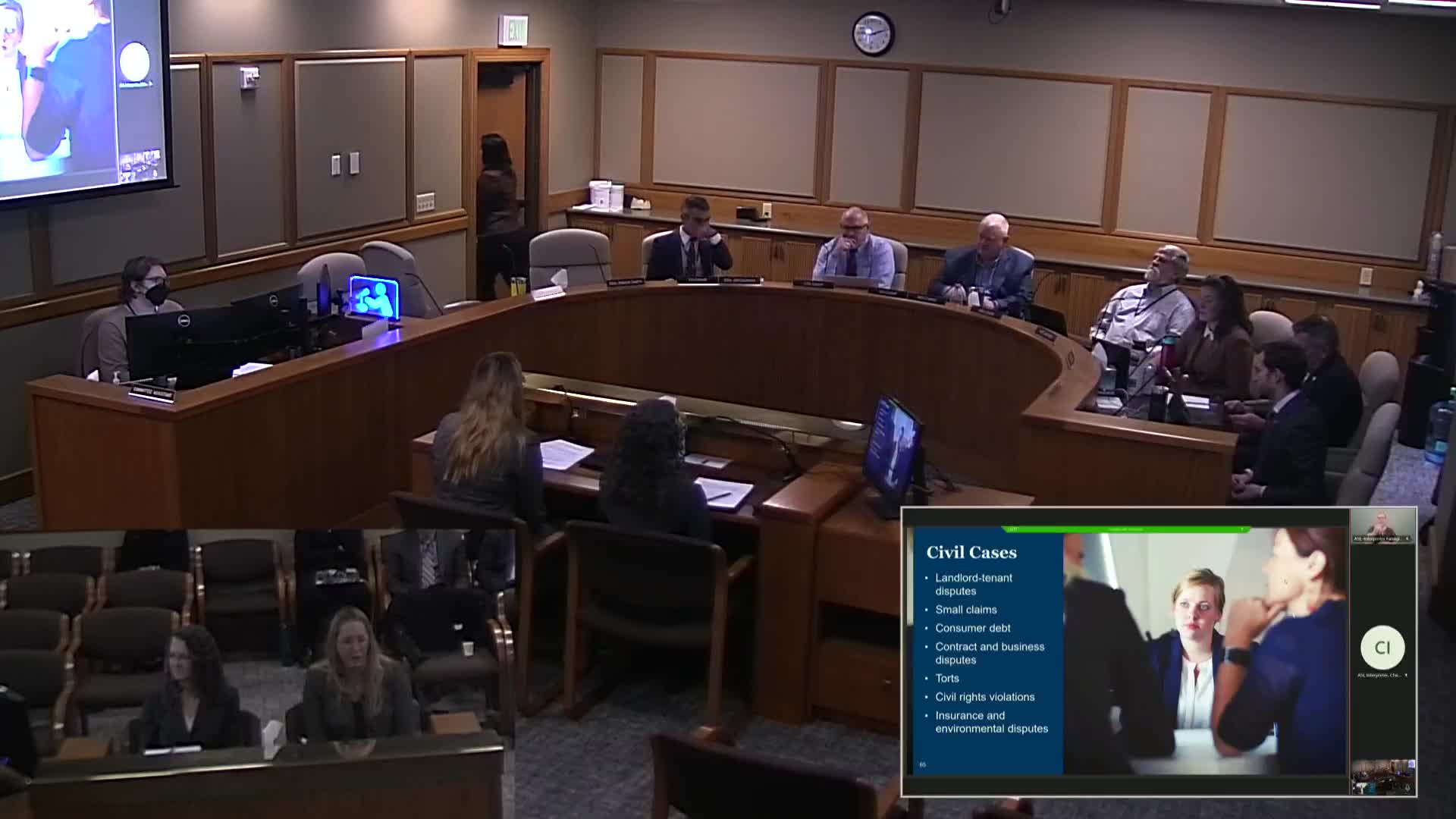
State court officials told the Public Safety Subcommittee that landlord‑tenant filings have grown rapidly since pandemic moratoria ended, self‑representation is common, and mediation and facilitation programs can improve outcomes but are unevenly available across counties.
The nut graf: Nancy Kozine and presenters said eviction and general civil caseload growth is straining court resources; mediation and facilitation can reduce adversarial outcomes, and conservatorship auditing programs have identified financial concerns that require ongoing oversight.
Presenters said landlord‑tenant filings dropped during the pandemic moratorium but have since climbed to levels above pre‑pandemic filings. Kozine said self‑representation rates are high: about 92 percent of tenants and 56 percent of landlords appear without counsel in eviction cases, and roughly 85 percent of eviction cases result in default judgment or dismissal when parties are self‑represented. The department noted that mediation, where available, improved settlement rates and judicial efficiency.
Kozine highlighted local innovations: a Plattsburgh County program funded by a National Center for State Courts grant trained volunteer mediators, moved proceedings remote and achieved settlement in more than half of cases. She said mediation settlement rates in districts offering landlord‑tenant mediation varied widely, from about 50 percent in Jackson County to about 90 percent in Deschutes County.
On guardianship and conservatorship, Kozine said the courts monitor more than $1.4 billion in assets and that the Conservatorship Auditing Program (CAP) reviewed $34 million in audited assets and identified concerns in 8.6 percent of audited accounts. Kozine said CAP findings prompt judges to investigate and address potential mismanagement.
Ending: Subcommittee members asked for further data on landlord representation trends, the role of corporate or non‑lawyer property managers, and agreed to follow up on program scalability and funding needs.