Get Full Government Meeting Transcripts, Videos, & Alerts Forever!
Get email alerts on the Tax Policy topic
No spam. Unsubscribe anytime.
Legislative Revenue Office briefs House economic committee on Oregon tax system and business taxes
Summary
Chris Alenak, director of the Legislative Revenue Office, gave a high-level briefing on Oregon’s tax system, explaining the major state and local revenue sources, business tax types (corporate income/excise, corporate activity tax), and property-tax history including Measure 5 and Measure 50.
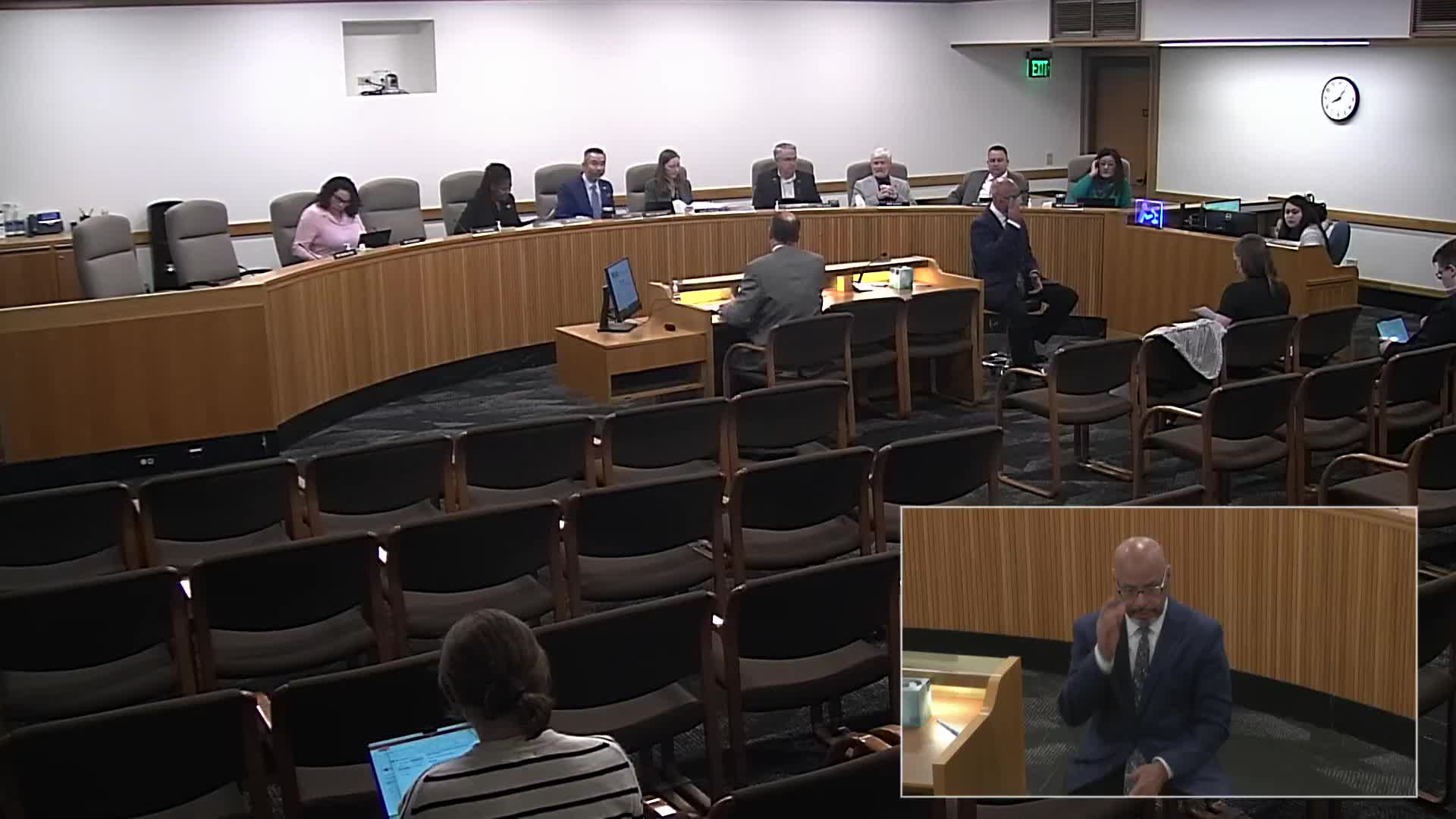
Chris Alenak, director of the Legislative Revenue Office, told the House Committee on Economic Development and Small Business and Trade on Feb. 24 that the office provides nonpartisan revenue analysis and produces an annual reference, Oregon Public Finance: Basic Facts, to orient policymakers on state tax programs.
"We are a separate agency. We are not LFO and we are not LPRO," Alenak said, describing the LRO’s role in preparing revenue impact statements and staffing revenue committees. He said the office has a small team of economists divided by tax program and that most bills do not affect the tax system.
Alenak walked committee members through the state’s largest revenue sources and business-related taxes. He said personal income tax is the single largest source of state revenue and can be volatile; recent year-to-year collection changes reflect the state’s "kicker" mechanism as well as economic cycles. He described two business-related taxes: the corporate income/excise tax (a two-rate structure for C corporations — 6.6% up to $1 million in taxable income and 7.6% above that threshold — and an entity minimum tax based on Oregon sales) and the corporate activity tax (CAT), enacted in 2019 and calculated as $250 plus 0.57% of commercial activity above $1 million in receipts. Alenak said roughly 35,000 C corporations file returns, about 25,000–30,000 businesses pay the CAT, and many small businesses are taxed through the personal income tax as pass-through entities or sole proprietors.
He also summarized unemployment insurance taxes, which flow to the UI trust fund and use multiple schedules to preserve solvency, and gave a concise history of property-tax reforms including voter-approved Measure 5 (1990) and Measure 50 (1997). Under Measure 50, assessed value growth for local property taxes is limited (commonly capped at 3% per year) and permanent rate limits were established for taxing districts, producing long-term differences between market values and taxable assessed values.
Committee members asked questions about standard deductions, whether certain programs count as taxes or fees (a determination Alenak said is for Legislative Counsel), and data needs for revenue analysis. Alenak repeatedly offered to follow up with specific figures the LRO tracks and to coordinate with legislative counsel and the Department of Revenue for detailed legal or fiscal determinations.
The briefing was intended to prepare the committee ahead of the official revenue forecast later in the week and to help new members understand how various taxes affect business and economic development policy choices.