Get Full Government Meeting Transcripts, Videos, & Alerts Forever!
Get email alerts on the Drugs And Public Safety topic
No spam. Unsubscribe anytime.
State Affairs committee sends constitutional amendment to House floor to make legalizing unlawful drugs harder
Summary
The House State Affairs Committee voted 12-3 to send House Joint Resolution 3, a proposed constitutional amendment that would require a two-thirds vote of each legislative chamber to make currently unlawful drugs lawful, to the full House after extensive public testimony and debate.
The House State Affairs Committee voted 12-3 to advance House Joint Resolution 3, a proposed constitutional amendment that would require two-thirds of each chamber of the Idaho Legislature to approve any future change that would make currently unlawful drugs lawful.
Representative Skog, sponsor of HJR3, told the committee the amendment would give Idaho voters and lawmakers a higher bar for legalizing drugs that are currently illegal. “We need 2 thirds of the House and of the Senate to get this onto the, ballot initiative, and that's what we're seeking to do,” Skog said. He cited Oregon's legalization experience as a warning and said the proposal was designed so “we allow the voters to decide to vote against the illegal drugs becoming illegal, at least making it very difficult in the future.”
The resolution prompted extensive public testimony both for and against. Joseph Evans, testifying for Kind Idaho and identifying himself as a combat veteran, urged the committee to oppose the measure. “This particular bill will continue to make that access significantly more difficult to maintain in the state of Idaho,” Evans said, arguing that some Schedule I substances have medical value under supervision. Several witnesses urged the committee to protect current criminal penalties and make it harder to legalize illicit drugs; Billy Norp, speaking for himself in favor of HJR3, said: “This amendment merely puts in Idaho Constitution what we already have in law.”
Supporters told the committee they had law-enforcement and organizational endorsements in their folders, and cited overdose and crime concerns from other states. Opponents and at least one committee member questioned whether the proposal would hinder future medical or research uses of substances that are currently unlawful but might later show therapeutic benefit.
During the committee exchange Representative Barbieri asked whether the amendment would affect the initiative process. Skog replied the measure as drafted “does not affect it in any manner whatsoever,” though later he said he would bring a fuller answer to the floor. Representative Green raised concerns about the draft's use of the undefined phrase “unlawful drugs” and whether it would unintentionally block medical uses; Skog said the language was intentionally broad so the amendment would not require frequent statutory updates.
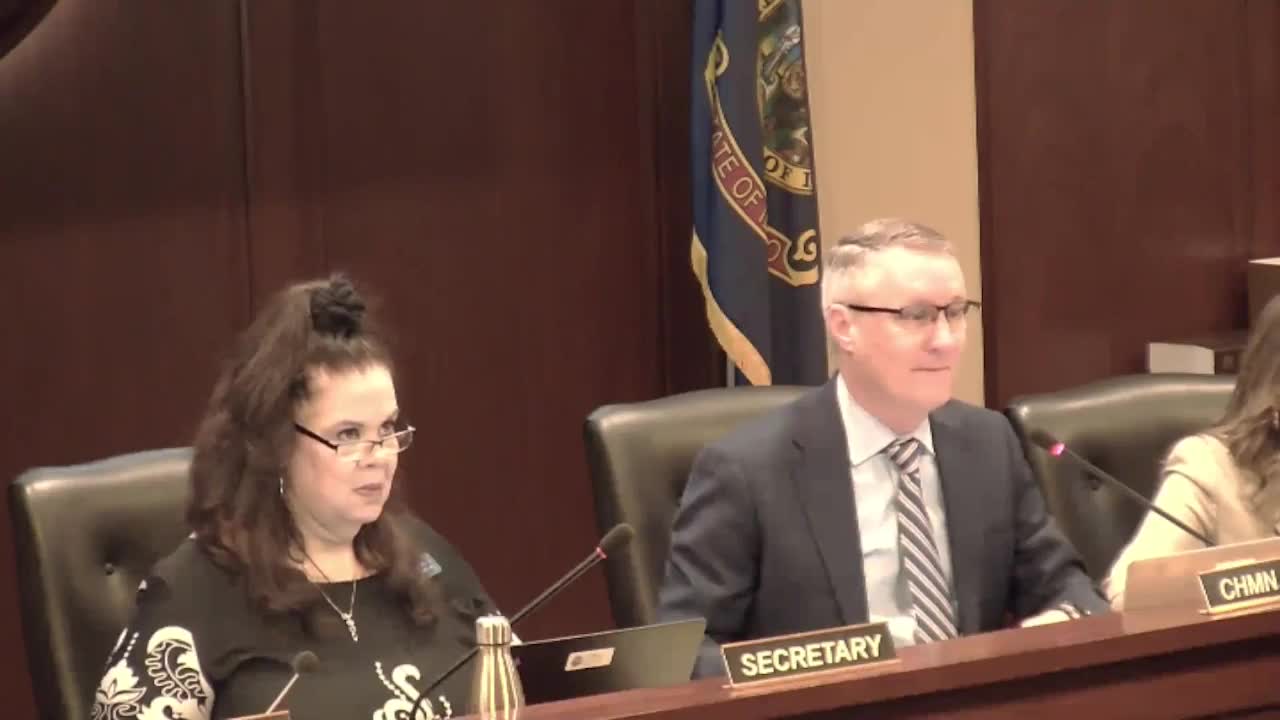
Representative Scott moved the committee’s due-pass recommendation to the House. The secretary then called the roll; the motion carried 12 to 3. The committee record shows the motion passed and HJR3 will now go to the full House for further consideration.
The measure, if approved by the Legislature with the required majorities and then by voters where required, would alter the state Constitution. Committee members who opposed the motion said they worried the two-thirds hurdle could limit lawmakers’ flexibility to respond to future medical or public-health findings.
HJR3 now advances to the full House, where members will debate the language and process questions that multiple legislators asked the sponsor to clarify before floor action.