Get Full Government Meeting Transcripts, Videos, & Alerts Forever!
Get email alerts on the Vocational Rehabilitation Audit topic
No spam. Unsubscribe anytime.
Audit: Idaho Vocational Rehabilitation labeled high-risk; agency seeks state match, hires contractor to address reporting
Summary
Legislative auditors told the Joint Finance-Appropriations Committee Feb. 24 that the Idaho Division of Vocational Rehabilitation failed to maintain expenditure controls and accurate federal reporting, prompting a federal high-risk designation and a $10 million federal reallotment that requires state matching funds.
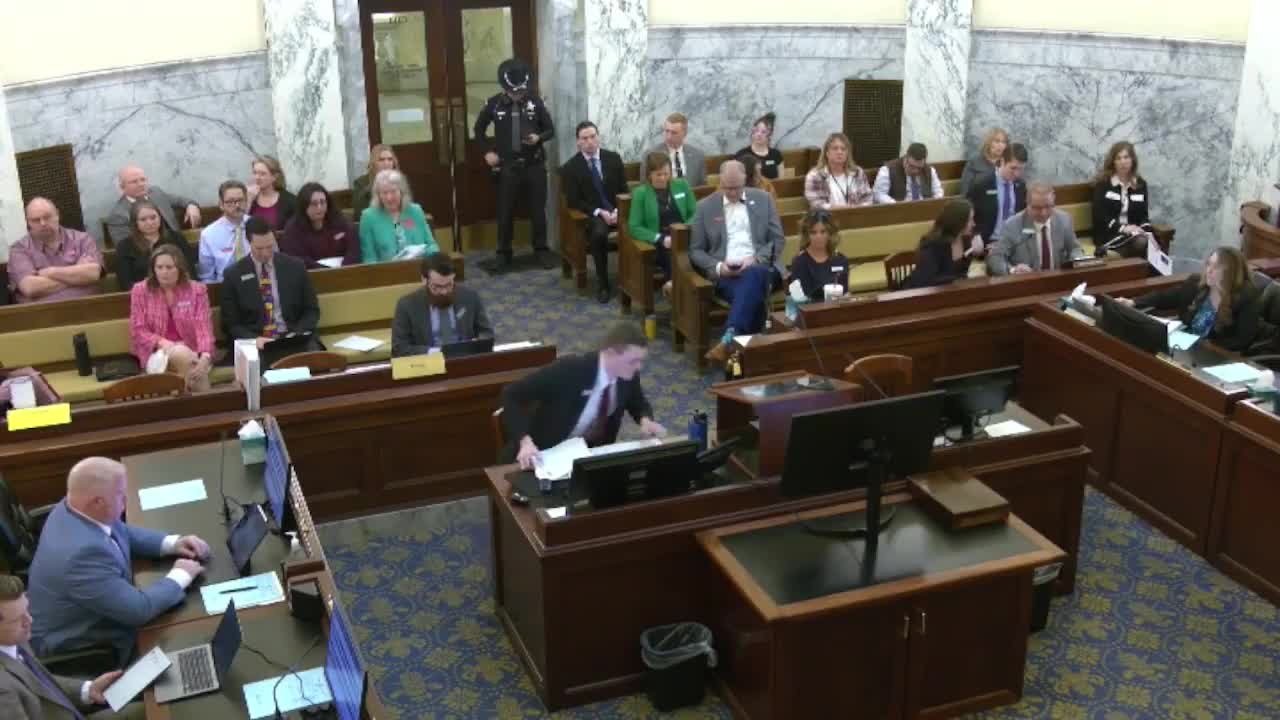
Legislative auditors and agency leaders told the Joint Finance-Appropriations Committee on Feb. 24 that the Idaho Division of Vocational Rehabilitation (IDVR) has serious fiscal-management weaknesses, prompting a federal high‑risk designation and a $10 million federal reallotment that requires state matching funds.
April Renfro, chief auditor with the Legislative Services Office audits division, told the committee that auditors found the division “did not establish procedures and control activities to ensure compliance with appropriation laws applicable to fiscal year 2024.” The audit identified insufficient financial-management systems, failures to account for and report obligations and expenditures properly, and inaccurate and unsupported federal financial reporting.
Why it matters: The division supports Idahoans with disabilities seeking employment; audit findings and uncertain federal decisions put both future federal funding and day-to-day client services at risk.
Noncognizable adjustment and supplemental requests: Budget staff and IDVR leaders said the governor recognized a noncognizable adjustment of $10,000,000 in federal funds after Rehabilitation Services Administration (RSA) reallotted available money. Brooke Dupree, a Legislative Services budget analyst, said RSA’s reallocation process made the funds available late in the federal year and that the $10 million requires a state match.
IDVR requested $2.7 million in one-time general-fund supplemental to meet the state match for that $10 million; the governor’s recommended budget included the $2.7 million request and an additional $1.7 million one-time recommendation for client services that agency staff expect may be disallowed by the federal grantor. Dupree said the $1.7 million represents the committee’s estimate of previously provided services that RSA may deem unallowable.
Contract for corrective work and contractor payments: The division engaged an out‑of‑state contractor under a professional services contract originally for $499,999 to assist with corrective actions, control design and restatement work. The agency later amended the agreement to add $1.9 million and extend work through Dec. 2025, producing a total contract ceiling near $2.5 million. Renfro said the agency has paid just under $900,000 to date and that all contract payments so far were charged to federal funds (which will also require matching where applicable).
Renfro said RSA designated IDVR a “high risk grantee” on May 3 and imposed specific conditions under federal regulations (2 C.F.R. § 200.208). RSA requested a corrective action plan; auditors judged the division’s first plan as generalized and insufficient. RSA subsequently performed a fiscal monitoring review that cited the division’s allocation and expenditure controls and reporting problems.
Scope and forensic work: Renfro and Director Judy Taylor (serving as interim director of IDVR) said the division is under heightened scrutiny and that a forensic audit will review period-of-performance and other transactions going back to 2019, with RSA inspection of prior federal reporting and potential remedies. Taylor said recent draw requests for the Pre-Employment Transition Services (Pre‑ETS) program produced a high breakage rate on reimbursements, leading IDVR to estimate $1.7 million in possible unallowable charges tied largely to Pre‑ETS; Dupree said the $1.7 million was an estimate of services already rendered that RSA found unallowable in initial reviews.
Impact on services, staffing and waitlist: Taylor told the committee IDVR has 2,735 active clients and about 1,950 qualified disabled Idahoans on a wait list; she described austerity measures, hiring slowdowns and a shift to more in‑house services. Taylor said the division had increased in‑house staff and is pursuing a “differentiated practice model” to have staff work at top of license and outsource only where appropriate.
Federal remedies and uncertainty: Renfro outlined potential federal actions under 2 C.F.R. and RSA guidance, including extra reporting, prior approvals, repayment of funds found to be unallowable, and, in extreme cases, replacement of agency control with a fiduciary. She said RSA may reduce or waive repayment based on mitigating circumstances, and that the final federal response will determine financial exposure.
Next steps: The committee was told the matter will be part of upcoming single-audit work and that further oversight hearings are possible. IDVR asked for the supplemental match to draw the $10 million federal reallocation and detailed contractor work to remediate reporting and controls; the committee sought additional documentation on match calculations and the justification for the contractor amendment.